Hosts putting out sweets to share
If chewy, fruit-flavoured sweets suit the discussion table, compare sharing formats and pack weights. Tesco lists jelly-and-chewy sharing packs, while M&S describes fruit jellies, jelly babies and jelly beans.


Choose jelly sweets if the book club wants chewy, fruit-flavoured sweets to share. If “dark” means a high-cocoa option, shop for dark chocolate instead: Tesco lists dark chocolate and jelly sweets separately, while HARIBO describes its Jelly Babies as fruit-flavoured sweets. Whichever route suits the group, check the exact pack for ingredients, allergens and a suitable quantity.
If chewy, fruit-flavoured sweets suit the discussion table, compare sharing formats and pack weights. Tesco lists jelly-and-chewy sharing packs, while M&S describes fruit jellies, jelly babies and jelly beans.
If “dark” refers to cocoa rather than a sweet’s colour or fruit flavour, look at dark chocolate and check the cocoa percentage on the exact product. Tesco places dark chocolate and jelly-and-chewy sweets in separate categories.
Ask guests about dietary and allergen needs before choosing a pack. M&S lists vegetarian and vegan options within its jelly-sweets range, but that does not describe every product; HARIBO lists gelatine in its Jelly Babies.
Decide whether the group wants jelly texture or cocoa-based chocolate before comparing pack sizes and labels.
Choose when: The group wants chewy sweets that can be put out for sharing.
Trade-off: A fruit-flavoured jelly sweet does not establish the requested cocoa content; HARIBO’s Jelly Babies are a fruit-flavoured example.
Choose when: Cocoa content, rather than jelly texture, is the deciding requirement.
Trade-off: Chocolate changes the texture of the treat, and its ingredients and allergens depend on the exact pack.
| Priority | What to check | Your needs |
|---|---|---|
| Type of sweet | Check whether the product is a jelly sweet or dark chocolate. If cocoa content matters, read the stated cocoa percentage on the exact chocolate pack; “dark” alone does not give a percentage. | I want the treat to match what the group means by “dark”, rather than choosing a fruit-flavoured jelly sweet when cocoa is the point. |
| Sharing format | Compare the pack’s net weight and format with the expected number of guests and other refreshments. Tesco lists jelly sweets in sharing and gift formats. | There should be a practical way to put sweets out for the group, without assuming that the largest pack is the right quantity. |
| Ingredients and allergens | Read the exact pack’s ingredients, allergen wording and any dietary statement. HARIBO lists gelatine in its Jelly Babies; M&S identifies vegetarian and vegan options within its wider jelly-sweets range. | I need to know whether the particular sweets I serve meet guests’ dietary and allergen needs, not just whether the range includes suitable options. |
Dark chocolate and jelly-and-chewy sweets appear as separate categories at Tesco, and HARIBO describes its Jelly Babies as fruit-flavoured. A dark colour or flavour name does not establish cocoa content.
If cocoa is essential, choose from dark chocolate and check the stated percentage on the exact pack. If jelly texture matters more, select jelly sweets without assuming they meet a cocoa requirement.
Dietary suitability varies by product: M&S lists vegetarian and vegan options in its range, while HARIBO Jelly Babies contain gelatine.
Check guests’ needs, then read the ingredients and dietary wording on the particular pack before serving it.
HARIBO’s Jelly Babies are an example of fruit-flavoured jelly sweets.
Tesco lists a 150g Rowntree's Jelly Tots sharing bag in its jelly-and-chewy range.
Tesco lists jelly-and-chewy sweets and dark chocolate in separate shopping categories.
M&S describes fruit jellies, jelly babies and jelly beans within its jelly-sweets range.
These products are dark-chocolate options for a book club where cocoa content takes priority over jelly texture. They are not jelly sweets; compare their stated percentages and pack weights against the group’s preferences.
 No image available
A 100g dark-chocolate bar labelled 85% cocoa for a group choosing chocolate rather than jelly sweets. Check the exact pack’s ingredients and allergen wording before sharing.
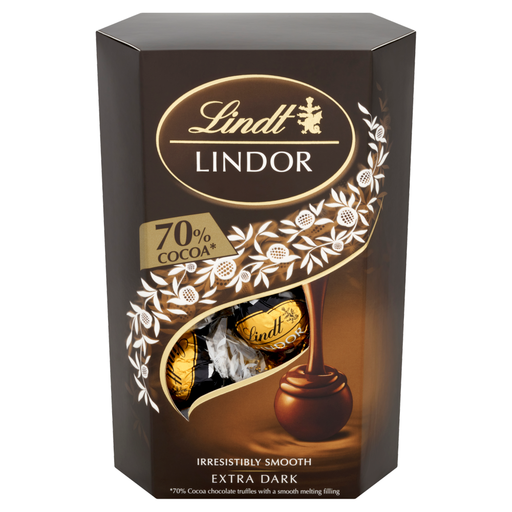 No image available
This 200g Lindt Lindor product is labelled 70% cocoa. It offers a chocolate option rather than jelly texture; check the exact pack’s ingredients and allergens for the group.
 No image available
A 100g dark-chocolate bar labelled 72% cocoa. Consider the pack weight against the number of guests, and check its ingredients and allergen wording before serving.
 No image available
This 100g bar is labelled 85% cocoa and belongs on the chocolate, not jelly-sweets, side of the choice. Check the exact pack’s allergen wording before putting it out for guests.
 No image available
A 90g dark-chocolate bar labelled 85% cocoa. Check how its weight fits the group’s sharing plans and read the exact pack for ingredients and allergens.
No: “dark” alone does not establish cocoa content. Tesco separates dark chocolate from jelly-and-chewy sweets, and HARIBO describes its Jelly Babies as fruit-flavoured. If cocoa matters, check the stated percentage and ingredients on an exact chocolate product.
It depends on the particular sweet. M&S lists vegetarian and vegan options within its jelly-sweets range, while HARIBO Jelly Babies contain gelatine. Read the exact pack’s ingredients and dietary statement before serving it.
Check the ingredients and emphasised allergen wording on the exact pack you intend to serve. GOV.UK’s food-allergen labelling guidance covers England, Northern Ireland and Wales; a category or brand description is not a substitute for the particular product’s label.
Start with the number of attendees and whether you are serving other refreshments, then compare net weights and formats. Tesco’s jelly-and-chewy range includes sharing and gift packs, but the format alone does not tell you how much your group will use.