Shoppers planning a late-night treat
Choose by how the treat will be served: a bag of chewy sweets suits an informal snack, while an assorted chocolate box offers a gift-style presentation for sharing after supper.


Choose jelly sweets for a casual, fruity chew, but check the exact recipe if anyone avoids animal-derived ingredients. A boxed chocolate selection fits a gift or shared after-dinner treat, provided its ingredients suit everyone eating it. If you would rather serve a spoonable dessert in individual portions, consider ready-to-eat jelly pots instead.
Choose by how the treat will be served: a bag of chewy sweets suits an informal snack, while an assorted chocolate box offers a gift-style presentation for sharing after supper.
Check the individual recipe, not just the word “jelly”. HARIBO UK describes its Jelly Beans as suitable for vegans, and Nestlé Confectionery UK says the same of Rowntree’s Jelly Tots; M&S lists beef gelatine in its Jelly Babies.
Check every intended recipient’s requirements before choosing a mixed box or sharing bag. Fillings, ingredients and cross-contact warnings differ between products, so the current pack matters more than the format alone.
Settle on the serving format first, then check the exact pack for dietary suitability, allergens and portion information.
Choose when: A fruity, chewy snack fits the occasion better than a boxed gift.
Keep in mind: Vegan suitability varies by recipe, and a sharing bag does not define how much each person will have.
Choose when: Presentation and a selection of chocolates matter for gifting or sharing after dinner.
Keep in mind: Check the ingredients and warnings for the whole assortment before offering it to someone with dietary restrictions.
Choose when: You want to serve an individual, spoonable dessert rather than pass around sweets.
Keep in mind: A jelly pot is a different texture and serving format from chewy sweets; check its ingredients if sweeteners matter to you.
| Priority | What to check | Your needs |
|---|---|---|
| Dietary suitability | Read the exact pack’s vegan or vegetarian statement and ingredients. Check whether it lists gelatine and, if relevant, its source. | I’m buying for someone who avoids animal-derived ingredients, so a fruit flavour alone will not settle the choice. HARIBO UK identifies its Jelly Beans as vegan-suitable, whereas M&S lists beef gelatine in its Jelly Babies. |
| Allergens | Read the current ingredients and emphasised allergens for every product in an assortment; review any cross-contact warning too. GOV.UK’s guidance explains the allergen declarations required on pre-packed food labels. | A treat for several people needs to suit each recipient. M&S’s milk, dark and white chocolate selection, for example, carries specific nut, peanut, wheat, egg and coeliac unsuitability statements. |
| Portions and sugars | Compare sugars per 100g on similar products, then look for a stated serving or individual pot size. Total sugars on a label are not an exact measure of free sugars, as the NHS explains. | For a small dessert, I would rather know what one serving contains than treat a sharing bag as one portion. Tesco lists Hartley’s Orange Flavour Jelly as four 125g pots, with 8.3g sugars per pot. |
| Serving format | Decide whether you want chewy sweets, an assorted chocolate box or a spoonable jelly. Check the pack size and how you intend to serve it. | A bag makes sense for an informal film night; a box may suit a gift or shared after-dinner selection. If everyone needs their own dessert, individual jelly pots fit that plan more directly. |
| Children’s safety | Follow the age and choking warnings on the specific sweets pack; do not assume soft sweets have no warning. | If young children will be present, I need to check whether the treat is appropriate for them. M&S states that its Jelly Babies are unsuitable for children under 36 months because of a potential choking hazard. |
Recipes differ: M&S Jelly Babies list beef gelatine, while HARIBO UK describes Jelly Beans and Nestlé Confectionery UK describes Rowntree’s Jelly Tots as vegan-suitable.
Check the ingredients and dietary statement on the exact product before buying for someone who avoids animal-derived ingredients.
A mixed box may contain ingredients that rule it out for its recipient. M&S’s milk, dark and white chocolate selection has specific allergy and coeliac unsuitability statements.
Ask about the recipient’s requirements, then read the current ingredients and warnings for the box you plan to give.
A per-100g nutrition figure describes a quantity of food, not necessarily the amount one person will eat. Nestlé Confectionery UK gives a seven-sweets reference portion for its 42g Jelly Tots bag.
Look for the pack’s serving information and decide how to divide a sharing bag before opening it. If you prefer a defined dessert portion, consider individual jelly pots.
M&S states that its Jelly Babies are unsuitable for children under 36 months because of a potential choking hazard. A Tesco jelly-sweets listing also warns that sweets can become lodged in the throat.
Follow the warning on the specific pack, including any stated minimum age.
These product examples show why ingredients and serving formats need checking individually; they do not describe every product sold under a brand.
A jelly-sweets reference where the recipe matters more than the brand name alone.
Its Jelly Tots are a bite-size fruit-sweets example for an informal treat.
Its grocery listings illustrate the difference between a sharing bag of sweets and individual jelly desserts.
Its product pages illustrate both an at-home jelly-sweets option and a gift-style chocolate box.
A ready-to-eat, spoonable jelly-dessert option rather than a chewy sweet.
These options cover fruity sweets for an informal late-night treat and boxed chocolates for gifting or sharing after supper. Check the current pack before choosing for someone with dietary restrictions or allergies.
 No image available
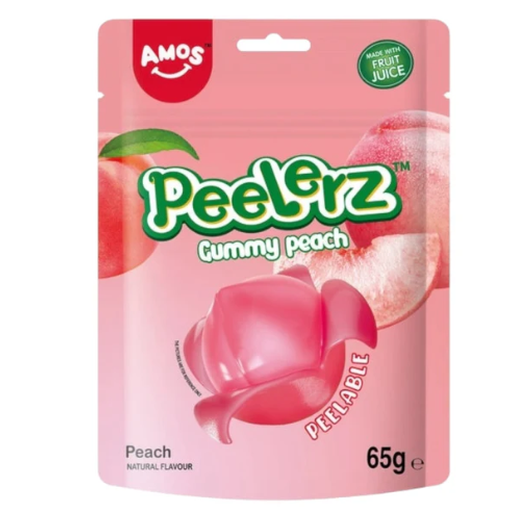
A 65g peach gummy option for an informal fruity treat. Check the current pack for dietary suitability and its warning about possible traces of gluten-containing cereals, milk, soybeans and sulphites if these affect the intended recipient.
 No image available
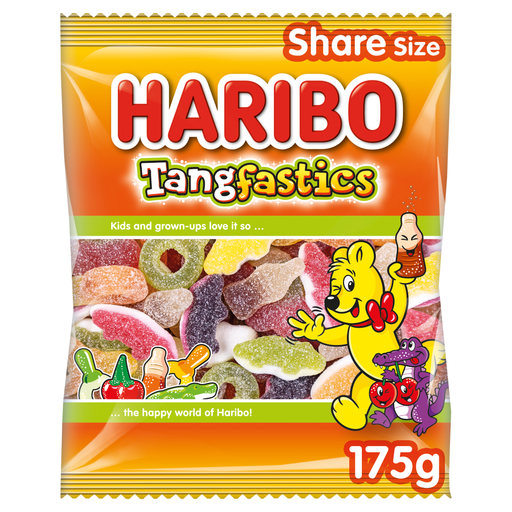
A 175g sharing bag for a fizzy fruit-and-cola sweet rather than a boxed gift. It contains gelatine, so check the current ingredients if anyone eating it avoids animal-derived ingredients.
 No image available
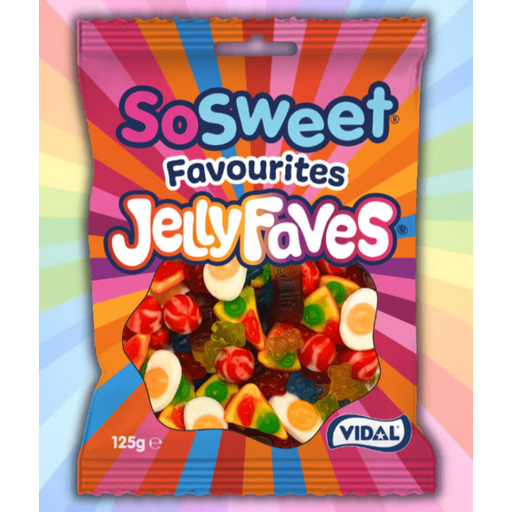
A 125g bag of assorted jelly sweets for informal sharing. It contains gelatine and may contain traces of milk. Check the current pack for its choking warning for children under 3 and its information about colours E102 and E129.
 No image available
A 24-piece chocolate box for gifting or sharing after supper, rather than a fruity sweet. Its ingredients include hazelnuts, milk, soya and wheat; check the current pack before offering it to someone who avoids any of them.
 No image available
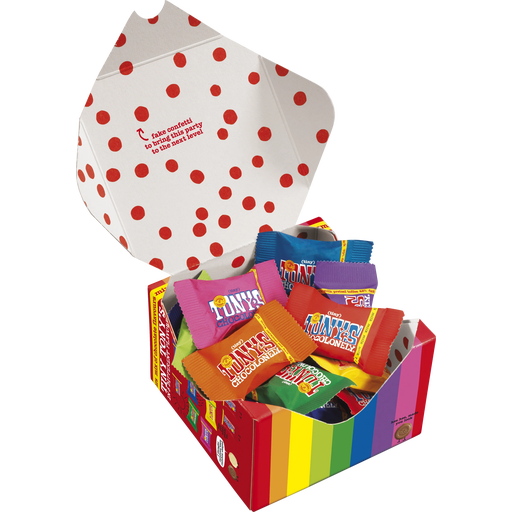
A 180g mixed chocolate gift box for a shared or presentable treat. Check the current box for its exact assortment and each recipient’s allergen requirements rather than relying on a representative ingredient list.
No. Check the exact recipe: HARIBO UK describes its Jelly Beans as vegan-suitable, and Nestlé Confectionery UK says Rowntree’s Jelly Tots contain no gelatine, while M&S Jelly Babies list beef gelatine. The word “jelly” does not establish dietary suitability.
Choose jelly sweets if you want an informal fruity chew; consider a chocolate box if presentation and an assortment to share matter more. Before gifting either, check the recipient’s dietary needs and the exact pack’s ingredients and allergen warnings.
Read the current pack’s ingredients and allergen information, including any cross-contact warning. GOV.UK’s guidance says the ingredients list on pre-packed food must emphasise any of the 14 allergens required to be declared; an old product listing is no substitute for checking the pack you buy.
Follow the age and choking warning for the specific product. M&S says its Jelly Babies are not suitable for children under 36 months because of a potential choking hazard, while a Tesco jelly-sweets listing warns that sweets can become lodged in the throat.
Not exactly. The NHS explains that the total-sugars figure on a food label can include naturally present sugars as well as other sugars. Use per-100g and per-serving information to understand the product and compare similar formats, but do not treat the figure as a calculation of free sugars.