Breakfast teams offering an optional treat
Jelly sweets can sit alongside the usual breakfast foods as a small extra. Teams need to keep information for the bag in use accessible when sweets are served loose and manage how they are handled.


For a hotel breakfast buffet, choose a sharing bag only if staff can keep the current pack’s ingredient and allergen information available after opening it, and offer the sweets as an optional extra rather than a breakfast staple. If vegan or vegetarian suitability matters, check the statement on the exact product; it does not establish allergen safety. Where young children use the buffet, check the product’s age warnings before deciding how to serve it.
Jelly sweets can sit alongside the usual breakfast foods as a small extra. Teams need to keep information for the bag in use accessible when sweets are served loose and manage how they are handled.
Choose by the exact product’s dietary statement, not by the word “jelly”. HARIBO describes its Jelly Beans as suitable for vegans, while M&S lists Fruit Jellies as vegan and vegetarian; neither statement replaces an allergen check.
Check warnings on each pack before placing sweets within children’s reach. M&S warns that its Fruit Jellies are not suitable for children under 36 months because of a potential choking hazard; that warning concerns this product, not every jelly sweet.
Start with the information and serving arrangements for the exact bag, then compare dietary statements, nutrition, warnings and pack format.
| Priority | What to check | Your needs |
|---|---|---|
| Allergen information | Keep the current pack’s product identity, ingredients and allergen information accessible after opening it. Check how containers and utensils fit the hotel’s allergen controls. | Guests and staff need information for the sweets actually being served, even when the sharing bag is no longer on display. |
| Dietary suitability | Look for a vegan or vegetarian statement on the exact product and check the current pack. Do not use that statement as an allergen-safety claim. | For guests requesting a vegan or vegetarian option, I want the product’s stated suitability rather than an assumption based on its appearance. |
| Sugars per 100g | Compare the nutrition panels on the same per-100g basis and decide how sweets will be offered as an optional extra. HARIBO lists 66g sugars per 100g for Jelly Beans; M&S lists 65.9g per 100g for Fruit Jellies. | I want guests to be able to choose a sweet treat without presenting confectionery as a standard breakfast food. The NHS advises keeping the frequency and amount of sugary foods as low as possible. |
| Age warnings | Read the warning on each selected pack and plan placement accordingly. M&S states that its Fruit Jellies are not suitable for children under 36 months because of a potential choking hazard. | Where toddlers can reach the buffet, I need to know whether the particular sweets have an age warning before putting them out for self-service. |
| Pack and serving format | Check the stated pack size, whether it is labelled as a sharing bag and how its information will remain identifiable once opened. | A bag needs to work with the buffet’s serving arrangements, not just look convenient on the shelf. |
A vegan statement describes dietary suitability; it does not identify every relevant allergen or account for handling after the bag is opened.
Check the current pack’s allergen information and use the hotel’s allergen controls when serving the sweets.
Once the bag is removed, staff need another way to identify the product and give guests accurate information. Shared handling can also create cross-contamination risks, as the Food Standards Agency’s MyHACCP guidance explains.
Keep the current product information available to staff and use the hotel’s procedures for containers and utensils. Do not mix unidentified leftovers from different bags.
Neither wording tells you the sugars value. HARIBO Jelly Beans list 66g sugars per 100g, and M&S Fruit Jellies list 65.9g per 100g.
Read the nutrition panel on a per-100g basis and present sweets as an optional extra.
M&S warns that its Fruit Jellies are not suitable for children under 36 months because of a potential choking hazard.
Check each product’s own warning and keep a product carrying that warning away from toddler self-service.
Its Jelly Beans provide an example with an explicit vegan statement from HARIBO.
Tesco lists a Rowntree’s Jelly Tots 150g sharing bag for buyers considering that pack format.
Tesco’s jelly-and-chewy-sweets listings include branded sharing bags and Tesco-labelled products.
Its Fruit Jellies illustrate a fruit-jelly option with stated vegan and vegetarian suitability.
These options include a labelled sharing bag and a 140g Jelly Tots pack to consider for the buffet. Check the current pack information and serving format for either choice.
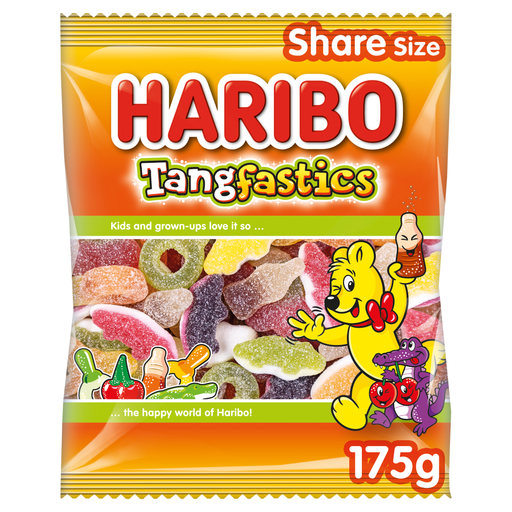 No image available
The 175g sharing-bag format is relevant if sweets will be portioned for the buffet. This product contains gelatine, so it does not meet a vegan requirement. Keep the current pack’s ingredient and allergen information accessible after opening it.
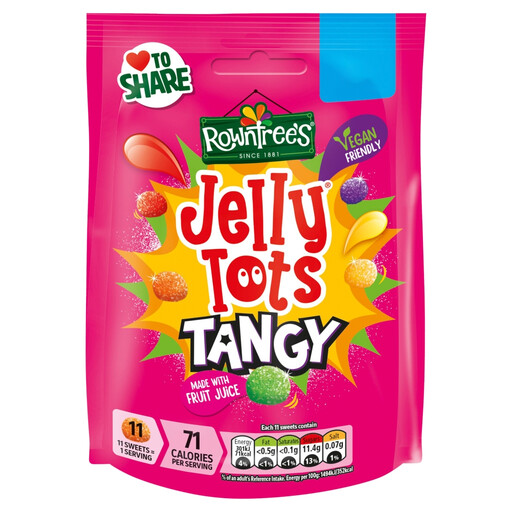 No image available
Consider whether this 140g pack works with the buffet’s serving format. If vegetarian suitability is needed, check the statement on the current pack; retain its ingredient, allergen and age-warning information for service.
Keep information for the exact bag being served available after it is opened. Food Standards Scotland states that businesses in Scotland must provide allergen information for both prepacked and non-prepacked food; hotels in England, Wales and Northern Ireland should follow the Food Standards Agency’s guidance applicable to how their sweets are presented.
No. A vegan statement concerns dietary suitability, not allergen safety. Check the current pack’s allergen information and manage handling and cross-contamination when serving the sweets.
Offer them as an optional sweet extra rather than a breakfast staple. The NHS advises keeping the frequency and amount of sugary foods as low as possible; HARIBO Jelly Beans list 66g sugars per 100g and M&S Fruit Jellies list 65.9g per 100g.
Keep the current pack or a controlled record identifying the product, its ingredients, allergen information, dietary statements and relevant date details. Staff can then refer to information for the sweets actually in the container, while following the hotel’s allergen-management procedures.
Do not assume suitability from texture. M&S warns that its Fruit Jellies are not suitable for children under 36 months because of a potential choking hazard; check the warning on each product selected for the buffet.