
24/7 Customer Support

Free returns

Same-day & Next-day Delivery

Quality Guaranteed

Unlock Your Welcome Offers: FREE Delivery | Up to 80% OFF | Free 30-day JoyPlus trial
Download the APP
Jelly sweets are easy to buy, but choosing the right pack is less straightforward than picking a colourful bag from the shelf. Texture, ingredients, portion size and dietary suitability can vary considerably between gummy sweets, fruit jelly sweets, jelly beans and Japanese-style jelly snacks.
For UK households, the most common buying mistakes are usually linked to marketing presentation rather than flavour.
A large tub may appear economical, but compare the price per 100g, not just the pack price. A 1kg tub can suit parties or regular sharing, while a smaller bag may be more practical if you want to limit opened sweets in the cupboard.
Also check whether the product contains individually wrapped pieces, loose sweets or multiple smaller bags. Packaging affects freshness, storage and how easily portions can be managed.
Many chewy sweets use glucose syrup, sugar, acids and flavourings, with only a small percentage of fruit juice or concentrate. Read the ingredients list if the presence of fruit juice matters to you.
Colour claims also need careful interpretation. “Without artificial colours” does not mean sugar-free, low-calorie or suitable for every dietary preference.
Gelatine is common in gummy sweets and may be animal-derived, so it may not suit vegetarians or vegans. Some products also contain beeswax or other glazing agents.
Check the full packaging information for allergens, may-contain warnings and age guidance. Small, firm or slippery pieces can present a choking hazard, particularly for younger children. Products containing sweeteners may also include usage advice, while certain colours carry legally required UK warnings about activity and attention in children.
Choose the texture that matches the occasion:
Texture is not simply a matter of preference. Very firm, sticky or slippery sweets may require more careful supervision.
Look for the ingredients that matter to your household:
For example, the Orihiro konjac jelly lists konjac flour, grape and apple juice and sweeteners. It is described as containing no listed major allergens, but the supplied information also warns of possible traces from shared production lines.
Nutrition panels help compare products fairly. The listed options range from 65g individual-style bags to 1kg sharing tubs. Several conventional jelly sweets provide approximately 319–375 kcal and 50–76g of sugar per 100g, although values differ by recipe.
A small pouch can work for an occasional snack, while bulk sweets may offer better convenience for party sweets, lunchboxes or repeated family sharing. However, portion control still depends on how the pack is used after opening.
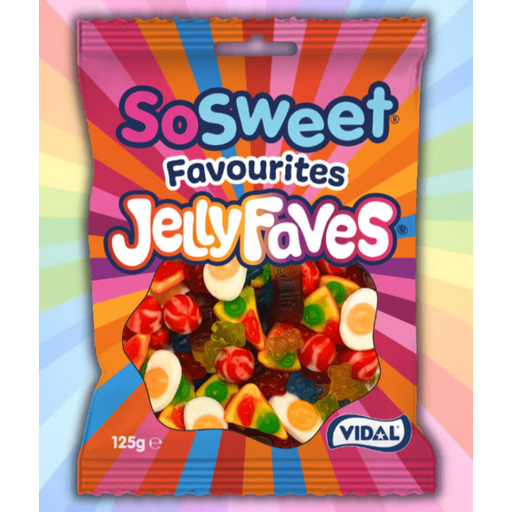
Why This Fits Their Persona: The 125g sharing bag offers a manageable starting point for households comparing fruity jelly sweets without committing to a large tub.
The pack size makes it easier to compare cost per 100g and reduce the risk of unused sweets going stale. Ingredient and allergen information is provided for checking before purchase.
Assorted fun shapes, soft chewy texture and 125g sharing format. Made in Spain according to the supplied product details.
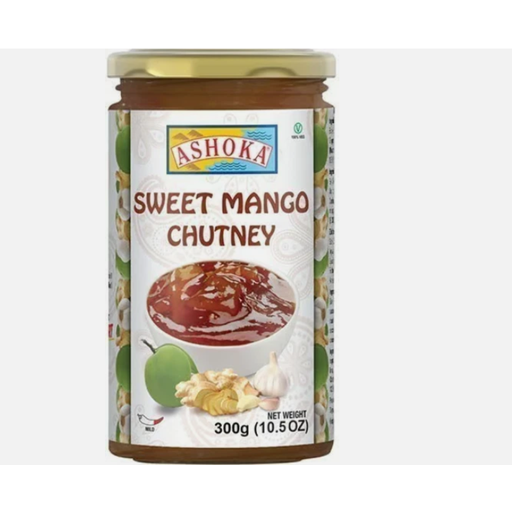
Why This Fits Their Persona: This Japanese-style jelly snack is suited to shoppers seeking a smooth, elastic konjac texture and a grape-and-apple fruit profile.
The supplied nutrition information states 65 kcal per 100g and 0g fat, while the pouch guidance says to chew thoroughly and avoid consuming the entire pouch in one mouthful.
Six-piece, 120g format; made with konjac flour; ready to eat. Not suitable for children under four according to the supplied safety information.
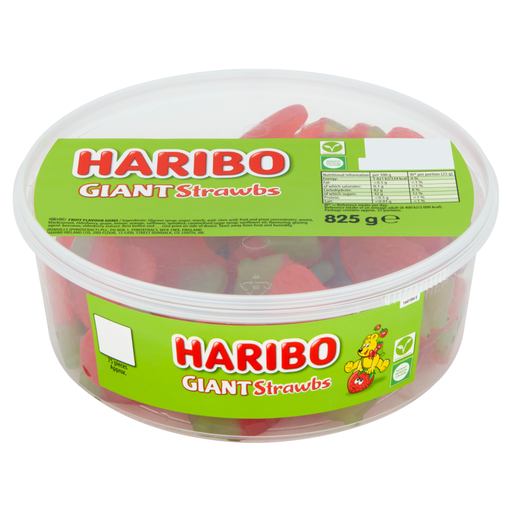
Why This Fits Their Persona: The large tub is designed for parties, workplace sharing, film nights and households that regularly serve chewy sweets.
The 825g net quantity is clearly stated, helping shoppers assess value for bulk sweets rather than relying on the tub’s appearance. Resealing the tub after use helps preserve texture.
Strawberry flavour, approximately 75 individually wrapped pieces and a vegetarian-suitable recipe according to the supplied product details.
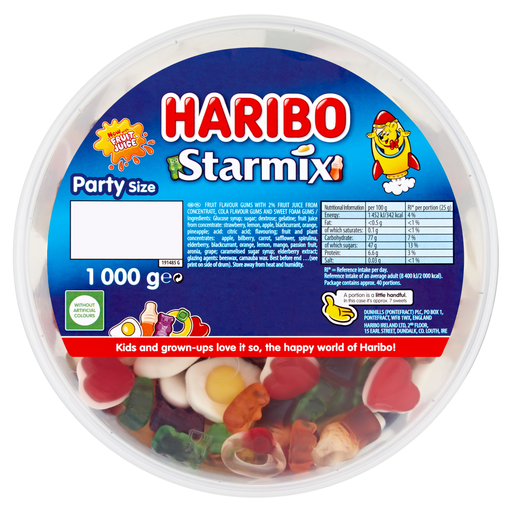
Why This Fits Their Persona: A mixed tub suits families and party hosts who want several shapes and flavours, including fruit, cola and foam-style pieces.
The listed pack information gives an approximate portion count and 25g reference portion, making it easier to plan party sweets and sharing quantities.
1kg party-size tub, fruit juice from concentrate and no artificial colours according to the supplied description. Contains gelatine.
We have compiled a complete, real-time list of products that fully satisfy these strict selection criteria and UK safety regulations.
Suitability depends on the specific shape, texture, ingredients and child’s ability to chew and swallow. Follow the age guidance on the packaging, seat children while eating and supervise younger children. Do not treat a soft texture as a guarantee that a product is free from choking risk.
Most jelly sweets should be kept in a cool, dry place away from direct sunlight and heat. Reseal opened bags or tubs to help reduce moisture loss and texture changes. Do not freeze products unless the packaging specifically recommends it.
Not all jelly sweets are vegetarian. Gelatine is used in many gummy sweets, while some products use starch, pectin or other setting agents. Check the ingredients and any vegetarian or vegan statement on the product packaging before buying.