Jelly sweets can be one source of carbohydrate on a longer ride, but choose a pack by the amount you will actually carry and count it alongside drinks and other food. A multi-pack of sharing bags is not the same as ready-measured ride portions: check the carbohydrate label, ingredients and pack size, and plan fluids separately.
Who needs to consider pack size?
Riders planning food for longer rides
British Cycling advises planning carbohydrate intake alongside hydration for prolonged riding. If sweets form part of that plan, the useful figure is the carbohydrate in the portion carried, not just the amount printed per 100g.
Cyclists avoiding gelatine
Dietary labels matter more than the word ‘jelly’. HARIBO describes its Jelly Beans as suitable for vegans, while its Jelly Babies Double Trouble contain gelatine. Check the current pack, including its allergen information.
Buyers dividing sweets between rides or lunchboxes
Separate bags may make it easier to allocate a pack to an occasion, but a sharing bag is not necessarily a measured serving. Check the weight and nutrition information for the amount that will actually be eaten.
What should you check before buying?
Start with the portion you intend to carry, then check whether the pack format and ingredients work for its intended use.
| Priority | What to check | Your needs |
|---|
| Carbohydrate per portion |
Read the carbohydrate figure per 100g and the weight you will eat. Count carbohydrate from drinks, gels and other food in the same ride plan. |
I want to know how much carbohydrate is in the sweets I carry, rather than treating a handful as a fixed serving. |
| Pack format |
Check the number of bags, each bag’s weight and whether a bag is a sharing size or an individual portion. |
Separate packs would help me allocate sweets across rides or lunchboxes, but I may still need to measure what goes into each ride portion. |
| Ingredients and allergens |
Read the current vegan declaration, ingredient list and allergen warnings on the exact product. Do not infer suitability from its shape or name. |
If I avoid gelatine or an allergen, I need the particular pack to meet that requirement—not just the wider brand or sweet category. |
| Food and fluids |
Plan what you will drink separately from the sweets. British Cycling discusses hydration alongside carbohydrate intake for prolonged rides. |
I can use sweets as one part of my ride food without relying on them to cover what I need to drink. |
| Everyday use |
Decide when a bulk pack will be opened and how portions will be set aside. NHS guidance identifies sweets as a source of free sugars and advises limiting how often sugary foods are eaten. |
For a lunchbox or an occasional snack, I would rather set out a portion than repeatedly eat from a large bag. |
Common buying mistakes
-
Equating a sharing bag with a ride portion
A per-100g nutrition figure does not tell you how much carbohydrate is in the amount you eat. HARIBO lists 93g carbohydrate per 100g for Jelly Beans and 82g per 100g for Jelly Babies Double Trouble; the portion weight still matters.
Use a stated serving weight or measure your own portion, then include its carbohydrate in your total ride-food plan.
-
Expecting sweets to cover hydration
Jelly sweets can contribute carbohydrate, but British Cycling treats hydration as a separate part of planning for prolonged riding.
Plan drinks separately and try your intended food-and-drink combination on a training ride before relying on it for an event.
-
Assuming every jelly sweet has the same dietary status
HARIBO Jelly Babies Double Trouble contain gelatine, whereas HARIBO labels its Jelly Beans suitable for vegans. A vegan label does not settle allergen suitability: M&S says its vegan Percy Pig sweets are not suitable for people with a milk allergy.
Check the ingredients, dietary declaration and allergen warnings on the exact pack you buy.
-
Leaving a bulk bag open for frequent snacking
NHS guidance identifies sweets as a source of free sugars and advises keeping the frequency and amount of sugary foods and drinks low.
Set aside the intended portion for a ride or snack instead of using the open bag as the portion.
Brand and retailer references
These product-specific examples show why nutrition and dietary details should be checked on the exact sweet; they are not a comparison of current multi-packs.
HARIBO
HARIBO’s UK product information distinguishes its Jelly Beans from Jelly Babies Double Trouble on both carbohydrate content and ingredients.
- HARIBO labels Jelly Beans suitable for vegans and lists 93g carbohydrate per 100g.
- Jelly Babies Double Trouble list 82g carbohydrate per 100g and contain gelatine; they are not a vegan substitute.
Rowntree's
Tesco Groceries lists a Rowntree's Jelly Tots 150g sharing bag in its jelly-and-chewy-sweets category.
- The listing identifies the product as a 150g sharing bag.
- A sharing-bag listing alone does not establish the carbohydrate in a planned ride portion.
M&S
M&S provides product-specific dietary and nutrition information for its Fruit Jellies and Percy Pig sweets.
- M&S labels Fruit Jellies vegan and vegetarian and lists 86.9g carbohydrate per 100g.
- M&S warns that Fruit Jellies are not suitable for children under 36 months because of a choking hazard. Its vegan Percy Pig sweets carry a milk-allergy warning.
Tesco
Tesco Groceries’ jelly-and-chewy-sweets category includes sharing-bag and larger-pack listings.
- Its category listing identifies pack formats, including the Rowntree's Jelly Tots 150g sharing bag.
- Use the individual product and current pack label to check ingredients, nutrition and portion size before planning ride food.
Joybuy jelly-sweet packs
These options include multi-bag sharing packs and five-pack fruit sweets that could be divided between rides or lunchboxes. Check the amount in each portion before counting any of them as ride carbohydrate.
 No image available
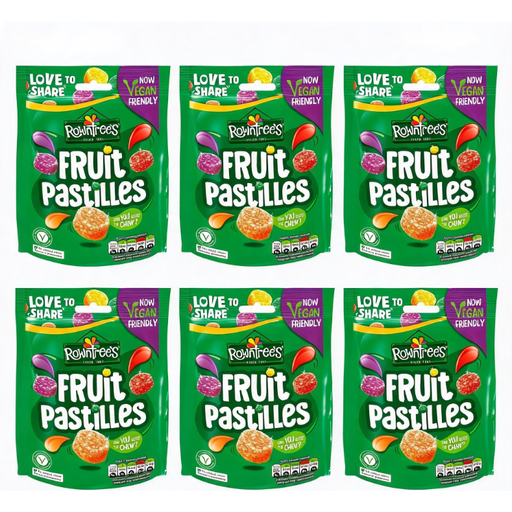
Rowntree's Fruit Pastilles Vegan, 143g × 6 bags
Six bags can be allocated across planned uses, but each 143g bag is a sharing bag rather than a measured ride portion. Measure the amount you carry and check its carbohydrate against the current pack label. The listing warns of a choking risk for children under four.
View on Joybuy
 No image available
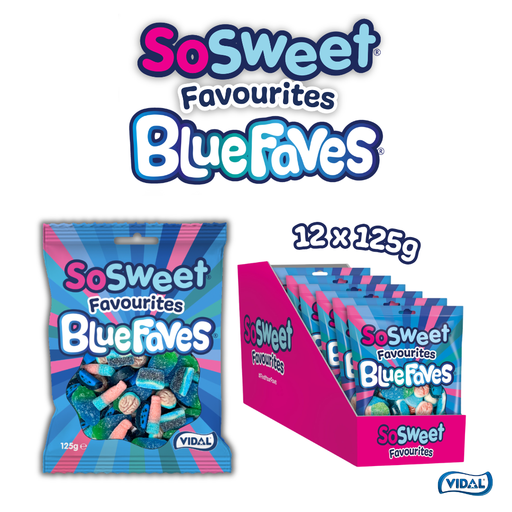
SoSweet BlueFaves, 12 × 125g bags
The twelve separate bags can be allocated across occasions, though each 125g bag still needs portioning for a ride. Check the current pack for carbohydrate in the amount carried. The listed ingredients include wheat, and the listing warns of possible traces of milk, soya and mustard, as well as an E129 warning and choking risks for young children.
View on Joybuy
 No image available
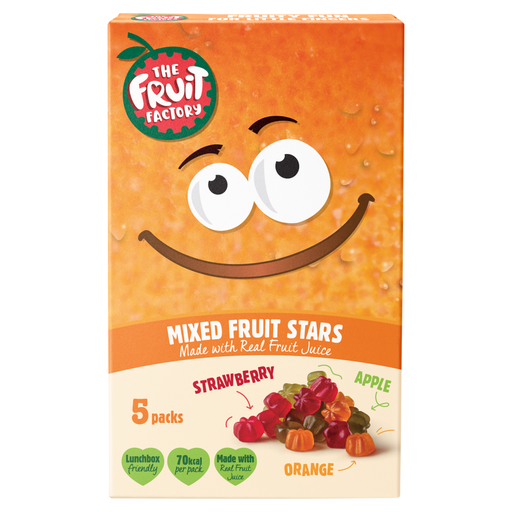
The Fruit Factory Mixed Fruit Stars, 5 packs
Five separate packs offer a way to allocate sweets between lunchboxes or rides. Check each pack’s weight and carbohydrate label before counting one as a ride portion. The listing warns of a choking hazard for children under 36 months and advises supervision.
View on Joybuy
No image available
The Fruit Factory Mixed Fruit Twists, 5 packs
The five-pack format lets you set aside separate packs for planned use; check each pack’s weight and carbohydrate label for ride planning. The listed ingredients include wheat and cereals containing gluten. The listing also warns of a choking hazard for children under 36 months and advises supervision.
View on Joybuy
Questions about jelly sweets for cycling
Can jelly sweets replace cycling drinks?
No. Sweets can contribute carbohydrate, but British Cycling treats hydration as a separate part of planning for prolonged rides. Count carbohydrate from sweets alongside other food and drinks, and plan what you will drink separately.
How do I calculate the carbohydrate in a ride portion?
Use the exact product label: multiply its carbohydrate in grams per 100g by the weight of your portion in grams, then divide by 100. Add that amount to the carbohydrate you plan to take from other ride food and drinks; a sharing bag’s total weight is not automatically your serving size.
Are all jelly sweets vegan or suitable for people with allergies?
No. HARIBO describes its Jelly Beans as suitable for vegans, while its Jelly Babies Double Trouble contain gelatine. M&S labels Percy Pig vegan but warns that it is not suitable for people with a milk allergy. Check the current pack’s ingredients and allergen information for the exact product.
Does a multi-pack mean each bag is a ride portion?
Not necessarily. A multi-pack can contain sharing bags as well as smaller separate packs. Check each bag’s weight and the carbohydrate declaration, then decide how much to carry. For children, also read product-specific age and choking warnings; M&S warns that its Fruit Jellies are not suitable for children under 36 months.


