Riders planning longer sessions
For a ride lasting over 90 minutes, British Cycling’s carbohydrate guidance gives you a reason to check the nutrition panel and plan portions instead of relying on an arbitrary handful.


Choose a jelly-sweet bag for cycling when you have a reason to plan additional carbohydrate and can measure a portion, rather than eating directly from a sharing bag. British Cycling gives 30–60g of carbohydrate per hour as guidance for rides over 90 minutes; the product’s serving information, ingredients and your fluid plan all matter to the choice. Rowntree's Jelly Tots 150g has a stated 11-sweet serving, while other bags may be more practical to portion before setting off.
A sharing bag is most useful when it fits a planned ride and can be divided into amounts you can keep track of.
For a ride lasting over 90 minutes, British Cycling’s carbohydrate guidance gives you a reason to check the nutrition panel and plan portions instead of relying on an arbitrary handful.
Similar-looking sweets can use different ingredients. A vegan label on one bag does not establish the suitability of another flavour or product line.
Consider the session before packing a sharing bag. British Cycling’s cited carbohydrate-per-hour guidance applies to rides over 90 minutes, not automatically to every trip by bike.
Start with the ride, then work out a portion from the exact bag’s label. Pack format and ingredients can change which option is practical to carry.
| Priority | What to check | Your needs |
|---|---|---|
| Ride and carbohydrate plan | Check the ride duration and the bag’s carbohydrate figure per serving or per 100g. British Cycling gives 30–60g per hour as guidance for rides over 90 minutes; a listed serving is not necessarily an hour’s portion. | For a longer ride, I want to know how the sweets fit into my planned carbohydrate intake, rather than taking a bag simply because it is easy to carry. |
| Measurable portions | Look for a serving stated by sweet count, or divide a measured amount before leaving. ASDA Groceries lists 17.1g carbohydrate per 11 sweets for Rowntree's Jelly Tots 150g; that figure does not apply to Jelly Tots Tangy 140g. | A portion I can count or pack separately would be easier to keep track of than repeated handfuls from a sharing bag. |
| Ingredients | Read the current dietary statement and ingredients on the exact pack. ASDA Groceries lists Rowntree's Jelly Tots 150g as vegan; Marks & Spencer lists its Fruit Jellies and Jelly Beans as vegan, while HARIBO UK lists gelatine in Starmix. | If I avoid gelatine, I need to check the particular recipe rather than assume all jelly sweets from a familiar brand are suitable. |
| Bag format and fluids | Decide whether one sharing bag needs dividing in advance or whether separate mini bags suit your packing plan. Check the carbohydrate amount in each portion; sweets do not take the place of fluids. | I want food I can organise before the ride and a separate plan for what I will drink. |
A bag’s total carbohydrate and its labelled serving answer different questions. ASDA Groceries gives 17.1g carbohydrate for 11 Rowntree's Jelly Tots 150g, whereas British Cycling’s guidance for rides over 90 minutes is expressed per hour.
Calculate the amount you intend to take from the exact pack’s nutrition panel and divide it before riding. Do not treat one listed serving as an hourly target.
HARIBO UK lists gelatine in Starmix, and Marks & Spencer lists beef gelatine in its Jelly Babies. Other named products are labelled vegan, so the sweet type alone cannot settle the question.
Check the dietary statement and ingredients on the current pack, including when switching flavours or variants.
Carbohydrate from sweets does not address what you will drink. The amount of food you plan also depends on the ride rather than the size of the bag.
Plan fluids separately and try your chosen food during training before relying on it for an event.
Jelly sweets contain sugars. NHS guidance on free sugars applies beyond the time spent riding, so a planned on-bike portion is different from continuing to eat from the bag afterwards.
Put aside the remainder when the planned ride portion is finished rather than treating the open bag as part of the fuelling plan.
These examples describe particular UK product lines, not every recipe or pack sold under each name.
The Jelly Tots Sharing Bag 150g offers a count-based serving for riders who prefer to divide sweets by number.
Starmix is a mixed-sweet option when its ingredient list fits the buyer’s requirements.
Marks & Spencer’s named jelly-sweet products illustrate why dietary suitability needs a product-by-product check.
These options include four jelly-sweet sharing bags and a Starmix multipack of separate mini bags. Choose by the exact recipe and pack format, then use the current nutrition panel to plan any ride portion.
 No image available
A sharing bag to consider if you want a mixed assortment and gelatine is acceptable. Check its nutrition panel and divide the amount you plan to carry; do not assume a carbohydrate amount for each sweet.
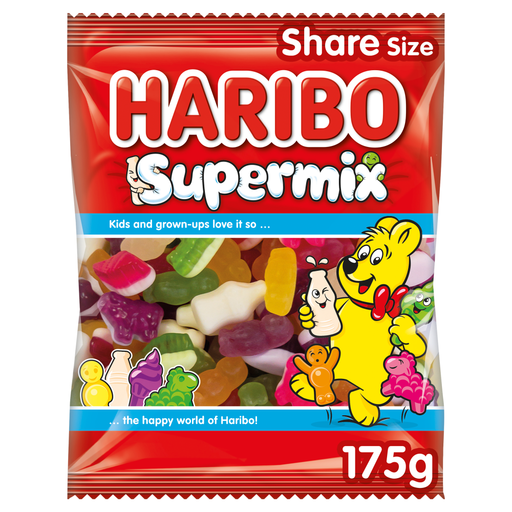 No image available
A 175g sharing-bag alternative if you prefer the Supermix assortment. Its product information identifies gelatine, so it does not suit a gelatine-free choice; check the pack to calculate a portion for your ride.
 No image available
This 175g sharing bag offers a fizzy fruit-and-cola assortment for riders who want that flavour and can eat gelatine. Work from this variant’s current nutrition panel when packing a measured amount.
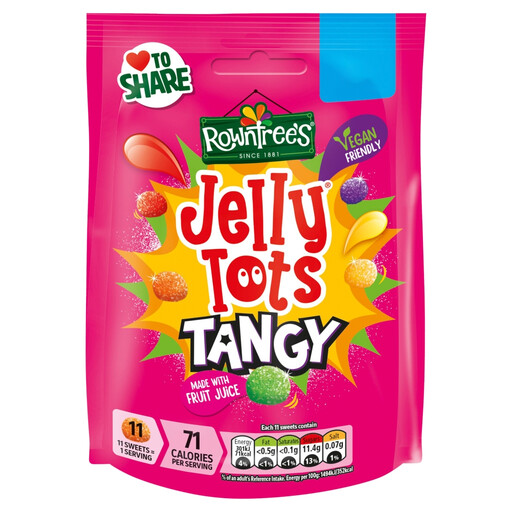 No image available
This tangy 140g variant is a separate choice from Jelly Tots Sharing Bag 150g. Its product information describes it as suitable for vegetarians; check this pack separately for vegan suitability and portion information.
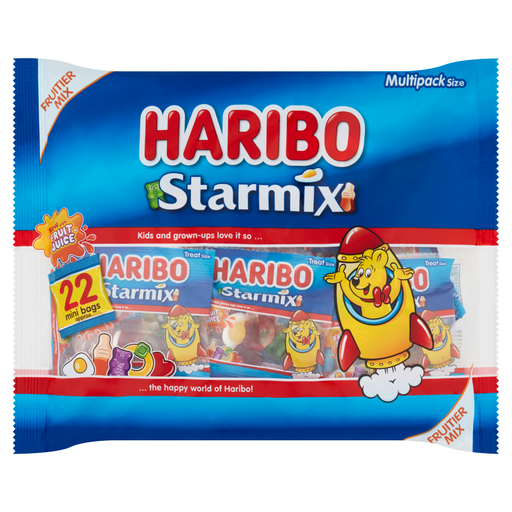 No image available
The 22 separate mini bags offer a different packing format from one sharing bag. Check the carbohydrate amount for a mini bag before treating one as a planned feed; the listed ingredients include gelatine.
No. British Cycling’s cited guidance gives a carbohydrate-per-hour range for rides over 90 minutes, so first consider your ride’s duration and the food you already plan to take. A sharing bag is an option to portion, not a requirement for every session.
Use the serving information on the exact pack and divide the amount you plan to carry. ASDA Groceries lists 17.1g carbohydrate per 11 sweets for Rowntree's Jelly Tots Sharing Bag 150g; a different variant or an unmeasured handful needs its own calculation.
ASDA Groceries lists Rowntree's Jelly Tots Sharing Bag 150g as suitable for vegans, and Marks & Spencer labels its Fruit Jellies 200g and Jelly Beans 180g vegan. HARIBO UK lists gelatine in Starmix, while M&S Jelly Babies list beef gelatine. Check the current pack, particularly when choosing another variant.
No. Jelly sweets can be counted as part of a carbohydrate plan, but they do not supply a complete fluid plan. Decide what you will drink separately when preparing for the ride.
Read the ingredients and allergen information on the current pack of the exact product. The Food Standards Agency states that the 14 specified allergens must be emphasised in the ingredients list of pre-packed food or drink; an older online description is not a substitute for checking the pack.