Parents packing an occasional treat
Separate bags can make it easier to allocate sweets for a day out or packed lunch. Check when they will be eaten, as well as the recipient’s age and the exact pack label.


Choose a jelly-sweets multipack when you need separate, unopened bags for a planned outing; a sharing bag also works if an adult will portion it. For a child’s routine between-meal snack, consider a non-sweet option instead: Leeds Teaching Hospitals NHS Trust advises keeping sugary snacks to mealtimes because the frequency of sugary foods and drinks is linked to dental decay. Whichever format you choose, check the current pack for ingredients, age warnings, allergens and storage instructions.
Separate bags can make it easier to allocate sweets for a day out or packed lunch. Check when they will be eaten, as well as the recipient’s age and the exact pack label.
Mini bags keep portions separate until needed. A larger sharing bag calls for someone to decide and distribute portions.
Check the particular product’s ingredients and dietary statement. Fruit flavour and a familiar brand name do not establish whether a jelly sweet contains gelatine.
Choose when: several people need separate, unopened bags for a planned outing.
Bear in mind: separate packaging does not change the need to consider when the sweets will be eaten.
Choose when: an adult can portion sweets at a meal or gathering and separate bags are unnecessary.
Bear in mind: check the exact product for dietary suitability; Nestlé Confectionery states that Rowntree’s Randoms contains pork gelatine.
Choose when: you are packing a routine between-meal snack for a child.
Bear in mind: it serves a different purpose from a planned confectionery treat. Leeds Teaching Hospitals NHS Trust suggests options including fruit, vegetables, sandwiches and plain crackers.
| Priority | What to check | Your needs |
|---|---|---|
| Pack format | Confirm the number of inner bags and total weight on the current pack. Check the weight of each bag if portion size matters; do not assume every multipack contains mini bags. | I want unopened bags to hand out across a day trip, rather than opening one sharing bag for everyone. |
| Sweet-snack timing | Consider whether this is a planned treat with a meal or a routine between-meal snack. Leeds Teaching Hospitals NHS Trust advises keeping sweet snacks to mealtimes because dental decay is linked to how frequently sugary foods and drinks are consumed. | For an everyday lunchbox snack, I would rather pack something that is not a sweet. Separate bags are useful only when I have planned to offer the sweets. |
| Dietary suitability | Read the exact product’s ingredients and vegetarian or vegan statement. Nestlé Confectionery identifies pork gelatine in Rowntree’s Randoms, while M&S labels its Fruit Jellies vegan and lists pectin. | Someone sharing these sweets avoids animal gelatine, so a fruit-flavoured name alone is not enough for me to choose the pack. |
| Age and allergens | Check the current age warning, ingredients, highlighted allergens and precautionary statements. M&S warns that its Jelly Babies and Fruit Jellies are unsuitable for children under 36 months because of a potential choking hazard. | I am buying for a young child or someone with an allergy and need the warning and ingredient information for this particular pack. |
| Storage | Read the product’s storage instructions before taking it on a warm journey. The Joybuy listing for Haribo Starmix 22 Mini Bags says to store it away from heat and humidity. | The sweets will travel with us, so I need somewhere suitable to keep them until they are handed out. |
Mini bags help with allocation, but packaging does not address how often sweets are eaten. Leeds Teaching Hospitals NHS Trust links dental decay to the frequency of sugary foods and drinks.
Plan jelly sweets as an occasional treat with a meal; for routine between-meal snacks, consider the fruit, vegetables, sandwiches or plain crackers suggested by the NHS trust.
Ingredients vary between products. Nestlé Confectionery states that Rowntree’s Randoms contains pork gelatine, while M&S lists pectin in its vegan-labelled Fruit Jellies.
Read the ingredients and dietary statement on the exact pack, particularly when changing products or formats.
M&S warns that its Jelly Babies and Fruit Jellies are unsuitable for children under 36 months because of a potential choking hazard. An old listing may not reflect the pack you receive.
Check the current pack’s age warning, ingredients and allergen information before serving it to a young child or someone with an allergy.
These examples show why pack format and ingredients need checking at product level; a brand name alone does not settle either question.
Tesco lists a Haribo Starmix 352 g multipack, and the Joybuy Starmix listing describes 22 mini bags.
The range includes products with different ingredients and pack formats, so choose by the particular product rather than the brand.
Tesco lists jelly sweets in several formats, including the Haribo Starmix 352 g multipack and Rowntree’s sharing bags.
M&S provides a clear product-level contrast: its Fruit Jellies are labelled vegan and list pectin, while its Jelly Babies list beef gelatine.
These options include individually packed sweets and packs of sharing bags. Match the number and size of bags to your outing, then check the current label for each recipient.
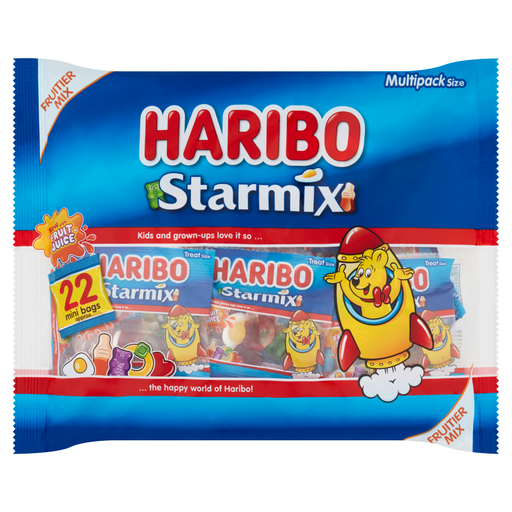 No image available
Twenty-two separate mini bags in a 352 g pack can be allocated across a planned outing. Check the current pack for each bag’s weight, age warning and dietary information; the listing says to store it away from heat and humidity.
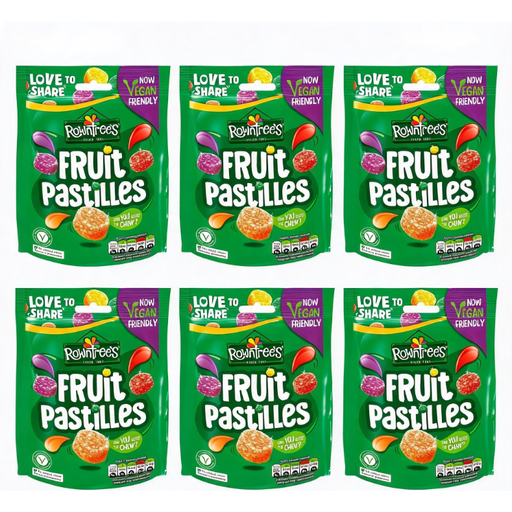 No image available
Six 143 g bags suit a household dividing sweets between occasions, but these are sharing bags rather than individual mini portions. The listing warns of a choking risk for children under 4; check the current pack before serving.
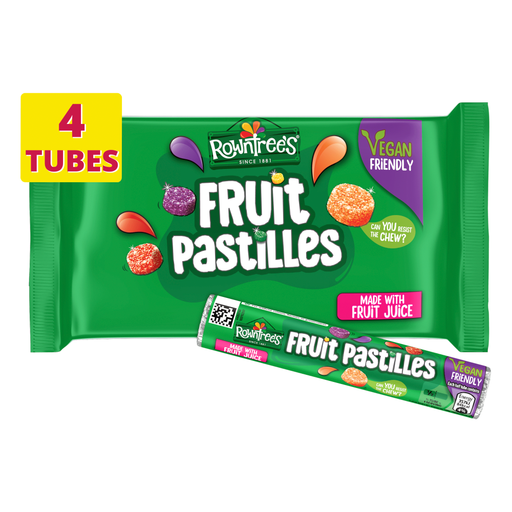 No image available
Four separate 41 g pouches offer a different allocation format from mini bags. Check the current ingredients and allergen information if sharing with someone who avoids milk or cereals containing gluten; the listing also warns of a choking risk for children under 4.
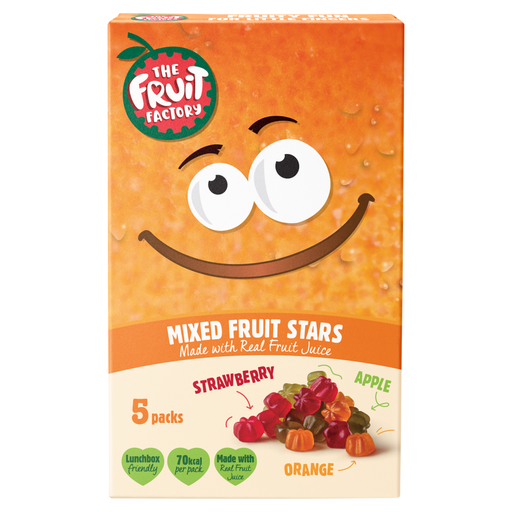 No image available
Five separate packs provide portions for a planned outing. The product information describes them as suitable for vegetarians and warns of a choking hazard for children under 36 months; check the current pack’s allergen statement before sharing.
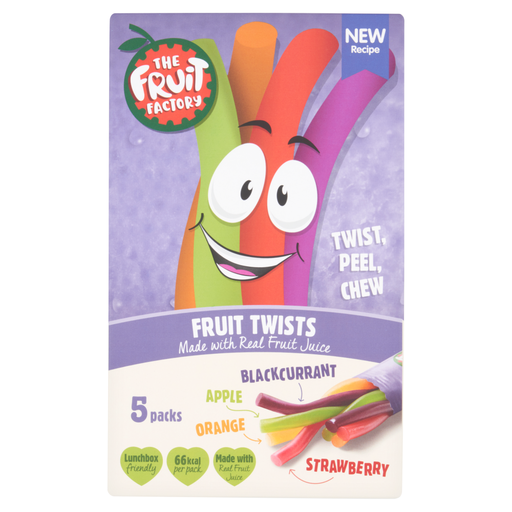 No image available
Five separate packs can be divided between recipients or outings. The product information identifies wheat starch and cereals containing gluten and warns of a choking hazard for children under 36 months. Check the current label for each pack’s weight and full allergen information.
Separate bags do not make jelly sweets a routine between-meal snack. Leeds Teaching Hospitals NHS Trust advises keeping sweet snacks to mealtimes because dental decay is linked to the frequency of sugary foods and drinks. For regular snacks, it suggests options including fruit, vegetables, sandwiches and plain crackers.
A multipack is useful when people need separate, unopened bags for an outing; a sharing bag works when someone can portion it deliberately. Check the actual format: the Joybuy Haribo Starmix 352 g listing describes 22 mini bags, whereas other multi-bag products may contain larger sharing bags.
Read the exact product’s ingredients and dietary statement rather than relying on its fruit flavour or brand. Nestlé Confectionery identifies its core Rowntree’s Jelly Tots, Fruit Pastilles, Fruit Gums and Pick & Mix ranges as suitable for vegetarians, but states that Randoms contains pork gelatine. M&S labels its Fruit Jellies vegan and lists pectin, while its Jelly Babies list beef gelatine.
Check that product’s current age warning before serving it. M&S says its Jelly Babies and Fruit Jellies are unsuitable for children under 36 months because of a potential choking hazard; do not assume the same wording applies to every jelly sweet.
Read the ingredients, highlighted allergens and any precautionary statement on the current pack of the exact product. GOV.UK states that food businesses must tell consumers about 14 specified allergens when they are ingredients in food or drink.