Parents packing an occasional lunchbox treat
Separate bags make it easier to pack a planned portion. Check the exact product’s sugars, ingredients and age warning, as well as the school’s packed-lunch policy.


Choose a jelly-sweets multi-pack for an occasional, pre-portioned treat, not simply because mini bags are convenient for daily elevenses. A sharing pouch can serve the same occasional purpose if you divide it at home. For a regular mid-morning snack, consider a non-sweet option: Lancashire and South Cumbria NHS Foundation Trust advises having foods containing sugars as part of a meal rather than between meals.
Separate bags make it easier to pack a planned portion. Check the exact product’s sugars, ingredients and age warning, as well as the school’s packed-lunch policy.
Check the recipe rather than the jelly-sweets category name. Nestlé Confectionery states that its core Rowntree’s Jelly Tots range is vegan, while the ingredient lists for Haribo’s Duo Pouch and M&S Jelly Babies include gelatine.
Mini bags provide separate take-along packs. A sharing pouch calls for dividing out the intended amount before it goes into a lunchbox or work bag.
Decide whether this is an occasional treat or a regular mid-morning snack, then compare the actual pack format and label. Figures stated per number of sweets, per 100g and per bag describe different amounts.
| Priority | What to check | Your needs |
|---|---|---|
| Sugars | Read sugars for the stated serving and establish how much of the pack will be eaten. Nestlé Confectionery lists 7.6g per seven sweets for its 42g Jelly Tots bag and 11.0g per 11 sweets for its 150g sharing pouch; neither figure describes a whole bag. | I’m planning an occasional sweet, rather than treating a small bag as a routine elevenses snack. For regular mid-morning eating, I’d consider a non-sweet option. |
| Pack format | Confirm the number of separately sealed bags and the weight of each. A sharing pouch needs dividing at home if you want a defined take-along portion. | One ready-packed portion would be useful for a lunchbox; if we will share at home, I can divide a larger bag instead. |
| Ingredients | Check the exact variant’s ingredient list and explicit vegan or vegetarian statement. A dietary claim for one product does not establish the recipe of another. | The recipient avoids gelatine, so I need to check this pack rather than rely on the brand or the shape of the sweets. |
| Age warning | Read the warning on the product being bought. M&S labels its Jelly Beans and Jelly Babies as unsuitable for children under 36 months because of a potential choking hazard. | If I’m buying for a young child, the warning on the exact pack matters more than whether the sweets come in mini bags. |
| School policy | Ask the school what its packed-lunch policy permits. Department for Education guidance on school food in England concerns food and drink provided in state-funded schools, not a decision about an individual packed lunch. | Before packing sweets for school, I need to know the school’s own requirements. |
A separate bag defines what you take, but it is still confectionery. Lancashire and South Cumbria NHS Foundation Trust advises having foods containing sugars with a meal rather than as snacks between meals.
Keep mini bags for planned occasional treats; consider a non-sweet option for regular elevenses.
Recipes vary by product. Nestlé Confectionery describes its core Jelly Tots range as vegan, whereas Haribo’s Duo Pouch and M&S Jelly Babies list gelatine.
Read the current ingredients and dietary statement when changing product, flavour or pack format.
A sharing pouch does not provide the separate portion offered by a mini-bag multi-pack.
Choose sealed mini bags when that format matters, or divide a sharing pouch at home and retain its label for ingredient and warning checks.
Pack formats and recipes need checking against the product you will receive. M&S advises that its food ingredients, nutrition and allergen information can change.
Confirm the current pack count and read the physical label before serving, particularly when dietary suitability or a child’s age matters.
These examples illustrate why the exact product and format matter; a brand name alone does not establish ingredients or portion size.
Nestlé Confectionery lists Jelly Tots in a 42g individual bag and a 150g sharing pouch, and describes its core Jelly Tots range as vegan.
Haribo’s range includes Jelly Beans described by the brand as vegan and a Haribo-and-MAOAM Duo Pouch containing mini bags.
M&S lists vegan-friendly Jelly Beans alongside other jelly sweets with different ingredients.
Tesco’s jelly-and-chewy-sweets category has listed formats including a Rowntree’s Jelly Tots 150g sharing bag and larger Haribo packs.
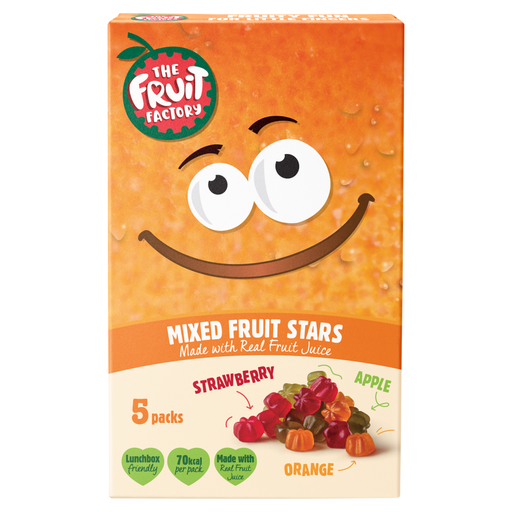
These options include separate sweet packs for an occasional take-along treat, sharing bags to portion at home, and a five-pack of fruit gums. Check the current label for the amount in each pack, ingredients and age warnings before choosing for a lunchbox.
 No image available
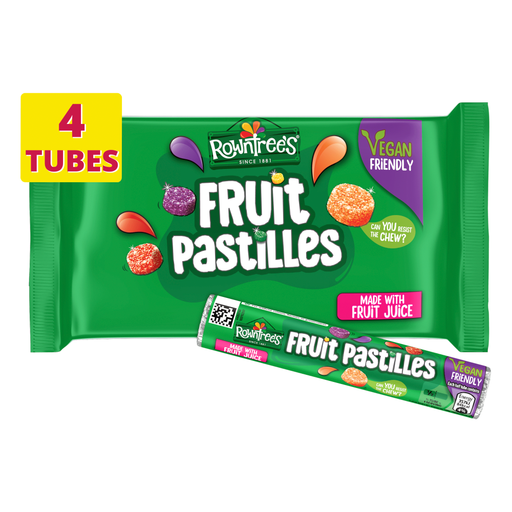
Four separate pouches suit a planned take-along treat. The product information lists milk in the ingredients and warns that small sweets could be a choking risk for children under four; check the current label. A sugars figure stated per six sweets should not be read as the figure for a whole 41g pouch.
 No image available
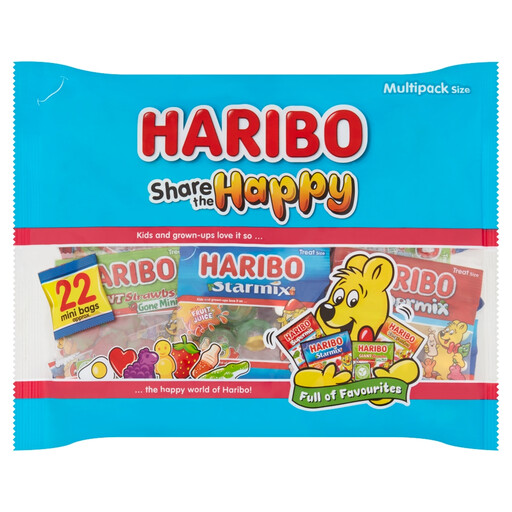
The 22 mini bags provide separate packs for occasional treats. The product information identifies bovine gelatine in the assortment, so check the current ingredients if dietary suitability matters. For a child’s portion, check the weight and sugars of a mini bag and any age warning on the pack.
 No image available
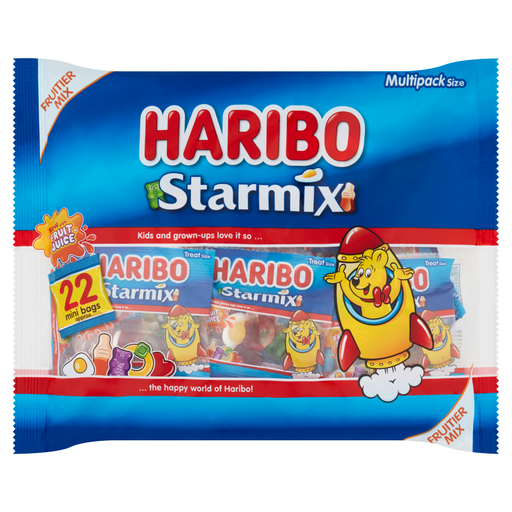
This 22-bag format provides separate take-along packs. The product information lists gelatine; read the current label rather than assuming vegetarian suitability. Check the amount and sugars in an individual bag, plus any age warning, when buying for a child.
 No image available
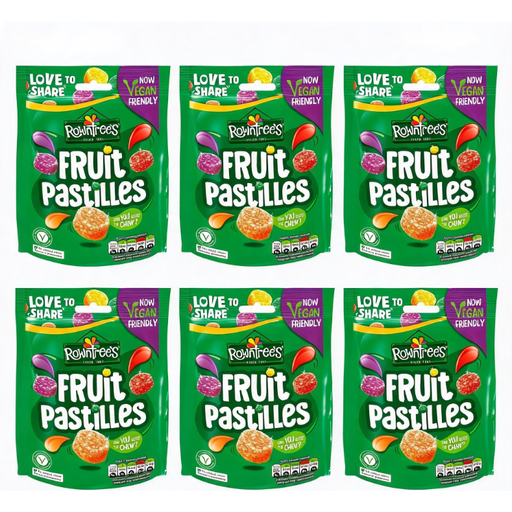
These are six sharing-sized bags, not six mini lunchbox portions; divide out the intended amount at home. Check the current dietary statement and sugars for the portion you will serve. The product information warns of a choking risk from small sweets for children under four.
 No image available
These separately packed fruit gums are an adjacent choice rather than a product described as jelly sweets. Check the weight and sugars of one pack when planning a portion. The product information warns of a choking hazard for children under 36 months and advises supervision while eating.
Choose them as an occasional sweet rather than making them the default mid-morning snack. Lancashire and South Cumbria NHS Foundation Trust advises having foods containing sugars as part of a meal instead of between meals; separate packaging does not change what is in the sweets.
Not necessarily. Check the sugars figure and the serving it describes: Nestlé Confectionery lists 7.6g sugars per seven sweets for its 42g Rowntree’s Jelly Tots bag, not per complete bag. Compare the figure with the amount likely to be eaten.
Suitability depends on the exact product. Nestlé Confectionery describes its core Jelly Tots range as vegan, and M&S labels its Jelly Beans vegan-friendly; Haribo’s Duo Pouch and M&S Jelly Babies list gelatine. Check the current ingredients when switching products.
Check the individual school’s packed-lunch policy before packing them. Department for Education guidance on school food in England addresses food and drink provided in state-funded schools; it does not answer what a parent may put in a particular packed lunch.
Read the age warning on the exact pack. M&S states that its Jelly Beans and Jelly Babies are unsuitable for children under 36 months because of a potential choking hazard; do not assume every jelly-sweets product carries identical wording.