For gym-bag jelly sweets, check the pack for a FAIRTRADE Mark, or identify the ingredient named by a Fairtrade Sourced Ingredient (FSI) Mark, if Fairtrade sourcing matters to your choice; a vegan label does not establish it. For an occasional treat, compare sugars per 100g, check dietary suitability where needed and choose a pack size that fits the amount you intend to carry.
Who is choosing these sweets?
Fairtrade-first shoppers
If Fairtrade sourcing determines whether you buy a pack, look for a specific mark rather than relying on the flavour, retailer or a vegan label. The Fairtrade Foundation says the classic FAIRTRADE Mark covers all ingredients that can be Fairtrade-certified; an FSI Mark calls for a check of the ingredient it names.
People carrying an occasional gym-bag treat
Compare total sugars per 100g across packs, then consider how much you will actually carry or eat. The named examples on Haribo UK, Tesco Groceries and Marks & Spencer product pages list between 51.8g and 66g sugars per 100g; a per-100g comparison is not a portion figure.
Vegan or gelatine-avoiding shoppers
Check the current vegan label and ingredients before choosing a jelly sweet. The named Haribo, Pimlico and M&S examples are labelled vegan on their product pages, but that label does not establish Fairtrade sourcing or tell you how their sugar figures compare.
What should you check before buying?
Start with any Fairtrade or dietary requirement you will not compromise on. Then compare sugars on the same per-100g basis and decide how much of the pack you want in your bag.
| Priority |
What to check |
Your needs |
| Fairtrade claim |
Look for a FAIRTRADE Mark on the pack. If it carries an FSI Mark, identify the named ingredient rather than treating it as a whole-product claim. The Fairtrade Foundation says the classic mark covers all ingredients that can be Fairtrade-certified. |
I only want to buy the sweet if I can tell what its Fairtrade claim covers. |
| Sugars |
Compare total sugars per 100g, then read the portion information. Marks & Spencer lists 51.8g per 100g for its Jelly Beans and 65.9g for its Fruit Jellies; Tesco Groceries lists 56g for Pimlico Fizzy Fruit sweets, and Haribo UK lists 66g for Haribo Jelly Beans. |
A smaller figure within those named examples would help me compare packs, but I would still check the amount I plan to eat. |
| Vegan suitability |
Check the current vegan label and ingredient list, including the gelling ingredient. Do not use vegan suitability as a substitute for checking a Fairtrade claim. |
If I avoid gelatine, I need a sweet whose current pack confirms it meets that requirement. |
| Pack quantity |
Check the stated pack weight and any serving information. For a multipack, distinguish the weight of each bag from the number of bags supplied. |
I want to carry an amount that suits an occasional treat, rather than assuming I need the whole pack in my gym bag. |
Mistakes to avoid
-
Taking a vegan label as proof of Fairtrade sourcing
Vegan suitability and Fairtrade sourcing describe different things. A pack can meet one requirement without establishing the other.
Check for a FAIRTRADE Mark or an FSI Mark naming the relevant ingredient before relying on a Fairtrade claim.
-
Calling the lowest figure in a comparison ‘low sugar’
Marks & Spencer lists 51.8g sugars per 100g for its Jelly Beans, the lowest figure among the four named examples here. That relative position does not make it a low-sugar product.
Compare total sugars per 100g on current packs and check the portion you intend to eat.
Brand and retailer references
These examples show how labels and nutrition figures can differ between named jelly sweets; a brand name alone does not answer the Fairtrade question.
Haribo
Haribo UK lists Jelly Beans among its jelly-sweet products.
- Its Jelly Beans page labels the product suitable for vegans and lists 66g sugars per 100g.
- Check the pack for a Fairtrade mark if sourcing is part of your decision; vegan suitability does not answer that question.
M&S Food
Marks & Spencer lists vegan-labelled Jelly Beans and Fruit Jellies.
- Its product pages list 51.8g sugars per 100g for Jelly Beans and 65.9g for Fruit Jellies, allowing a per-100g comparison between those two products.
- Check the current pack for ingredients, nutrition information and any Fairtrade mark, as product information can change.
Pimlico
Tesco Groceries lists Pimlico Vegetarian Fizzy Fruit Flavoured Jelly Sweets in a 450g pack.
- The Tesco Groceries page labels this product vegan and vegetarian and lists 56g sugars per 100g.
- Read the current pack for its ingredients and any Fairtrade claim before buying.
Joybuy jelly-sweet options
These options cover vegan-labelled fruit pastilles and cola-flavoured jelly sweets for an occasional gym-bag treat. Check the current pack if Fairtrade sourcing or a particular ingredient matters to you.
 No image available
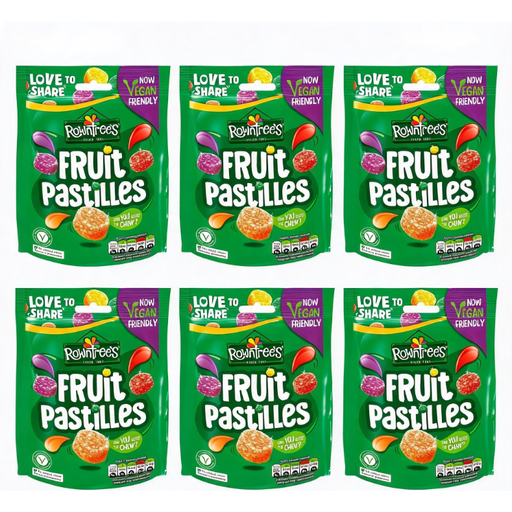
Rowntree's Fruit Pastilles Vegan 143g × 6
For a gym-bag treat when vegan suitability matters, this is a pack of six 143g bags. Check a current bag for its ingredients, sugars per 100g and any Fairtrade mark before deciding how much to carry.
View on Joybuy
 No image available
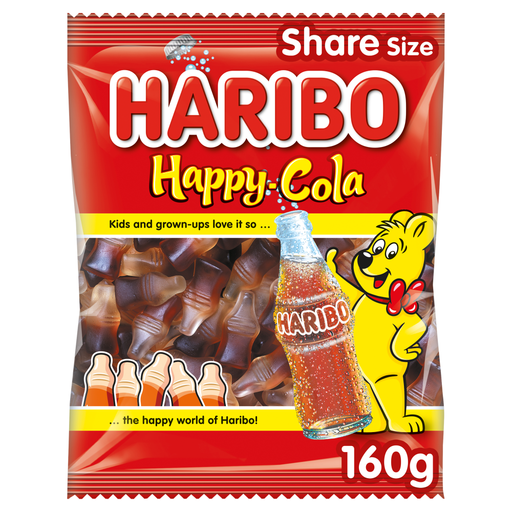
Haribo Happy Cola 160g
For an occasional cola-flavoured jelly sweet, this is a 160g pack. If you avoid gelatine, check the current ingredients; also compare sugars per 100g and look for any Fairtrade mark on the pack.
View on Joybuy
Questions about jelly sweets
Does a vegan jelly sweet automatically count as Fairtrade?
No. Vegan suitability concerns ingredients of animal origin; it does not establish how other ingredients were sourced. Check the pack for a FAIRTRADE Mark or an FSI Mark that names the Fairtrade-sourced ingredient.
What is the difference between a FAIRTRADE Mark and an FSI Mark?
According to the Fairtrade Foundation, the classic FAIRTRADE Mark means that all ingredients that can be Fairtrade-certified are certified. A Fairtrade Sourced Ingredient (FSI) Mark identifies a named ingredient, so check which ingredient the claim covers rather than assuming it applies to the whole sweet.
How do I compare sugars when the packs are different sizes?
Compare total sugars per 100g first, then check the portion you expect to eat. The named jelly sweets on Haribo UK, Tesco Groceries and Marks & Spencer product pages list between 51.8g and 66g sugars per 100g; those figures describe equal weights of product, not equal portions.
How should I keep jelly sweets in a gym bag?
Keep the pack sealed and follow its current storage instructions. The named manufacturer and retailer pages advise cool, dry storage away from sunlight, so check where the bag will sit if it may become warm.


