A single bag of jelly sweets can contribute to a planned training run if its labelled carbohydrate amount fits what you intend to consume. Nestlé Confectionery lists 86.4g of carbohydrate per 100g for its 42g Rowntree's Jelly Tots bag, giving an estimated 36.3g per bag; World Athletics gives a range of 30–60g per hour for endurance exercise lasting 1–2.5 hours. For sessions over 2.5 hours, its guidance calls for a more deliberate carbohydrate plan using multiple-transportable sources, so one bag should not be treated as a complete food-and-fluid plan.
Who is choosing training sweets?
The useful pack size depends on the run you are planning and whether you need a sealed individual portion or can prepare one yourself.
Runners practising long-run fuelling
If you want to measure carbohydrate rather than carry an uncounted snack, start with the pack label and your planned intake during the run. World Athletics gives different carbohydrate guidance for sessions lasting 1–2.5 hours and those lasting over 2.5 hours.
Runners who want an individual bag
A sealed portion makes the amount you carry easier to identify. Nestlé Confectionery describes its 42g Rowntree's Jelly Tots bag as an individual bag and provides carbohydrate information from which to estimate the full-pack amount.
Runners checking dietary ingredients
Check the exact sweet rather than assuming products with similar names or shapes use the same ingredients. Nestlé Confectionery states that its core Jelly Tots range contains no gelatine and is suitable for vegans and vegetarians; M&S lists beef gelatine in its Jelly Babies.
What should you check before a long run?
Decide on the run duration first, then compare the carbohydrate in the portion you will actually carry—not just the figure per 100g.
An individual bag of jelly sweets
Consider it when: You want a chewable portion whose labelled carbohydrate can be counted within a practised plan for a 1–2.5-hour run.
Bear in mind: The sweets do not replace fluids, and a single bag's contribution depends on its weight and nutrition label.
A longer-run fuelling plan
Consider it when: The session is expected to exceed 2.5 hours and you need to plan carbohydrate sources and amounts across the run.
Bear in mind: World Athletics specifies multiple-transportable carbohydrates for its guidance of up to 90g per hour at this duration; do not assume an ordinary sweet supplies the required mix.
| Priority |
What to check |
Your needs |
| Carbohydrate amount |
Read the carbohydrate per 100g and the weight of the portion you will carry. Multiply the two to estimate carbohydrate per portion; check that amount against your planned intake. World Athletics gives 30–60g per hour for endurance exercise lasting 1–2.5 hours. |
I want to know what one bag contributes before deciding when to eat it during a run. |
| Longer-run plan |
For exercise lasting over 2.5 hours, World Athletics gives guidance of up to 90g carbohydrate per hour using multiple-transportable sources, such as glucose with fructose or glucose polymers such as maltodextrin. Check carbohydrate sources rather than assuming a jelly sweet meets that approach. |
For a longer session, I need to plan food and fluids across the run instead of relying on one pack. |
| Pack and serving size |
Check whether the product is one bag, separate pouches or a sharing bag. A labelled serving may be smaller than the full pack: Tesco lists 23.1g carbohydrate for a 25g serving of its Jelly Beans, sold in a 200g bag. |
A sealed portion suits me if I want to carry a known amount; with a sharing bag, I can measure a portion before setting off. |
| Ingredients |
Read the current ingredients, dietary statement and allergen information for the exact variant. Nestlé Confectionery states that core Jelly Tots contain no gelatine, while M&S Jelly Babies list beef gelatine. |
If I avoid particular ingredients, flavour and appearance are not enough to tell me whether a sweet suits my requirements. |
| Confectionery use |
Distinguish the sweets planned for a run from frequent unplanned snacking. The NHS advises keeping the frequency and amount of sugary foods and drinks as low as possible. |
I want the sweets I carry to have a defined place in my training plan, rather than eating them repeatedly throughout the day. |
Planning mistakes to avoid
-
Counting one bag as the whole marathon plan
Nestlé Confectionery's figures put a 42g Rowntree's Jelly Tots bag at an estimated 36.3g carbohydrate. World Athletics gives different hourly guidance for exercise over 2.5 hours and specifies multiple-transportable carbohydrate sources for that duration.
Work out what each portion contributes, plan how portions fit across the run and practise food and fluids together before race day.
-
Confusing a serving with a sharing bag
Tesco lists 23.1g carbohydrate per 25g serving of its Jelly Beans, but the bag contains 200g. The serving figure does not describe everything in the bag.
If you choose a sharing bag, measure the amount you intend to carry into a suitable food-safe container and calculate its carbohydrate from the label.
-
Assuming all jelly sweets use the same gelling ingredient
Nestlé Confectionery states that core Jelly Tots contain no gelatine, whereas M&S lists beef gelatine in its Jelly Babies. A similar-looking sweet can therefore differ on a decisive dietary detail.
Read the current ingredients and dietary statement for the precise product and variant you intend to take.
-
Letting planned sweets become frequent snacking
Training use and repeated snacking throughout the day are different decisions. The NHS advises keeping the frequency and amount of sugary foods and drinks as low as possible.
Decide what you will carry for the run instead of treating the remainder of a larger bag as part of that portion.
Brand and product-label references
These examples show why pack format, carbohydrate figures and ingredients need to be checked at product level; a brand name alone does not settle the choice.
Rowntree's
Nestlé Confectionery describes Jelly Tots as a 42g individual bag, making it a concrete example for calculating carbohydrate per complete pack.
- Its stated 86.4g carbohydrate per 100g works out to an estimated 36.3g for the 42g bag.
- The manufacturer states that its core Jelly Tots range contains no gelatine and is suitable for vegans and vegetarians.
- The bag is confectionery, not a drink or a complete longer-run fuelling plan.
Haribo
HARIBO provides per-100g nutrition and ingredient information for Starmix, a different product from an identified individual running portion.
- HARIBO lists 77g carbohydrate per 100g for Starmix.
- Its ingredient list includes gelatine; check the pack format and full-portion amount before including it in a run plan.
Tesco
Tesco Jelly Beans offer a sharing-bag option for someone willing to prepare a measured portion.
- Tesco lists 92.4g available carbohydrate per 100g and 23.1g per stated 25g serving.
- The product is a 200g bag, so the stated serving is not a sealed individual pack.
M&S
M&S Fruit Jellies and M&S Jelly Babies illustrate why dietary suitability must be checked for each product.
- M&S lists Fruit Jellies as vegan and vegetarian, with 86.9g carbohydrate per 100g.
- M&S Jelly Babies list beef gelatine. The Fruit Jellies dietary statement should not be applied to them.
Jelly sweets on Joybuy
These options include 65g gummy bags and a pack of four separate 41g fruit-pastille pouches. Compare the current label for the portion you intend to carry, particularly if its carbohydrate amount or ingredients affect your plan.
 No image available
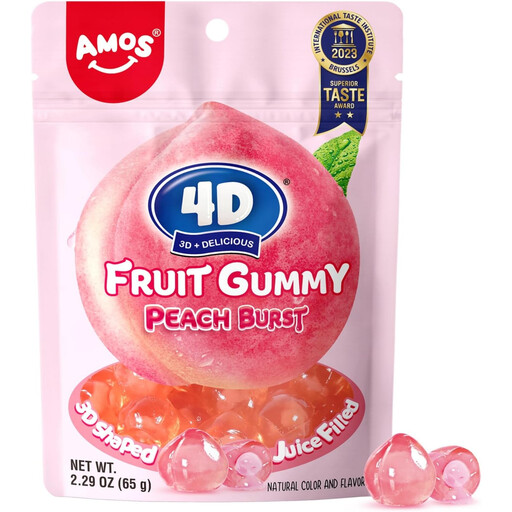
Amos 4D Fruit Gummy Peach Burst 65g
The 65g bag gives you a defined pack weight to use when checking carbohydrate per complete bag against your run plan. Check the current ingredients if you avoid gelatine, and plan fluids separately.
View on Joybuy
 No image available
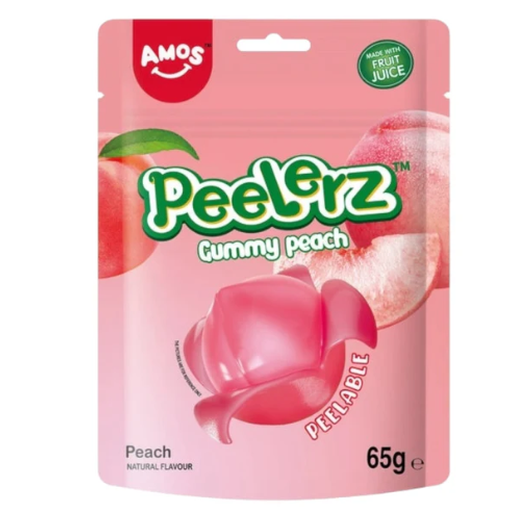
Amos Peelerz Gummy Peach 65g
This 65g gummy bag is another defined portion to compare with your planned carbohydrate intake. If vegan suitability matters, check the current pack's ingredients and dietary statement rather than inferring it from the product name.
View on Joybuy
 No image available
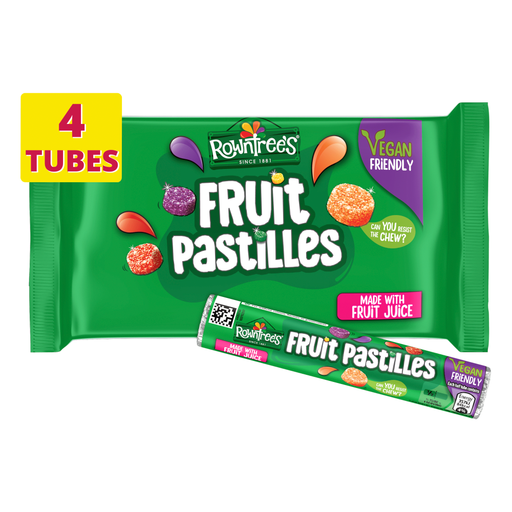
Rowntree's Fruit Pastilles 4 × 41g
Four separate 41g pouches let you choose how many portions to carry, but this is a multipack rather than one pouch sold alone. Use the current nutrition label to calculate carbohydrate for each pouch you plan to eat.
View on Joybuy
Common questions
How much carbohydrate is in a 42g bag of Rowntree's Jelly Tots?
Approximately 36.3g, calculated from the 86.4g carbohydrate per 100g stated by Nestlé Confectionery for its 42g bag. Check the label on the pack you buy before using that estimate in your plan.
Is one bag of jelly sweets enough for a marathon?
Do not count one bag as a complete marathon fuelling plan. World Athletics gives 30–60g carbohydrate per hour for endurance exercise lasting 1–2.5 hours; for exercise over 2.5 hours, it gives guidance of up to 90g per hour using multiple-transportable carbohydrate sources. Calculate what your chosen portion contributes and plan food and fluids across the run.
Do I need to plan fluids as well as jelly sweets?
Yes. Jelly sweets are not a drink, so plan fluids separately and practise your chosen food-and-fluid combination during training rather than trying it for the first time on race day.
Are all jelly sweets vegan or vegetarian?
No. Nestlé Confectionery states that its core Jelly Tots range contains no gelatine and is suitable for vegans and vegetarians, while M&S Jelly Babies list beef gelatine. Read the current ingredients and dietary statement for the exact product you choose.


