Parents packing occasional lunchbox treats
Separate mini bags avoid dividing a sharing bag before packing. Check the assortment, ingredients and nutrition label on the pack you buy, particularly if different children will receive different sweets.


Choose mini bags when you need separate treats ready to pack; a standard sharing bag means dividing the sweets yourself, while a larger multipack makes more sense when you have several occasions planned. Check the number and size of inner packs rather than relying on outer weight: Asda lists approximately 22 packs in the 352g HARIBO Share the Happy bag, but says its assortment can vary. Check the exact ingredients for dietary needs, and treat the pack format as a convenience rather than a reason to put sweets in a lunchbox every day.
Separate mini bags avoid dividing a sharing bag before packing. Check the assortment, ingredients and nutrition label on the pack you buy, particularly if different children will receive different sweets.
Dietary suitability needs to apply to the whole pack, not just one variety. Rowntree’s says Jelly Tots ingredients are suitable for vegans and vegetarians; its Randoms contain pork gelatine. Check the exact multipack label rather than choosing by brand alone.
A larger outer bag is useful only if its inner-pack format fits the occasions you have in mind. Compare the stated count and size of the inner packs, whether the assortment suits everyone, and where you will store the remainder.
Start with how the sweets will be packed and used, then check the exact product label for ingredients and nutrition.
| Priority | What to check | Your needs |
|---|---|---|
| Ready-to-pack portions | Check the stated inner-pack count and whether the sweets come in separate mini bags. Asda lists approximately 22 packs in the 352g HARIBO Share the Happy bag. | I want a treat I can put in a lunchbox without dividing up a sharing bag. |
| Pack size and assortment | Compare outer weight with the number and size of inner packs. Check whether the varieties are fixed: Asda describes its 352g HARIBO Share the Happy pack as a random mixture. | Several occasions are planned, but I need to know whether the pack contains portions and flavours the recipients will use. |
| Dietary suitability | Read the ingredients and dietary statement for the whole pack. Rowntree’s says its core Jelly Tots range uses no gelatine, whereas Randoms contain pork gelatine. | If sweets must be vegan or vegetarian, I cannot judge a mixed pack by one suitable variety or by the brand name. |
| Sugars and frequency | Compare sugars per 100g and the labelled portion. Sainsbury’s lists 46g sugars per 100g for HARIBO Share the Happy 352g; NHS guidance advises keeping the frequency and amount of sugary foods low. | Mini bags make packing simpler, but I do not want their convenience to turn sweets into an automatic daily lunchbox item. |
| Allergens and current ingredients | Check the physical pack, especially after a substitution. GOV.UK guidance says that any of the 14 regulated allergens present as ingredients in prepacked food must be clearly labelled in its ingredients list. | Where an ingredient matters to my household, I need to check the pack that will actually be eaten. |
A suitable variety does not make the entire assortment suitable. The researched HARIBO mixed packs include gelatine-containing sweets.
Read the current ingredients and dietary statement for the complete multipack before choosing it for someone avoiding gelatine.
Separate bags save re-portioning, but the packaging does not change the free sugars in sweets. NHS guidance advises keeping the frequency and amount of sugary foods low.
Plan sweets as occasional treats and use the nutrition panel on the exact pack to compare sugars per 100g and per labelled portion.
A large pack does not tell you how many separate lunchbox portions it contains. Packs with small inner bags and packs with larger units serve different plans.
Check the inner-pack count and size against the occasions you have planned, as well as whether the assortment suits each recipient.
An outer bag that exceeds your planned use also takes up storage space and may leave sweets unused.
Ingredients and allergy information can change, and a substituted product may have a different recipe.
Check the physical package before the sweets are eaten. For an allergy or another ingredient restriction, ask the retailer or manufacturer if the label leaves a question unresolved.
These examples help distinguish pack formats and product lines; a brand name alone does not establish the contents or dietary suitability of a particular bag.
Share the Happy is a mixed-sweets multipack sold in different outer weights. Asda lists approximately 22 packs in its 352g version and describes the mixture as random.
Product-line distinctions matter here. Rowntree’s says its core Jelly Tots range uses no gelatine, and the Jelly Tots multipack listed by Iceland Foods is described as suitable for vegans and vegetarians.
Tesco’s jelly-sweets listings include own-label products and Rowntree’s Jelly Tots, giving weekly shoppers different product lines to examine.
These options include mini-bag multipacks for separate treats and larger formats for planned occasions. For lunchboxes, check the inner packaging rather than assuming every multipack contains ready-to-pack portions.
 No image available
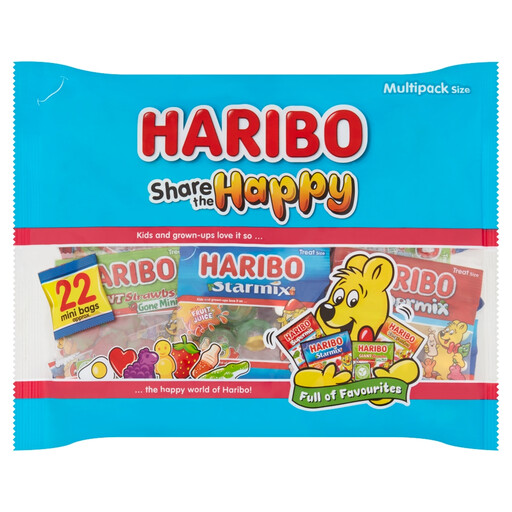
For separate planned treats without dividing a sharing bag. This 352g pack is named as containing 22 mini bags; check that the current assortment and ingredients suit each recipient.
 No image available
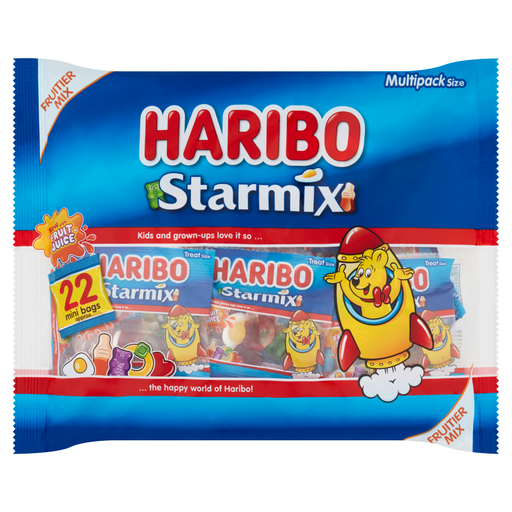
Another named mini-bag format for occasions when sweets need to be packed separately. The outer pack is 352g and states 22 mini bags; check the current ingredients for any dietary restrictions.
 No image available
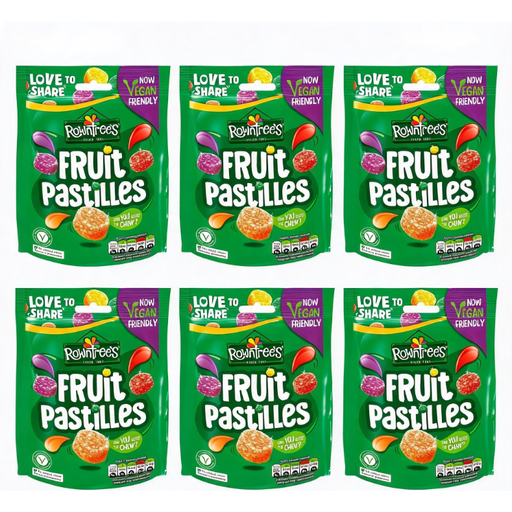
Consider the six-unit format for several planned occasions rather than assuming it contains lunchbox mini bags. The product name states 6 × 143g and describes it as vegan; confirm the unit packaging and current dietary statement on the pack.
 No image available
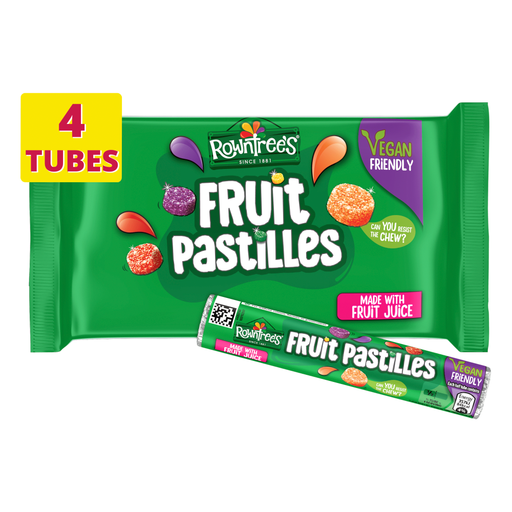
The stated 4 × 41g format offers a smaller outer quantity to consider for planned treats. If each portion needs to go straight into a lunchbox, confirm whether the units are separately packaged; check the physical label for ingredients and allergens.
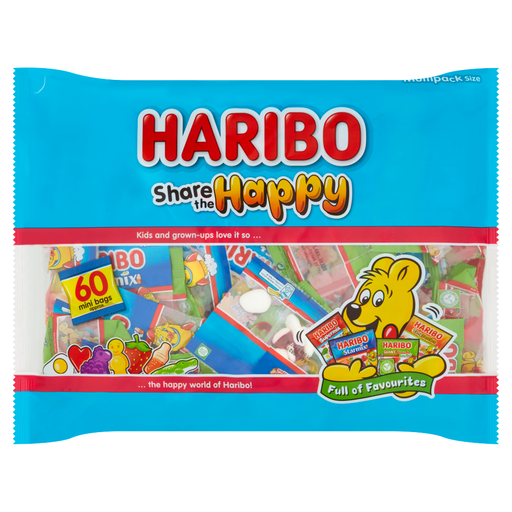 No image available
For a larger quantity across planned occasions. Joybuy’s description names several HARIBO varieties; confirm the inner-pack count and size if you need lunchbox-ready portions. Iceland Foods lists gelatine in the ingredients for its 960g Share the Happy pack, so check the current label for dietary suitability.
Mini bags make an occasional treat easier to pack, but their format does not change the sweets themselves. The NHS says sweets contain free sugars and advises keeping the frequency and amount of sugary foods low; check the nutrition panel on the pack you choose.
Do not assume the whole mix is suitable. The researched Share the Happy packs include gelatine-containing sweets, and Asda says the contents of its 352g mixture may vary. Check the ingredients for the exact pack before buying.
No: Rowntree’s says its core Jelly Tots range uses no gelatine, while Randoms contain pork gelatine. Check the current ingredients and dietary statement for the specific product and pack format.
Check the ingredients on the physical package that will be eaten, including after a substitution. GOV.UK guidance says that any of the 14 regulated allergens present as ingredients in prepacked food must be clearly labelled in its ingredients list; ask the retailer or manufacturer if you need further product information.