Marathon trainees trying everyday-food fuel
If you want to use jelly sweets on a longer training run, calculate the carbohydrate in the portion you will carry and try that portion during training before relying on it in a race.


Individually portioned jelly sweets can be a carbohydrate option for marathon training runs if you can work out what each packet contributes and have tried eating it while running. Choose by carbohydrate per carried portion, not the multipack’s total weight, and check the exact pack for ingredients and allergens; a small packet may provide much less than you intend to carry for a long session.
If you want to use jelly sweets on a longer training run, calculate the carbohydrate in the portion you will carry and try that portion during training before relying on it in a race.
Separate packets can be easier to carry and keep track of than a loose sharing bag. Check the carbohydrate in each packet: one mini bag may be only part of the amount you planned for a session.
Jelly sweets differ in their use of gelatine and other ingredients. Read the ingredient and allergen information on the exact pack, particularly when switching product or pack size.
Decide how much carbohydrate you intend to carry for the run, then compare pack formats by their labelled portions and by whether you can comfortably use them during training.
Consider it: When you want separate packets and can calculate and trial the amount you will carry.
Trade-off: A mini bag is easy to count, but you may need several bags for the carbohydrate amount in your plan.
Consider it: When you are willing to measure a tested portion and pack it securely before the run.
Trade-off: You do the portioning yourself rather than carrying ready-divided packets.
Consider them: When a product’s stated carbohydrate serving or other stated formulation matters to your plan.
Trade-off: A stated serving does not tell you whether you will tolerate the product while running; trial it in training.
| Priority | What to check | Your needs |
|---|---|---|
| Carbohydrate per portion | Read carbohydrate per 100 g and the weight of each packet; calculate the amount per carried portion. A 2015 review indexed by PubMed gives 30–60 g carbohydrate per hour for high-intensity exercise lasting 1–2.5 hours, not a universal target for every run. | I want to know what each packet contributes, rather than judging my supply by the size of the outer multipack. |
| Carrying and counting | Check the number and size of individual packets and whether you can carry the number your plan calls for. Tesco lists 16 g Haribo Starmix mini bags; at the listed 77 g carbohydrate per 100 g, that is about 12.3 g per mini bag. | Separate portions would help me keep track during a run, provided carrying and eating enough of them is practical. |
| Ingredients and allergens | Read the current pack’s full ingredients and allergen declaration. The Haribo Starmix mini bag listed by Tesco contains gelatine; a different flavour or format needs its own check. | Gelatine, other animal-derived ingredients or declared allergens could change which exact pack I choose. |
| Use during training | Try the intended product, portion and timing on a training run. A 2023 food-first endurance-nutrition review published in Nutrients advises trialling carbohydrate foods in training before competition. | I need to find out whether the quantity is manageable to carry and eat while running, rather than leaving that test until race day. |
| Everyday use | Compare sugars per labelled portion as well as carbohydrate. Keep track of portions eaten outside runs; the NHS identifies too much sugary food and drink as a factor in tooth decay. | I want the multipack for planned sessions without losing track of the sweets I eat at other times. |
The weight you carry in each packet matters more to a run plan. Tesco’s listed 16 g Haribo Starmix mini bag works out at about 12.3 g carbohydrate from its 77 g-per-100 g nutrition figure.
Calculate carbohydrate per mini bag, then work out how many bags your intended session would require before deciding what to carry.
The Tesco listings for Haribo Starmix mini bags and Tesco Jelly Babies include gelatine, while Tesco describes a Rowntree’s Fruit Pastilles multipack as vegan. These descriptions apply to the listed products, not every pack under those names.
Check the current ingredients and allergen declaration for the exact flavour and pack size you buy.
The amount needed, ease of carrying it and comfort while eating it can all affect whether an everyday food works during a run. The 2023 Nutrients review advises trialling carbohydrate foods in training before competition.
Try the intended product, portion and timing on a training run; if that arrangement does not work for you, reconsider the format.
A multipack makes it easy to take another portion outside the session you planned. The NHS identifies too much sugary food and drink as a factor in tooth decay.
Read sugars per portion and keep track of how you use the remaining packets outside training.
These examples illustrate pack formats and label checks; a brand name alone does not establish carbohydrate per portion or ingredient suitability.
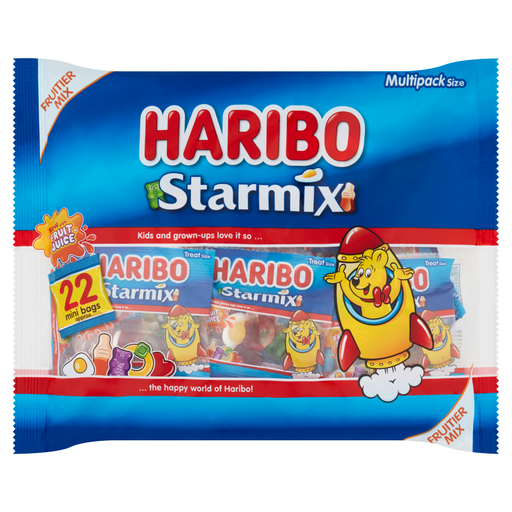
A reference for small, separately carried portions: Sainsbury’s lists a Starmix multipack of 22 × 16 g mini bags.
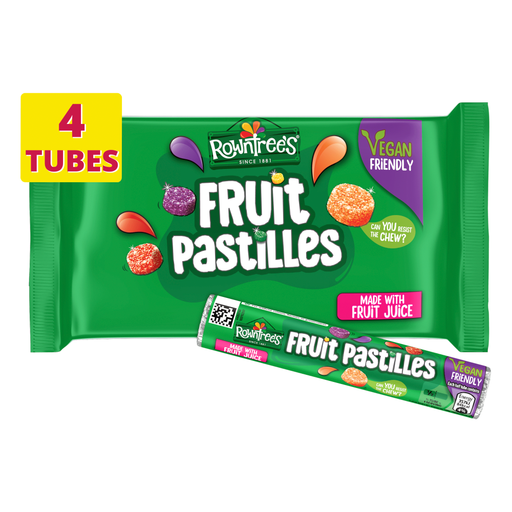
Tesco describes one Fruit Pastilles multipack as four 42.8 g portions and vegan. That pack size should not be confused with other Fruit Pastilles variants.
Tesco Jelly Babies are an example of a larger bag that a runner could divide into portions before a session.
The M&S jelly-sweets range includes products labelled vegetarian and vegan, making the individual product label the useful starting point.
These are multipack formats to consider if you want separate sweet portions for a training run. Compare each exact pack’s labelled carbohydrate serving and ingredients before deciding how it fits your plan.
 No image available
The 22 mini bags offer separate portions to carry and count. The matching 16 g Starmix mini-bag listing from Tesco gives 77 g carbohydrate per 100 g, equivalent to about 12.3 g per bag; check the current pack’s nutrition and ingredients before planning how many to take.
 No image available
Four pouches offer portions you can pack separately. Use the nutrition panel on this 41 g variant to check carbohydrate per pouch or per counted serving; do not substitute figures from a different pack size. Check its current ingredient and allergen declaration too.
 No image available
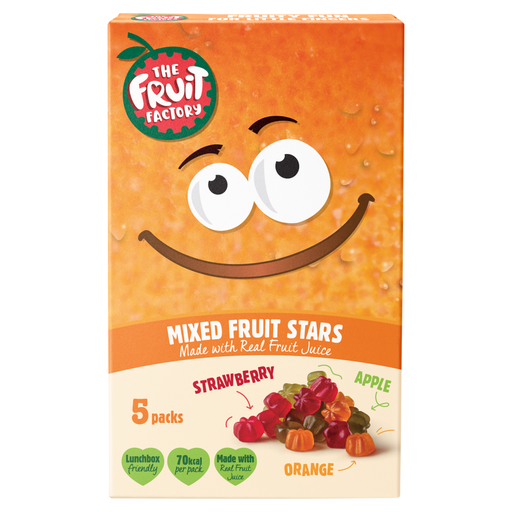
The five-pack format may suit someone arranging portions before a session. Check the weight, carbohydrate amount and packaging of each small pack before deciding whether it is practical to carry and count during a run.
Jelly sweets can be a carbohydrate option, but they are not automatically interchangeable with a gel’s stated serving or formulation. Calculate the carbohydrate in the exact portion you will carry and trial it while running. A 2015 review indexed by PubMed discusses 30–60 g carbohydrate per hour for high-intensity exercise lasting 1–2.5 hours; that range is not a prescription for every training run.
Work from the amount intended for your particular session and the current pack label, rather than a fixed bag count. Tesco lists 77 g carbohydrate per 100 g for its 16 g Haribo Starmix mini bag, which works out at about 12.3 g per bag. That calculation lets you compare the number of bags with your plan without assuming one bag is a complete serving for a run.
Some are described as vegan, but the category as a whole is not. Tesco’s listed Haribo Starmix mini bag and Tesco Jelly Babies contain gelatine, whereas Tesco describes a 4 × 42.8 g Rowntree’s Fruit Pastilles multipack as vegan. Read the current ingredients on the exact variant you intend to buy.
Read the ingredient and allergen declaration on the exact pack you will carry, especially if you have changed flavour, size or product. A previous purchase or a general description of jelly sweets may not describe that pack’s ingredients.
No. Check sugars per labelled portion and keep track of packets eaten outside your planned run. The NHS identifies too much sugary food and drink as a factor in tooth decay; using a multipack for training does not make its other portions sugar-free.