Families planning an after-school treat
A bag with clear serving information makes it easier to put out a portion for sharing at home, rather than opening the whole pack without a plan.


For an after-school sharing treat, choose by the exact bag’s ingredients and serving information rather than assuming “sharing bag” means one child-sized portion. Nestlé Confectionery UK says Jelly Tots ingredients are suitable for vegans and vegetarians, while Sainsbury’s lists gelatine in Haribo Jelly Babies Double Trouble 175g; if the sweets are intended for a packed lunch, check the school’s policy separately.
A bag with clear serving information makes it easier to put out a portion for sharing at home, rather than opening the whole pack without a plan.
Check the exact recipe: Nestlé Confectionery UK says Jelly Tots ingredients are suitable for vegans and vegetarians, whereas Sainsbury’s lists gelatine in Haribo Jelly Babies Double Trouble.
Read the current pack’s ingredients and allergen information for every bag being shared. Familiar-looking fruit sweets can have different recipes.
Start with the people sharing the sweets, then check the exact pack’s portion and ingredient information before deciding where it will be eaten.
| Priority | What to check | Your needs |
|---|---|---|
| Portions | Check servings per pack and sweets per serving. Sainsbury’s lists 11 sweets as a serving and seven servings in its Rowntree’s Jelly Tots 150g bag. | I want to put out enough for the group without treating the whole bag as one portion. |
| Sugars | Read the sugars figure alongside its stated basis: per 100g or per serving. Check the portion you intend to offer rather than comparing figures on different bases. | For an occasional treat, I want to know what the label says about the amount being shared. |
| Dietary suitability | Read the product-specific ingredients and dietary statement. Nestlé Confectionery UK describes Jelly Tots ingredients as vegan- and vegetarian-suitable; Sainsbury’s lists gelatine in Haribo Jelly Babies Double Trouble. | If someone avoids gelatine, fruit flavour or appearance alone will not settle the choice. |
| Allergens | Check the current pack’s ingredient list and declared allergens for each product. The Food Standards Agency says food businesses must provide allergen information. | When sharing with someone who has an allergy, I need information for the exact bag being offered. |
| School setting | Check the individual school’s packed-lunch policy. Department for Education guidance on school food in England addresses food and drink provided in state-funded schools. | A treat for home and something intended for a packed lunch may need different decisions. |
The Sainsbury’s listing for Rowntree’s Jelly Tots 150g gives 11 sweets as one serving and seven servings per bag.
Decide how many servings to put out before opening a bag for a group.
Flavour and dietary suitability answer different questions from the sugars line on a nutrition label.
Compare the sugars information for the exact bags and the portions you plan to share.
Nestlé Confectionery UK says Jelly Tots ingredients are suitable for vegans and vegetarians, but the Sainsbury’s ingredient list for Haribo Jelly Babies Double Trouble includes gelatine.
Check the current ingredients and dietary statement for the particular bag, including any production information relevant to your requirements.
These references help narrow a search, but dietary and ingredient decisions belong to the individual product and its current pack.
Jelly Tots are available in a 150g sharing-bag listing from Sainsbury’s.
Sainsbury’s lists Jelly Babies Double Trouble in a 175g sharing bag.
Tesco Groceries has a jelly and chewy sweets category for browsing different bags.
Its listings include Rowntree’s Jelly Tots 150g and Haribo Jelly Babies Double Trouble 175g.
ASDA Groceries has a jelly and chewy sweets category.
Marks & Spencer has a jelly-sweets range with vegetarian and vegan filters.
These Haribo and Rowntree’s options offer different bags and flavours for a planned treat at home. Check each exact pack if dietary suitability or portion guidance matters.
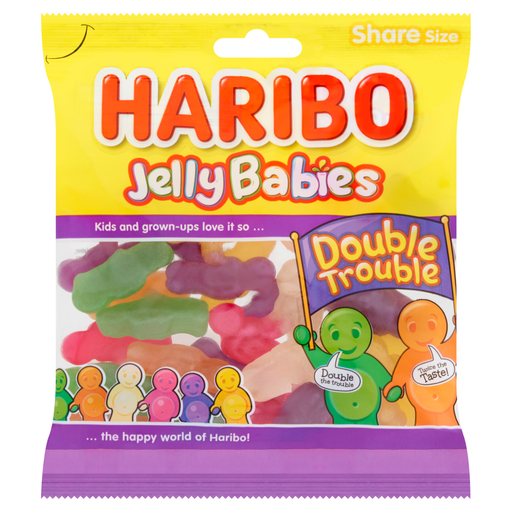 No image available
This 175g sharing bag is an option when gelatine is acceptable. Sainsbury’s ingredient listing for Haribo Jelly Babies Double Trouble includes gelatine; check the current pack before sharing with anyone who avoids it.
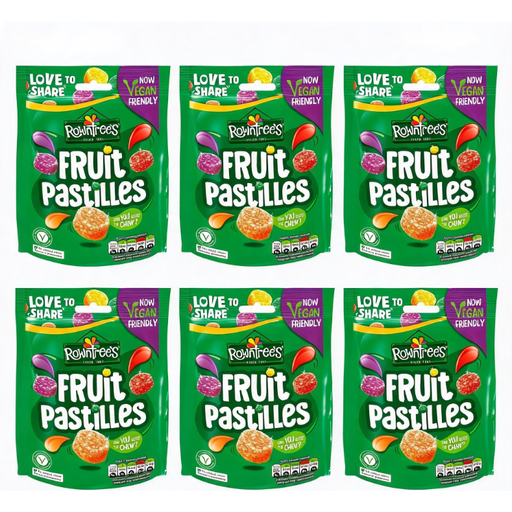 No image available
The six 143g bags allow separate sharing occasions, and the product name identifies this variant as vegan. Check the current packs for ingredients and serving information before offering them to a group.
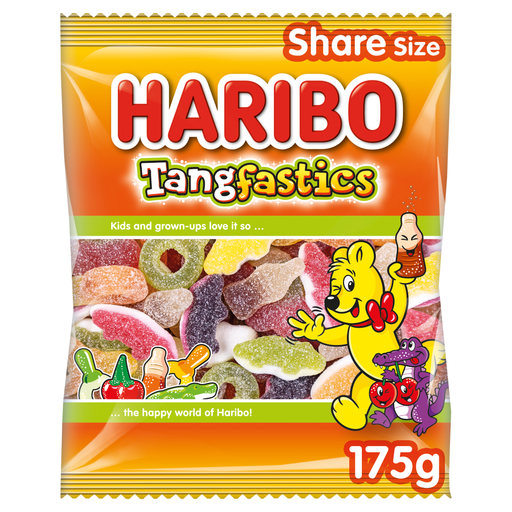 No image available
This 175g fruit-and-cola fizzy sweets sharing bag offers a different flavour choice for a home treat. Check its current ingredients if gelatine matters, and read the pack’s serving information when deciding how much to put out.
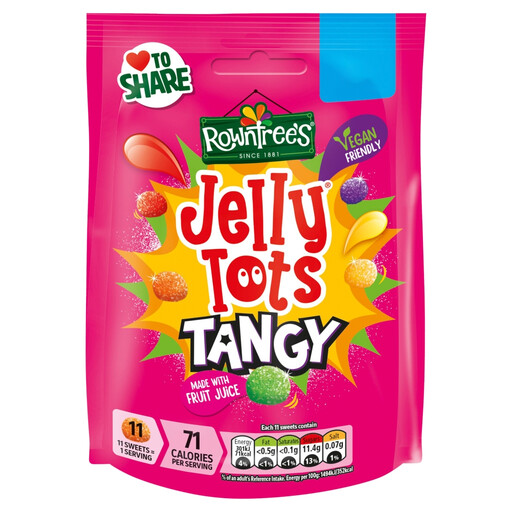 No image available
This 140g tangy variant is another fruit-sweet option for sharing at home. Check the current pack’s dietary statement and serving information rather than applying details from the separate Jelly Tots 150g bag.
Check the individual school’s packed-lunch policy before sending sweets in. Department for Education guidance on school food in England concerns food and drink provided in state-funded schools; that scope does not, by itself, settle what a parent may pack at a particular school.
No. The total-sugars figure includes sugars beyond those classified as free sugars, so do not read it as a free-sugars amount. Compare labels using the same basis, such as per 100g, and check the intended serving.
Check the exact product’s ingredients and dietary statement. Nestlé Confectionery UK says Jelly Tots ingredients are suitable for vegans and vegetarians, while Sainsbury’s lists gelatine in Haribo Jelly Babies Double Trouble; confirm the current pack for the variant you buy.
Read the current pack’s ingredient list and declared allergens for the exact bag. The Food Standards Agency says food businesses must provide allergen information; a brand name or a different product’s ingredients are not a substitute for that check.