Parents planning everyday snacks
If the food is for the usual gap between meals, the NHS suggests options including fruit and plain unsweetened yoghurt. A sharing bag of confectionery serves a different occasion.


For a routine toddler snack between meals, choose something other than a jelly-sweets sharing bag: the NHS suggests options such as fruit and plain unsweetened yoghurt, while NHS dental guidance advises having sugary foods with meals rather than between them. If you are buying sweets for an occasional family treat, check the exact pack’s age warning, ingredients, allergy information and nutrition panel before deciding whether and how to serve them.
If the food is for the usual gap between meals, the NHS suggests options including fruit and plain unsweetened yoghurt. A sharing bag of confectionery serves a different occasion.
If sweets are for a shared treat with a meal, the exact product matters. Compare its age warning, ingredients, allergy information and sugars per 100g rather than relying on the words “sharing bag”.
Food brought into a setting may need to follow its own policy. Ask what the nursery or school accepts before packing sweets for a child.
Decide whether this is an everyday snack or an occasional treat first. If you are considering a sharing bag, move on to the product-specific checks.
| Priority | What to check | Your needs |
|---|---|---|
| Eating occasion | Is this a routine snack between meals or an occasional treat with a meal? The NHS suggests non-sugary snacks for young children; NHS dental guidance advises having sugar-containing foods with meals. | I need something to offer between meals, rather than a bag of sweets that becomes part of the daily snack routine. |
| Bag and serving | Read sugars per 100g and any stated serving amount on the current pack. A sharing-bag label does not define a toddler portion. | If several people will share the bag, I want to decide what to serve rather than treating the whole pack as one child’s portion. |
| Age warning | Check the exact product’s age and choking warnings. Marks & Spencer states that its Jelly Babies are not suitable for children under 36 months because of a potential choking hazard; that warning is specific to that product. | Before offering a sweet, I need to know whether its own warning rules it out for the child’s age. |
| Ingredients and allergies | Read the ingredient list, dietary wording and allergy statement together. HARIBO lists gelatine in Starmix; Nestlé Confectionery specifies pork gelatine in Rowntree’s Randoms. Marks & Spencer labels Percy Pig vegan but says it is not suitable for those with a milk allergy. | A vegan label alone would not answer my allergy question, and a brand name would not tell me which type of gelatine an individual sweet contains. |
The bag may be convenient to share, but that does not change when the sweets are eaten. NHS dental guidance advises having sugar-containing foods with meals rather than as snacks between meals.
Choose a non-sugary option for the routine snack. If you buy sweets, keep them separate from that everyday choice.
HARIBO lists 47g sugars per 100g for Starmix, despite its fruit-juice ingredient. Nestlé Confectionery lists 54.6g sugars per 100g for Rowntree’s Randoms. An ingredient or additives claim does not tell you the sugar value.
Read the current pack’s sugars per 100g and ingredient list before choosing an occasional treat.
Marks & Spencer’s under-36-month warning applies to its Jelly Babies. Gelatine and allergy information also differ between products, so a familiar shape or brand cannot settle those questions.
Check the age warning, ingredients and allergy statement on the exact pack before serving.
These examples show why the details of one sweet should not be assumed to apply to another; they are not a list of products available in the Joybuy selection below.
Starmix combines different gums and foam sweets in one bag.
Randoms is presented as a 150g sharing bag with varied sweets.
The age and dietary information differs between M&S jelly-sweet products.
These jelly-sweets bags fit an occasional family-treat decision, not a routine toddler snack. Check each current pack before deciding whether it is suitable for a particular child.
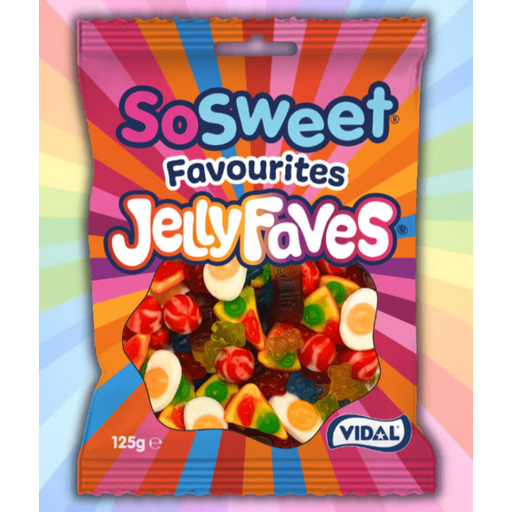 No image available
Consider this 125g bag only for an occasional treat, not a between-meal toddler snack.
The listing says it is not suitable for children under 3 and warns that small pieces may present a choking hazard. It also says the sweets may contain traces of milk; check the current pack if that affects your choice.
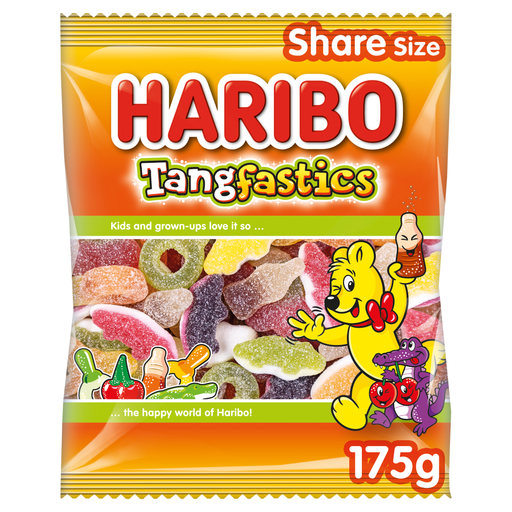 No image available
This 175g sharing bag is an occasional-treat option rather than a routine toddler snack.
Its ingredients include gelatine. Check the current pack’s age guidance, ingredients and allergy information before considering it for a child.
Choose a different food for the routine between-meal snack. The NHS suggests options such as fruit and plain unsweetened yoghurt for young children, while NHS dental guidance advises having sugar-containing foods with meals rather than between them.
No. It describes the pack, not a toddler serving. Read the product’s nutrition and serving information, then consider the child and the occasion rather than using the bag size as a portion.
No. Check the exact product’s warning: Marks & Spencer says its Jelly Babies are not suitable for children under 36 months because of a potential choking hazard. Do not assume that warning applies identically to every sweet, or that no visible warning proves suitability.
Not necessarily. Marks & Spencer labels Percy Pig vegan and vegetarian but states that it is not suitable for those with a milk allergy. Check the allergy information on the exact current pack separately from its vegan wording.
Ask the individual nursery or school what its food policy permits before sending sweets. A choice made for a family treat at home does not establish what an organised setting will accept.