Choose jelly sweets for an informal, self-serve buffet when the exact packs suit your guests’ dietary needs and age range. Choose boxed chocolates when gifting or presentation matters more. If you offer both, keep their labels available: neither format establishes allergen or dietary suitability on its own.
Who is this buffet choice for?
Hosts serving guests of different ages
A sharing pack may be convenient, but check its stated servings and any age warning before leaving sweets within reach of young children. M&S, for example, warns that its Fruit Jellies are not suitable for children under 36 months because of a potential choking hazard.
Hosts accommodating dietary requirements
Check each pack rather than relying on a brand or the word “jelly”. HARIBO says its usual gelatine is pork-derived, while its UK vegetarian range is free from animal gelatine; other products may carry vegan, vegetarian or halal labels.
Shoppers choosing between buffet sweets and a gift
Jelly sweets can be put out for informal sharing. A chocolate box serves a different purpose when the packaging and presentation are part of the gift or dessert-table display.
What should you check before choosing?
Decide whether the purchase is mainly for self-service, gifting or both. Then compare the exact packs against the needs of the people who will be offered them.
Jelly sweets
Choose for: An informal bowl or sharing-pack option at the buffet.
Bear in mind: The jelly-sweet format alone tells you nothing definite about gelatine source or dietary suitability.
Boxed chocolates
Choose for: A gift or an assortment displayed in its box.
Bear in mind: A chocolate box does not replace jelly sweets for guests who specifically want them, and wrapping varies by product.
| Priority | What to check | Your needs |
|---|
| Serving format |
Look at whether the pack is a sharing bag, tub or boxed assortment. If individually wrapped pieces matter, confirm that on the exact product. |
I want guests to help themselves, or I need a box that can also be given as a gift. |
| Dietary suitability |
Read the ingredients and the pack’s vegetarian, vegan or halal wording. HARIBO says its usual gelatine is pork-derived, while its halal products use beef gelatine. |
Some guests avoid particular gelatine sources or animal ingredients, so a general brand name is not enough to make the choice. |
| Allergens |
Check the ingredients and any “may contain” statement for each pack. A vegan recipe does not rule out precautionary allergen warnings; an ASDA-listed vegan confectionery product carries several. |
I need guests with allergies to be able to identify which sweets, if any, suit them. |
| Portions and sugars |
Compare sugars using the same stated basis, such as per 100g or per serving, and check how many servings the pack contains. Sainsbury’s lists 15.7g sugars per four sweets and approximately seven servings for its 200g Fruit Jellies. |
For a long buffet, I want to judge the amount I am putting out rather than treating a whole sharing pack as one portion. |
| Young children |
Read the exact pack’s age and choking warnings before serving. M&S says its Fruit Jellies and Jelly Beans are not suitable for children under 36 months because of a potential choking hazard. |
Children may be able to reach the buffet, so I need to check the products before putting them out. |
Common mistakes when serving sweets
-
Assuming all jelly sweets are gelatine-free
Gelatine sources differ. HARIBO says its usual gelatine is pork-derived, its halal products use beef gelatine and its UK vegetarian range is free from animal gelatine.
Check the dietary wording and ingredients on every pack in a mixed assortment.
-
Treating “vegan” as an allergy statement
An ASDA-listed product prepared to a vegan recipe carries “may contain” warnings, including milk, eggs, peanuts and wheat.
For a guest with an allergy, check the ingredients and precautionary allergen statement separately from the vegan label.
-
Buying by pack weight alone
Pack weight does not tell you the stated serving size. Sainsbury’s 200g Fruit Jellies, for example, list approximately seven servings and 15.7g sugars per four sweets.
Use the serving information alongside pack weight when deciding how much to put out.
-
Discarding the label when filling a serving bowl
Guests may need to check ingredients, allergen statements or age warnings after sweets have been taken out of their packaging.
Keep the current pack or its label available beside each separately served product.
Brand and retailer references
These examples illustrate why the format and label of a particular product matter more than a brand-wide assumption.
HARIBO
HARIBO offers jelly and gum formats for sharing.
- HARIBO says its UK vegetarian range is free from animal gelatine.
- The company says its usual gelatine is pork-derived and its halal products use beef gelatine; check the individual pack.
Rowntree’s
A fruit-jelly option for shoppers looking at familiar fruit flavours.
- Sainsbury’s describes the Rowntree’s Jelly Tots Giant Tube as made with real fruit juice and lists approximately five servings.
- That product page lists 59.8g sugars per 100g; check the pack and its availability when shopping.
Tesco
Tesco’s categories include sharing-format jelly sweets and separate boxed-chocolate assortments.
- The two categories let shoppers compare a buffet sharing format with a gift-style box.
- Check the particular product’s ingredients, format and current availability rather than relying on its category.
Sainsbury’s
Its 200g Fruit Jellies are an example of an own-label fruit-jelly product.
- The product page lists pectins as the gelling agent and approximately seven servings per pack.
- Sainsbury’s lists 15.7g sugars per four sweets and advises checking the current label because ingredients can change.
ASDA
Its listed confectionery includes products with different vegan, vegetarian and halal labels.
- ASDA labels its Mini Gems suitable for vegans and lists Sweetzone Pencil Jelly as halal and suitable for vegetarians.
- A separate vegan confectionery product carries “may contain” allergen warnings, so dietary and allergy checks remain distinct.
M&S
Its listed options include fruit jellies, jelly beans and a festive jelly assortment.
- M&S labels its Fruit Jellies and Jelly Beans vegan and vegetarian.
- Both product pages warn that the sweets are not suitable for children under 36 months because of a potential choking hazard.
Joybuy sweets and boxed chocolates
These options include sharing-style jelly sweets, a hawthorn jelly cake and chocolate boxes for gifting or display. Check each pack against your guests’ requirements before serving.
 No image available
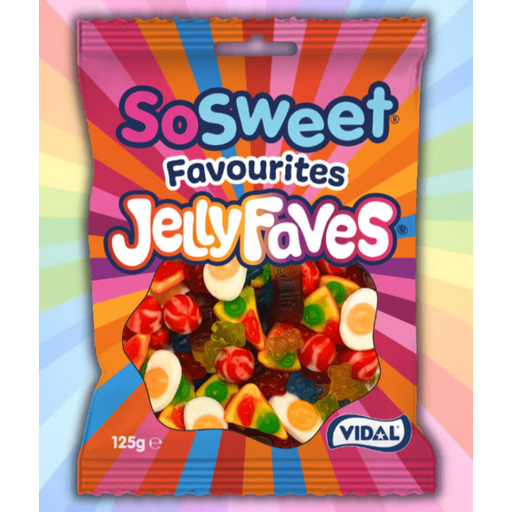
SoSweet JellyFaves Bag 125g
A sharing bag of jelly sweets for an informal buffet. The product information warns of a choking hazard, says it is not suitable for children under three and notes that it may contain traces of milk. Check the current pack for the gelatine source if dietary suitability matters.
View on Joybuy
 No image available
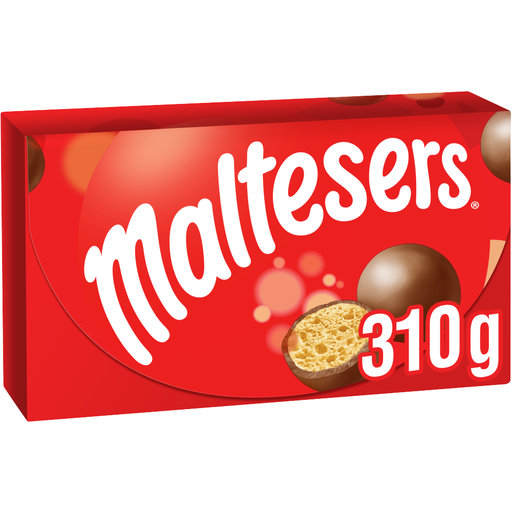
Maltesers Chocolate Box Gift 310g
A boxed chocolate option when presentation or gifting is the main purpose. The product information lists milk, soya and wheat allergens. Check the current packaging for any age warning before serving it to young children.
View on Joybuy
 No image available
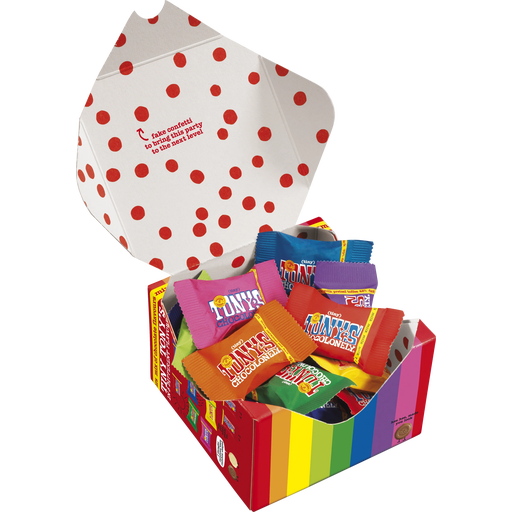
Tony’s Chocolonely Tiny Tony’s Mix Gift Chocolate Box 180g
A chocolate assortment in a gift-box format. Check the current pack for the ingredients and allergens of the pieces you plan to serve; the representative ingredient information should not be treated as a complete list for every piece. Confirm individual wrapping if it matters for your buffet.
View on Joybuy
 No image available
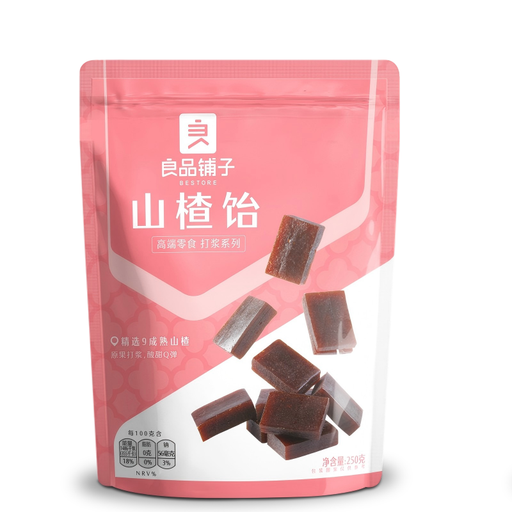
Bestore Hawthorn Jelly 250g Bag
A shareable hawthorn jelly cake rather than an assorted bag of fruit-flavoured jelly sweets. The product information lists sulphites. Check the current pack for dietary details and any age warning relevant to your guests.
View on Joybuy
Questions about buffet sweets
Should I buy boxed chocolates instead of jelly sweets for a Boxing Day buffet?
Choose boxed chocolates if gifting or display in the box is the priority; choose jelly sweets for informal bowl sharing. If you offer both, keep their labels available so guests can check the individual products rather than assuming either format meets a dietary requirement.
Are all jelly sweets suitable for vegetarians or vegans?
No. HARIBO says its usual gelatine is pork-derived, although its UK vegetarian range is free from animal gelatine. Check the exact sweet’s ingredients and dietary wording.
Does a vegan label mean a sweet is suitable for someone with a food allergy?
No. An ASDA-listed product prepared to a vegan recipe has “may contain” warnings for several allergens. Check the ingredients and precautionary statement against the individual guest’s allergy.
Can jelly sweets be put out for children under three?
Check the specific product warning before serving. M&S says its Fruit Jellies and Jelly Beans are not suitable for children under 36 months because of a potential choking hazard; that warning should not be assumed to describe every jelly sweet.


