People training after a long gap since eating
A small, familiar snack may be more useful to consider than a rich assortment just before exercise. Sports Dietitians Australia advises trying snack choices and timing during training.


For a small snack shortly before exercise, a familiar portion of jelly sweets is a closer match to Sports Dietitians Australia’s advice to choose well-tolerated, carbohydrate-rich, low-fat food than the richer boxed-chocolate example compared here. That does not make sweets necessary for every workout: consider when you last ate, decide on a portion you have tolerated in training, and treat a gift box as a separate buying decision.
A small, familiar snack may be more useful to consider than a rich assortment just before exercise. Sports Dietitians Australia advises trying snack choices and timing during training.
A box can be chosen for gifting without assuming its contents suit a snack immediately before training. Check the portion format and ingredients if the recipient may also use it for exercise.
Supplying confectionery through school food calls for a different check from buying a personal snack. England’s school-food requirements and retail promotion rules are separate frameworks; organisers elsewhere in the UK need to check the rules that apply to their nation and setting.
Decide whether the purchase is for a snack close to exercise or primarily for gifting, then check the exact pack rather than assuming all confectionery has the same composition.
Consider when: You want a small carbohydrate-containing snack close to training and already know that you tolerate it.
Bear in mind: A sharing box does not define your portion, and ingredients such as gelatine may rule out a particular recipe.
Consider when: Gifting or sharing matters more than choosing a snack immediately before exercise.
Bear in mind: Centres and ingredients vary, so check the exact assortment for dietary suitability and decide on a serving separately.
| Priority | What to check | Your needs |
|---|---|---|
| Timing and familiarity | Consider the time until exercise and whether you have tolerated this food and serving before. Sports Dietitians Australia advises trying snack timing during training rather than on competition day. | If I am eating shortly before a session, I would rather choose a familiar, manageable portion than try a new assortment. |
| Nutrition label | Compare carbohydrate and fat on the same per 100g basis. HARIBO lists 77g carbohydrate and less than 0.5g fat for its Starmix gift box; Marks & Spencer lists 53.9g carbohydrate and 34.0g fat for its Collection Milk, Dark and White Chocolates. These are values for those products, not prescribed servings. | I want to compare the actual products before choosing a snack close to exercise, rather than treating all sweets and chocolates as interchangeable. |
| Portion format | Check the pack size, whether it is divided into smaller bags, and whether any per-serving values use a defined amount. | For something to carry to training, I may find separated packs easier to plan around than an open gift box. |
| Ingredients | Read the current ingredients and allergen statements for the exact variant. HARIBO lists gelatine for its Starmix gift box; Marks & Spencer says its Collection chocolate assortment is not suitable for people with nut or peanut allergies. | If I am avoiding gelatine or sharing with someone who has an allergy, the precise pack label matters more than the category name. |
The HARIBO Starmix gift box and Marks & Spencer Collection chocolate assortment have different fat and carbohydrate values per 100g. Sports Dietitians Australia advises familiar, well-tolerated foods that are high in carbohydrate and low in fat before exercise.
Compare the exact labels and try your chosen serving during ordinary training before relying on it for an important session.
A gift box or mixed assortment is packaged for sharing, which is a different consideration from deciding how much to eat before exercise.
Decide on a serving first, or consider a format already divided into smaller packs if that makes planning easier.
The Department of Health & Social Care’s retail promotion guidance applies to businesses operating in and selling to England; school-food requirements are a separate framework.
Before supplying sweets through school food, check the nation, the setting and its applicable school-food requirements.
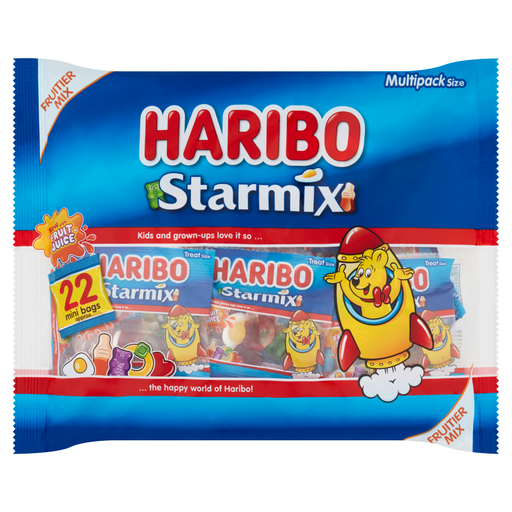
HARIBO’s Starmix gift box provides a jelly-sweet example for comparing labels with boxed chocolates, without treating the gift-box format as a suggested exercise serving.
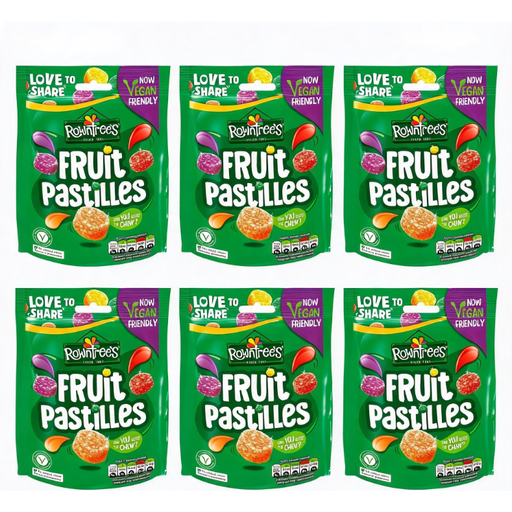
Rowntree’s Fruit Pastilles include a vegan-labelled variant, making the distinction between variants relevant when choosing sweets to share.
Marks & Spencer’s Collection Milk, Dark and White Chocolates 440g is a boxed assortment relevant to gifting rather than a direct substitute for a portion of jelly sweets.
These jelly-sweet packs are options to examine if you are considering a small snack before exercise. The boxed-chocolate choice remains a separate gifting decision; none of these packs determines a suitable serving or personal tolerance on its own.
 No image available
The six-pack fruit-pastille format may suit someone dividing sweets between occasions or sharing them. The product name identifies the vegan variant; check the current pack for ingredients, allergens and serving information, and try any pre-exercise portion during ordinary training.
 No image available
The mini bags offer a separated-pack format for planning what to take to training. The Joybuy product page lists 77g carbohydrate, 47g sugars and less than 0.5g fat per 100g; those figures do not specify the amount in one mini bag. Check the current pack and choose a serving you tolerate.
 No image available
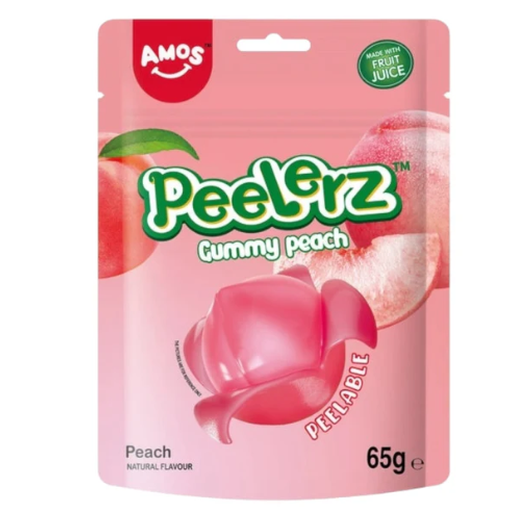
This is a 65g gummy-sweet bag rather than a divided multipack. If considering it before exercise, decide on a serving and check the current nutrition and allergen label; a whole pack should not be assumed to be a suitable portion.
 No image available
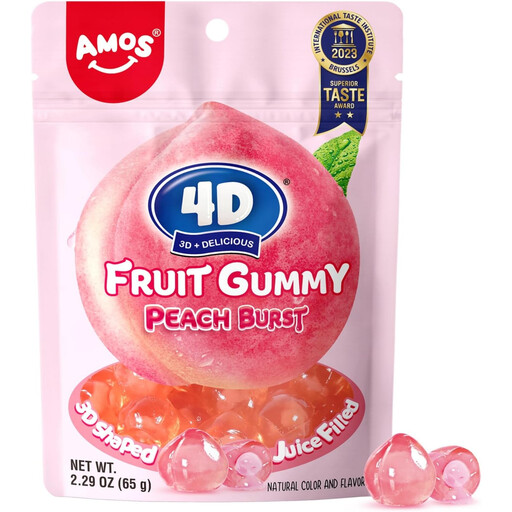
This 65g peach gummy bag is another single-pack option, not a pre-measured exercise serving. Check its current ingredients and allergen statement if avoiding gelatine, soy or dairy, and try a chosen portion during ordinary training.
A small portion may be worth considering when you want a familiar carbohydrate-containing snack shortly before exercise and already know you tolerate it. Sports Dietitians Australia advises choosing familiar, well-tolerated foods that are high in carbohydrate and low in fat, and trying timing and snacks during training.
For the two examples here, the HARIBO Starmix gift box lists less than 0.5g fat per 100g, while Marks & Spencer lists 34.0g fat per 100g for its Collection Milk, Dark and White Chocolates. The jelly-sweet example is therefore closer on this measure to Sports Dietitians Australia’s low-fat pre-exercise guidance; the comparison does not determine how you personally tolerate either product.
Do not carry personal snack advice straight over to school food. England’s Requirements for School Food Regulations 2014 define confectionery to include both non-chocolate confectionery and chocolate, and Department for Education school-food guidance applies to England. Check the requirements for the school’s nation and setting before supplying a product.
No. Department of Health & Social Care guidance describes restrictions on certain retail and online promotions for businesses operating in and selling to England. School-food requirements are separate, and that retail guidance is not a UK-wide school-meal rule.
Read the current label of the exact pack, particularly its ingredients and allergen statements. HARIBO lists gelatine in its Starmix gift box, while Marks & Spencer says its Collection Milk, Dark and White Chocolates are not suitable for people with nut or peanut allergies.