Students choosing a revision-break treat
If you want something sweet and chewy, distinguish fruit jelly sweets from cocoa-based dark chocolate. Neither product type needs to be your default for every break.


Choose by the kind of snack you want: fruit-flavoured jelly sweets offer a chewy confectionery treat, while high-cocoa dark chocolate is a different product, not a variety of jelly sweet. For regular revision breaks, NHS Healthier Families favours fruit and vegetables as snacks; if you choose confectionery, check the portion and nutrition label rather than relying on fruit or cocoa wording.
If you want something sweet and chewy, distinguish fruit jelly sweets from cocoa-based dark chocolate. Neither product type needs to be your default for every break.
Check the amount a child is likely to eat against the pack’s serving size and sugars information. NHS Healthier Families favours fruit and vegetables as snacks and advises cutting down on snacks with red front-of-pack traffic-light labels.
Food provided in state-funded schools in England is subject to school-food requirements, as the Department for Education explains. The Requirements for School Food Regulations 2014 define confectionery to include non-chocolate confectionery and chocolate; check the applicable requirements before selecting either for school provision.
Start with the snack type, then compare the portion you would eat with the information on its label. School food buyers must also check the rules for their setting.
| Priority | What to check | Your needs |
|---|---|---|
| Regular breaks | Decide whether you want confectionery or another snack. NHS Healthier Families favours fruit and vegetables and also lists options such as yoghurt and hummus with vegetables. | For regular revision breaks, I want a snack choice that does not depend on sweets or chocolate every time. |
| Portion and sugars | Compare the stated serving with the amount you plan to eat. Tesco’s label for the 150g Rowntree’s Jelly Tots bag gives 11 sweets and 11g sugars per serving. | If I’m buying a sharing bag, I want to know what its nutrition figures mean for one serving, not just for the whole bag. |
| Sweet type | Check the product description and ingredients: cocoa percentage identifies a chocolate product, while the cited HARIBO Jelly Beans are fruit-flavoured sweets. Compare nutrition per 100g on the exact products. | Am I after a chewy fruit sweet, or the taste of dark chocolate? The word “dark” alone does not settle that choice. |
| School provision | For food provided in a state-funded school in England, check the school-food requirements. The 2014 Regulations define confectionery to include non-chocolate confectionery and chocolate. | When buying for a school, I need to apply the rules for that setting rather than assume retail promotion rules answer the school-food question. |
Tesco’s label for Rowntree’s Jelly Tots gives 11g sugars per 11-sweet serving and 54.6g per 100g. Fruit-flavour wording does not replace those figures.
Read the sugars line and serving size on the exact pack, especially if you are choosing from a sharing bag.
A stated cocoa percentage describes chocolate, whereas the cited HARIBO Jelly Beans are fruit-flavoured sweets. The two will not meet the same preference for flavour and texture.
Decide whether you want cocoa flavour or a chewy fruit sweet before comparing individual products.
Ocado’s label for M&S 70% dark chocolate also declares 29.6g sugars and 27.7g saturates per 100g. Cocoa content answers a different question from the nutrition figures.
Use the cocoa percentage to identify the chocolate you want, then read the serving size, sugars and saturates on that pack.
Retail restrictions on promotions of products high in fat, salt or sugar address a different context from food provided in schools. Department for Education guidance identifies England’s state-funded schools as the scope of its school-food requirements.
For school provision, check the applicable school-food rules directly; do not assume one retail rule applies to every school setting across the UK.
These product-label examples illustrate different choices; a brand reference does not mean every product in its range has the same ingredients or nutrition values.
HARIBO Jelly Beans are an example of fruit-flavoured sweets rather than a cocoa-based option.
Jelly Tots offer a fruit-flavoured jelly-sweet example with a stated serving.
The cited M&S product illustrates the dark-chocolate choice, not a jelly sweet.
These options cover fruit-flavoured chewy sweets and dark chocolate as separate confectionery choices for a revision-break treat. Check each pack’s serving information when deciding how much to have.
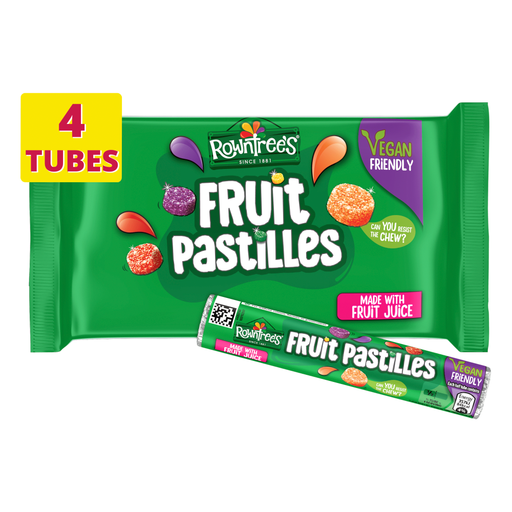 No image available
A fruit-sweet option in four 41g packs for an occasional revision-break treat. Check the pack’s serving size and sugars information when choosing a portion; this is not dark chocolate.
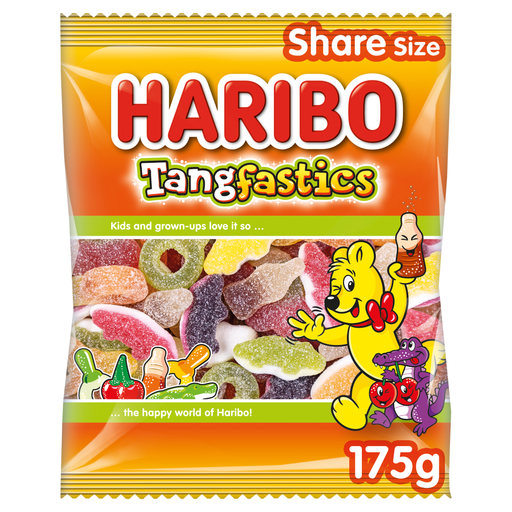 No image available
A 175g sharing bag for someone seeking fruit-and-cola-flavoured fizzy jelly sweets rather than cocoa flavour. Check the pack for a serving size and sugars per serving if you want to compare portions.
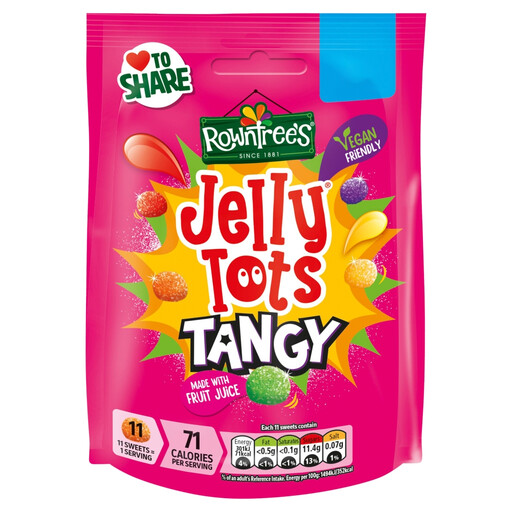 No image available
A 140g bag of tangy jelly sweets for a chewy treat rather than a dark-chocolate choice. Use the exact pack’s serving and sugars information to assess a portion.
 No image available
A 100g dark-chocolate bar for a cocoa-flavoured treat, not a jelly sweet. Compare the pack’s stated portion, sugars and saturates as well as its 72% cocoa description.
 No image available
A 90g dark-chocolate bar for someone choosing cocoa flavour instead of jelly-sweet texture. Its 70% description identifies the chocolate; check the pack’s portion and nutrition figures separately.
No: a cocoa percentage describes chocolate, while the cited HARIBO Jelly Beans are fruit-flavoured sweets. If “dark” matters to your choice, check whether the product is described as chocolate or as a jelly sweet rather than assuming the terms mean the same thing.
Check the school-food requirements applicable to the food being provided, not retail promotion rules. Department for Education guidance covers food and drink provided in state-funded schools in England, and the Requirements for School Food Regulations 2014 define confectionery to include non-chocolate confectionery and chocolate.
Use the serving size and sugars figure on the exact pack. Tesco’s label for the 150g Rowntree’s Jelly Tots bag states that 11 sweets make one serving containing 11g sugars; do not transfer those figures to a different product or pack.
No. Cocoa percentage identifies a characteristic of the chocolate, not its full nutrition information. Ocado’s label for M&S 70% dark chocolate lists 29.6g sugars and 27.7g saturates per 100g, so compare the portion and nutrition label of the chocolate you are considering.