Who is this choice for?
The occasion matters as much as the flavour: an occasional sweet, a regular between-meal snack and food provided at school call for different checks.
Occasional mid-morning treat buyers
If you want jelly sweets now and then, check the portion you intend to eat as well as the nutrition label. For a regular between-meal snack, the NHS’s advice to limit the frequency and amount of sugary foods points towards a non-sugary choice.
Vegan shoppers and people avoiding gelatine
Check the exact sweet, not just its brand or jelly texture. HARIBO UK describes its Jelly Beans as suitable for vegans, while Tesco lists beef gelatine in its Jelly Babies.
Parents and school-food planners in England
Keep a private purchase separate from food provided during the school day. For a state-funded school in England, check the applicable school-food standards and school policy; the Department for Education says its updated standards remain subject to Parliamentary approval ahead of a planned September 2027 start.
What should you check?
Decide whether this is an occasional sweet or a regular snack first. Then compare like-for-like nutrition figures and check the ingredients of the product you would actually buy.
| Priority | What to check | Your needs |
|---|
| Snack occasion |
Consider how often you have sweets between meals. The NHS advises keeping the frequency and amount of sugary foods as low as possible; Lancashire and South Cumbria NHS Foundation Trust advises having sugary foods with meals instead. |
For something to eat every mid-morning, I’d choose a non-sugary snack. Jelly sweets would be an occasional sweet, not my default between-meal option. |
| Sugars and portion |
Compare sugars per 100g on the same basis, then read the stated serving and sugars per serving where shown. Check how many servings a bag contains. |
I want to know what my intended portion represents, rather than treating the whole bag as one serving. Sainsbury’s lists approximately seven servings in its 150g Rowntree’s Jelly Tots bag. |
| Ingredients |
Read the current ingredient list for gelatine and look for an explicit suitability statement if you need one. Do not transfer a claim from one product to another in the same range. |
If I avoid gelatine, a vegan claim on the exact sweet matters. HARIBO UK describes Jelly Beans as suitable for vegans; Tesco Jelly Babies list beef gelatine. |
| ‘Dark’ and cocoa |
Check what the product actually is and whether its label states a cocoa content. Cocoa powder in a mixed sweet does not establish that it is a high-cocoa dark product. |
When I want a cocoa flavour or a particular cocoa content, I’ll check chocolate products separately. Sainsbury’s describes Dolly Mix as a candy-and-jelly assortment containing fat-reduced cocoa powder. |
| School provision |
For food provided by a state-funded school in England, check the rule in force, the school type and its policy. The Department for Education says updated standards are subject to Parliamentary approval, with a planned September 2027 start. |
A sweet bought for home is a different decision from a snack supplied at school. I need to check the applicable school rules before buying for that setting, rather than applying England’s planned standards across the UK. |
Brand and product-line references
These examples show why a brand name alone cannot settle a sugar or ingredient question; the figures and suitability statements apply to the named products.
Haribo
HARIBO UK’s Jelly Beans and Starmix illustrate different ingredient statements within one brand.
- HARIBO UK describes Jelly Beans as suitable for vegans and lists 66g sugars per 100g.
- HARIBO UK lists gelatine in Starmix and 47g sugars per 100g; the Jelly Beans suitability statement does not extend to Starmix.
Rowntree’s
Sainsbury’s lists a 150g Rowntree’s Jelly Tots sharing bag with both per-100g and serving information.
- The listing states 54.6g sugars per 100g and 11g sugars per serving of 11 sweets.
- The bag contains approximately seven stated servings, so its full contents should not be mistaken for one serving.
Tesco
Tesco Jelly Babies provide a product-specific example with ingredient and nutrition information.
- Tesco lists 59.8g sugars per 100g and 15g per stated 25g serving.
- The ingredients list includes beef gelatine, which matters if you avoid that ingredient.
Sainsbury’s
Sainsbury’s Dolly Mix is described as an assortment of candy and jelly sweets, rather than a high-cocoa dark jelly sweet.
- Its listing gives 74.4g sugars per 100g and identifies fat-reduced cocoa powder among the ingredients.
- It also lists beef gelatine; the presence of cocoa powder does not establish a particular cocoa content for the assortment.
Joybuy product options
These options include fruit-flavoured sweets in single and sharing formats, plus a separate grape konjac jelly pouch format. For an occasional sweet, compare the current pack’s serving and ingredient information before choosing; the konjac jelly also calls for its own use instructions to be checked.
 No image available
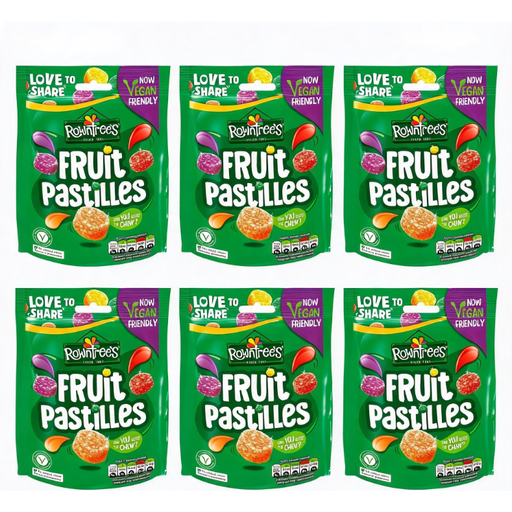
Rowntree’s Fruit Pastilles Vegan 143g × 6
The vegan-labelled six-pack is an option to examine if you want fruit pastilles while avoiding gelatine. Check the current pack’s ingredients and serving information for your intended portion; the product information warns of a choking risk for children under 4.
Joybuy
 No image available
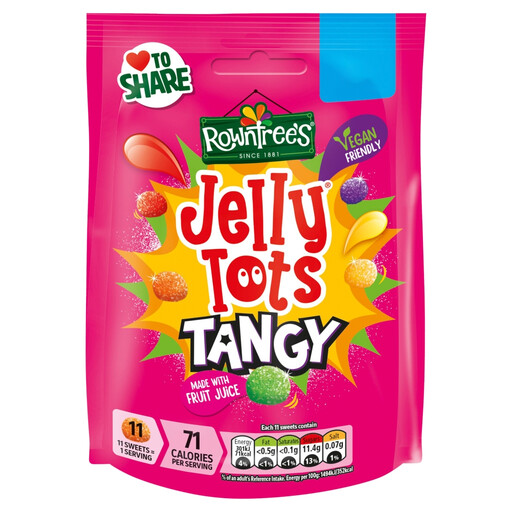
Rowntree’s Jelly Tots Tangy 140g
For an occasional tangy sweet, use the current pack’s stated serving to judge the portion you plan to eat. If dietary suitability matters, check the exact label: a vegetarian statement does not, by itself, establish vegan suitability.
Joybuy
 No image available
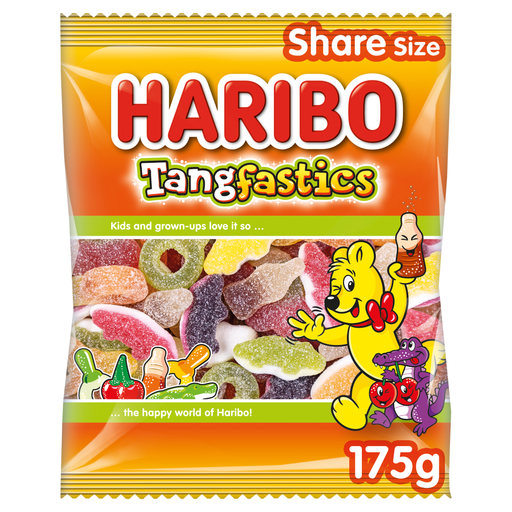
Haribo Tangfastics Fruit & Cola 175g Sharing Bag
The fruit-and-cola sharing format is relevant if you want a tangy sweet occasionally. Decide on a portion rather than treating the bag as one serving, and check the current ingredient list if you avoid gelatine.
Joybuy
 No image available
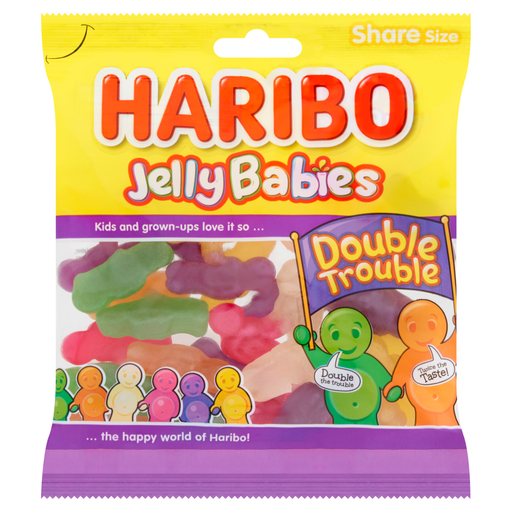
Haribo Jelly Babies Double Trouble 175g Sharing Bag
This share-size bag is another occasional fruit-flavoured sweet option. Check the current pack for its serving guidance before dividing it up, and read the ingredients if gelatine is a deciding factor.
Joybuy
 No image available
Orihiro prunto Konjac Jelly Grape 6pcs 120g
These individual grape konjac jelly pieces are a different format from the sharing bags. The product information says they are not suitable for children under 4 and advises thorough chewing and adult supervision for older children; check the current pack instructions before use.
Joybuy
Questions about jelly sweets
Are jelly sweets an everyday mid-morning snack?
A non-sugary option is the more appropriate choice for a regular between-meal snack. The NHS advises keeping the frequency and amount of sugary foods as low as possible, while Lancashire and South Cumbria NHS Foundation Trust advises having sugary foods with meals rather than as snacks between them. Treat jelly sweets as an occasional sweet instead of a daily mid-morning default.
Does a lower sugars-per-100g figure settle the choice?
No. The per-100g figure lets you compare labels on the same basis, but your intended portion and how often you eat sweets still matter. For a serving comparison, Sainsbury’s lists 11g sugars per 11 Rowntree’s Jelly Tots, while Tesco lists 15g per 25g serving of its Jelly Babies; those are different stated serving sizes.
Are all jelly sweets vegetarian or vegan?
No. Check the exact product’s ingredients and suitability statement. HARIBO UK describes Jelly Beans as suitable for vegans, whereas Tesco lists beef gelatine in its Jelly Babies; neither statement establishes the ingredients of a different sweet.
Does ‘dark’ mean a jelly sweet is high in cocoa?
Not on its own. Sainsbury’s describes Dolly Mix as a candy-and-jelly assortment containing fat-reduced cocoa powder, not as a sweet with a stated high cocoa content. If a particular cocoa content is what you want, check chocolate labels separately.
Can jelly sweets be provided as a school mid-morning snack in England?
Do not assume a household sweet is suitable for school provision. The Department for Education says its updated school-food standards for England are subject to Parliamentary approval ahead of a planned September 2027 start; its published September 2027 primary-school standards exclude confectionery from permitted snacks. For food provided at a state-funded school, check the rule in force on the relevant date and the school’s policy, rather than applying a future England standard across the UK.


