
24/7 Customer Support

Free returns

Same-day & Next-day Delivery

Quality Guaranteed

Unlock Your Welcome Offers: FREE Delivery | Up to 80% OFF | Free 30-day JoyPlus trial
Download the APP
A well-chosen display cabinet and jewellery display stand can make a room, boutique or exhibition table look organised and intentional. The wrong combination, however, may create more problems than it solves: doors that are awkward to open, shelves that do not suit your items or display surfaces that mark delicate jewellery.
Whether you are furnishing a UK home, preparing a shop window display or arranging stock for a trade show, focus on practical specifications rather than attractive product photography alone.
A tall, narrow cabinet may look suitable for a small room, but its usable capacity depends on shelf layout, door clearance and the depth of the storage area. Check the assembled dimensions, not just the product image. Also measure skirting boards, plug sockets and the route through doorways before ordering.
A freestanding display cabinet needs a stable, level position. For taller furniture, check whether wall-fixing hardware is included and whether your wall type can support the required anti-tip fitting.
A glass door storage cabinet is useful for keeping dust away while allowing items to remain visible, but glass doors are not automatically lockable or designed as a security safe. Check the product description for locks, hinges, glass type and closure details.
Tempered glass is designed for everyday furniture use and can be safer than ordinary glass when broken, but it can still break under impact. Avoid placing the unit where children may play or where doors could be struck by furniture.
Jewellery can be scratched by rough wood, untreated metal edges or abrasive fabric. A grey microfibre jewellery display provides a softer surface for rings and can create contrast against brighter metals and gemstones. However, microfibre still needs sensible care: avoid liquids, excessive moisture and direct sunlight.
For retail use, also consider viewing height. A display that is attractive from above may be difficult to browse at a counter or shop window.
For a tall white metal display cabinet, look for the stated metal finish and how it should be maintained. Powder-coated metal can provide a smooth, wipe-clean surface, while the finish also contributes to the cabinet’s visual style. Use a soft, dry cloth unless the manufacturer gives different instructions; abrasive cleaners may dull or damage the coating.
For a wooden ring holder, check whether the wood is finished smoothly and whether the ring-contacting area is covered with fabric. Solid wood and microfibre offer a different feel from plastic or unfinished timber, particularly when the stand is handled regularly.
Dimensions should be compared in centimetres, especially when planning a UK home office, hallway or boutique counter. The Interiors by Premier cabinet is listed at H150 x L35 x W75cm and weighs 25kg. Confirm how the retailer defines length and width before finalising your layout, as product listings can use these labels differently.
A slim industrial cabinet may save floor space, but narrow furniture can be more prone to tipping if it is overloaded or positioned on an uneven surface. Keep heavier items low and follow the supplied fixing instructions.
Check whether the product arrives assembled. The featured cabinet requires assembly, so allow time to identify parts and follow the instructions. Its two glass doors and open lower shelf create a combination of concealed and open storage, but the open shelf will need more frequent dusting.
For a tiered jewellery organiser, no installation may be preferable when you need a ready-to-use display for a market, shop counter or exhibition. Consider how easily the stand can be lifted, packed and repositioned between events.
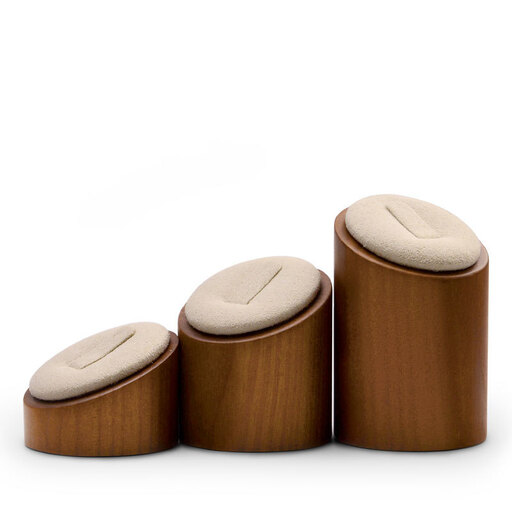
Why This Fits Their Persona: A compact, ready-to-use option for someone arranging a bedroom dressing table, home collection or small starter display without assembling furniture.
It does not require installation and uses a covered display surface rather than leaving rings on a hard, potentially abrasive shelf.
Solid wood construction, grey microfibre covering and three height levels of 1.2, 2.0 and 2.8 inches.
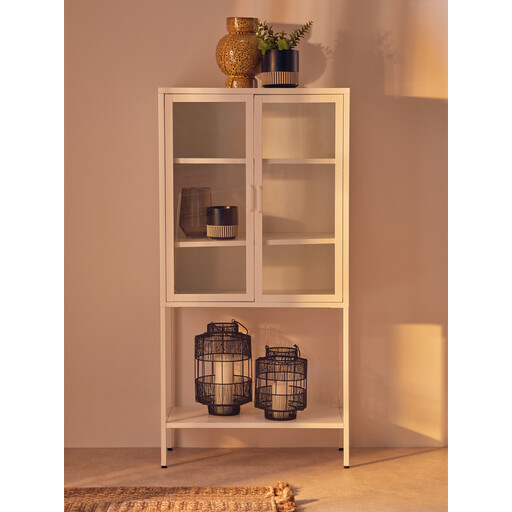
Why This Fits Their Persona: Suits homeowners or boutique owners wanting furniture-led storage that displays selected items while keeping other belongings behind doors.
The listing states the construction, tempered glass and maintenance method clearly, while the open shelf makes the storage layout easier to assess before purchase.
Powder-coated metal body, two glass doors, an open shelf and a listed 25kg weight.

Why This Fits Their Persona: Designed for repeated presentation at a jewellery counter, shop window display, trade show or portable merchandising setup.
The three-level structure separates pieces visually, reducing the need to overcrowd one flat surface or hide rings behind one another.
Ready for immediate use, made from solid wood and finished with grey microfibre to provide contrast for jewellery.
We have compiled a complete, real-time list of products that fully satisfy these strict selection criteria and UK safety regulations.
A slim cabinet can work well in a hallway, bedroom or home office, provided the assembled depth and door clearance fit the space. Measure skirting boards and nearby furniture, and secure tall units to the wall. A narrow profile does not remove the need for anti-tip precautions.
Use a soft, dry cloth on the wood and microfibre. Keep the stand away from excessive moisture, liquids and prolonged direct sunlight. Do not use abrasive cleaning products, as they may affect the wood finish or fabric surface.
No. A ring display stand is intended for presentation and organisation. It does not provide the enclosed or lockable protection associated with secure storage. For valuable items, consider where the stand will be placed and whether a separate secure storage solution is appropriate when the items are not being displayed.