
24/7 Customer Support

Free returns

Same-day & Next-day Delivery

Quality Guaranteed

Unlock Your Welcome Offers: FREE Delivery | Up to 80% OFF | Free 30-day JoyPlus trial
Download the APP
A jewellery display tray can turn a cluttered dressing table into an orderly arrangement, but attractive photographs do not always reveal whether a tray is practical for daily use. UK shoppers often discover the drawbacks only after purchase: rings disappear into oversized compartments, necklaces tangle on a flat surface, or delicate finishes become difficult to clean.
Before choosing a jewellery organiser tray, look beyond colour and styling. The most useful option depends on what you own, where the tray will sit and whether it is for private storage, retail presentation or occasional entertaining.
A large jewellery storage tray may look spacious but still provide poor organisation if it has no dedicated areas for rings, earrings or watches. Conversely, a compact ring display tray may suit a small collection but become overcrowded when used for bracelets and necklaces.
Check the external dimensions, compartment layout and available surface area. A tray measuring approximately 35 x 24 cm offers more room for a mixed collection than a small 18 x 10 cm option, but it will also need more space on a dresser, counter or display table.
A hard or rough surface can allow items to slide and may increase the chance of scratches when pieces are placed together. A velvet-lined jewellery tray or one finished with microfibre provides a softer display surface. However, lining alone does not prevent chains from tangling, so separated sections and sensible spacing still matter.
For retail use, a neutral lining can also improve visibility. Beige, black or other understated colours generally keep attention on the jewellery rather than the tray itself.
A tray designed for jewellery is not automatically suitable for food, moisture or heat. PU leather can usually be wiped with a dry or slightly damp cloth, while wood and microfibre generally need gentler care. Decorative trays may be suitable for candles or ornaments but may not have compartments for small accessories.
Always check the care instructions, whether the item is intended for indoor use and whether jewellery is included. The products discussed below are supplied as trays or display pieces; jewellery and food are not automatically part of the package.
A PU leather jewellery tray is practical when quick wipe-clean maintenance matters. It can suit a bedside table, desk, shop counter or exhibition stand, and its dark finish creates contrast with many metals and gemstones.
A wooden jewellery tray gives a warmer appearance and may complement traditional or Scandinavian-inspired interiors. Solid wood with microfibre lining can provide a firm base and a softer surface for watches, earrings and rings. Moisture should generally be avoided, particularly around untreated or fabric-lined surfaces.
Porcelain and stone trays are better considered for decorative or serving purposes. A porcelain snack serving tray may double as a small-item organiser, while a marble dessert display stand is intended for cakes and pastries rather than jewellery storage.
Measure the area where the tray will be used before ordering. A shallow 1.5–2 cm tray can be easy to slide into a drawer or place on a narrow shelf. A deeper 3–3.5 cm display tray may offer a more substantial presentation but can take up more room.
For necklaces and bracelets, look for enough uninterrupted space to lay pieces separately. For rings and earrings, compartments or a divided layout are more useful than a completely open surface.
Look for clear maintenance guidance. PU leather trays can generally be wiped clean, whereas microfibre-lined wood should be dusted with a soft, dry cloth and kept away from excessive moisture. Decorative metal trays may require a dry cloth to protect the finish.
For a jewellery shop display holder, also check whether the tray sits flat and whether its proportions fit the display cabinet. A visually refined tray is less useful if it overcrowds the counter or makes smaller pieces difficult to view.
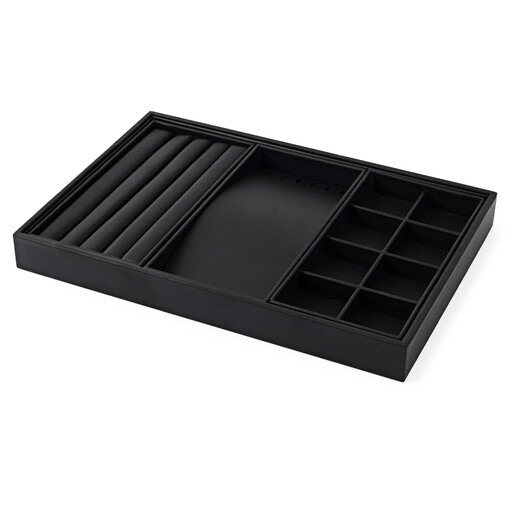
Why This Fits Their Persona: A practical choice for someone starting a jewellery storage system at home, with enough room for rings, earrings, necklaces, bracelets and watches.
Its approximate 35 x 24 x 3 cm format provides more usable space than a tiny trinket dish, while the wipe-clean PU leather avoids complicated maintenance.
PU leather construction; suitable for home, shop or exhibition display; no assembly required.
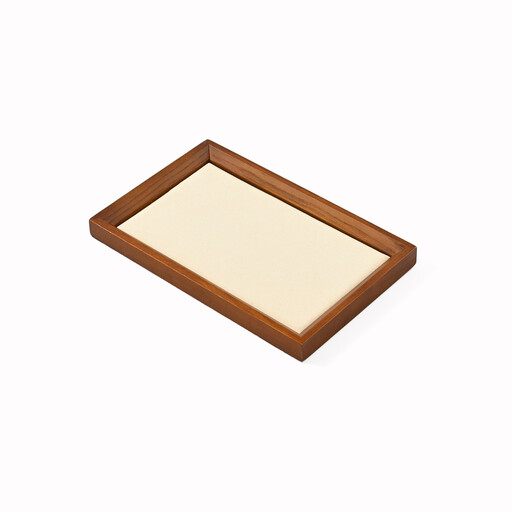
Why This Fits Their Persona: Suits shoppers who prefer a natural material and a more considered presentation for a dressing table, bedside table or display cabinet.
The solid wood base and microfibre lining address the problem of a hard display surface, while its 23 x 15 x 2 cm size remains suitable for smaller spaces.
Solid wood construction; beige microfibre lining; suitable for jewellery shops, photography and home organisation.
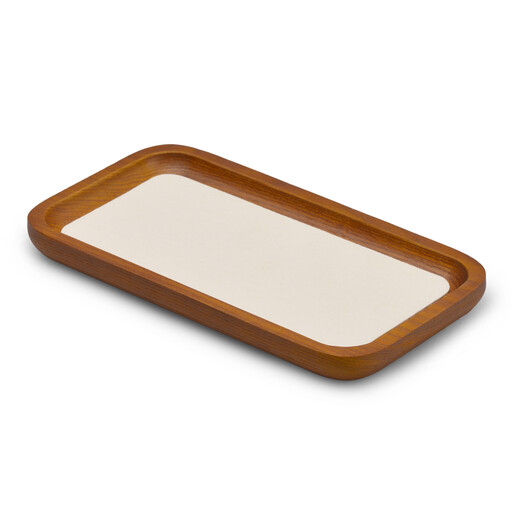
Why This Fits Their Persona: Its two listed size options make it useful for retailers, exhibitors, photographers or collectors who need flexible arrangements for different product groups.
The small rectangular option measures 18 x 10 x 1.5 cm and the medium option measures 20 x 18 x 1.5 cm, helping users match the tray to a particular display area.
Solid wood and premium microfibre; two size options; designed for rings, earrings, necklaces, bracelets and watches.
We have compiled a complete, real-time list of products that fully satisfy these strict selection criteria and UK safety regulations.
Some trays can be repurposed for keys, watches, cosmetics or office accessories, provided the material and care instructions are suitable. A divided porcelain dish can work as a jewellery organiser tray or snack serving tray, while a decorative metal tray may suit candles and ornaments.
For food presentation, choose a product specifically described as food-safe or intended as a serving piece. A dessert display stand, such as a marble cake stand, should not be treated as a jewellery tray simply because it has a flat surface.
Place frequently worn items towards the front and group similar pieces together. Use separated sections for rings and earrings, and lay necklaces individually rather than stacking chains. Keep heavier watches and bracelets on a stable area where they will not press against delicate items.
Avoid overfilling the tray. Leaving visible space makes items easier to identify and reduces the need to handle several pieces when choosing one.
Lifespan depends on materials, handling and exposure to moisture or sunlight. PU leather can remain presentable when wiped gently and kept away from harsh chemicals. Wood and microfibre require dry storage and careful dusting. Do not place any tray near open flames, radiators or prolonged damp conditions unless the product guidance specifically allows it.
For a purchase that suits your home or business, compare the material, measurements, lining and cleaning requirements before selecting a jewellery display tray.