
24/7 Customer Support

Free returns

Same-day & Next-day Delivery

Quality Guaranteed

Unlock Your Welcome Offers: FREE Delivery | Up to 80% OFF | Free 30-day JoyPlus trial
Download the APP
Buying jewellery making tools can seem straightforward until a low-cost set develops stiff joints, a punch produces uneven holes or a rotary tool includes accessories that do not fit. Product photos may look convincing, but the details that affect everyday use are often found in the specifications.
Whether you are making bracelets, repairing chains, working with leather, finishing 3D prints or looking for a creative children’s activity, check these points before buying.
A large tool kit is not automatically more useful. Some sets include repeated accessories or attachments that are unsuitable for your materials. For jewellery work, the shape and size of the jaws often matter more than the total number of pieces.
A practical jewellery pliers set should ideally include needle-nose or long-nose pliers for reaching small components, flat-nose pliers for holding and shaping and cutters for trimming wire. Check the dimensions as well: mini pliers for jewellery making are easier to control around small findings, while larger handles may offer more leverage for heavier tasks.
Rotary tools and replacement accessories are not universally compatible. Check the collet size before ordering sanding drums, polishing wheels or engraving bits. For example, a tool designed for 3/32-inch (2.3 mm) accessories will not necessarily accept every attachment sold for a different shaft size.
Similarly, leather hole punch pliers should offer punch sizes suited to your project. A tool with only one fixed hole diameter may be limiting if you work with watch straps, belts, bags and fabric projects.
Precision work involves repeated gripping, turning and cutting. Hard, slippery handles can make detailed work uncomfortable, while a poorly stored tool can collect moisture and debris. Look for non-slip grips, spring-assisted opening where relevant and a pouch or case that keeps jewellery repair tools together.
In the UK, storing metal tools in a dry area is particularly useful in damp rooms or workshops. Wipe tools after use and apply a small amount of light oil to pivots when recommended by the manufacturer.
Different jaw profiles perform different jobs:
For regular use, alloy or carbon steel construction can provide a firm working platform. The WORKPRO set listed below specifies drop-forged alloy steel, a Ni-Fe coating and jaws hardened to HRC55-65. Hardness figures should be treated as one specification rather than a guarantee of suitability for every material; avoid cutting wire or components beyond the tool’s intended capacity.
For small components, precision pliers should open and close smoothly and allow you to see the workpiece clearly. Bi-material rubber handles can improve grip, while double springs may reduce the effort needed to reopen the jaws during repetitive tasks.
Look for dimensions in millimetres before purchasing. A 108 mm cutter is more compact than a 165 mm front cutter, but the larger tool may provide more leverage. Select the size according to your hand, workspace and material thickness.
For leatherwork, six interchangeable punch heads provide more flexibility than a single-size punch. The Deli tool below includes 2 mm, 2.5 mm, 3 mm, 3.5 mm, 4 mm and 4.5 mm options.
For a rotary tool for crafts, adjustable speed is valuable because polishing, drilling, engraving and sanding require different levels of control. A five-speed tool with a maximum speed of 25,000 RPM can cover varied tasks, but beginners should start at a low setting and practise on scrap material. Confirm the accessory diameter, charging method and included attachments before buying.
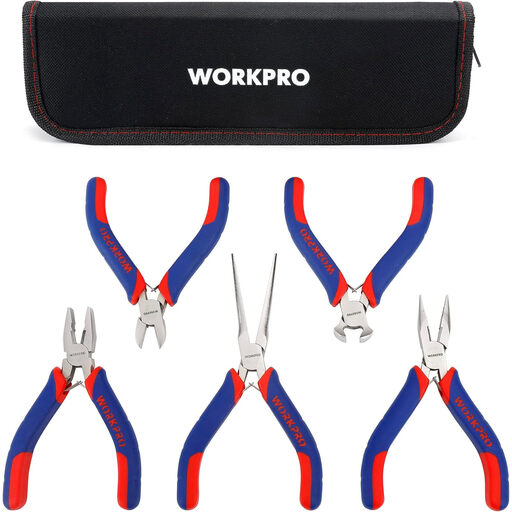
Why This Fits Their Persona: A compact selection suits beginners building a basic home jewellery bench, model builders and electronics repair users who need several jaw styles without buying each tool separately.
The five included pliers have specified sizes and functions, rather than relying on an unspecified piece count. The set also includes a 600D nylon zip pouch for storage.
Includes side cutters, combination, front cutters, flat-nose and needle-nose pliers. Rubber handles and double spring strips are specified for controlled, repeated use.
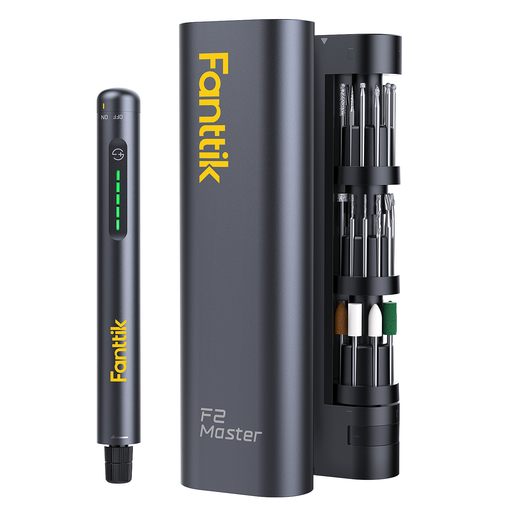
Why This Fits Their Persona: Makers who want a portable finishing tool for engraving, polishing, drilling, sanding or 3D-print finishing may value its cordless format and organised accessory storage.
The tool specifies its compatible 3/32-inch (2.3 mm) accessory size, five speed settings and USB-C charging, helping buyers check fit and power requirements first.
Includes 35 accessories, a 25,000 RPM maximum speed and a stated 60-minute full USB-C charging time.
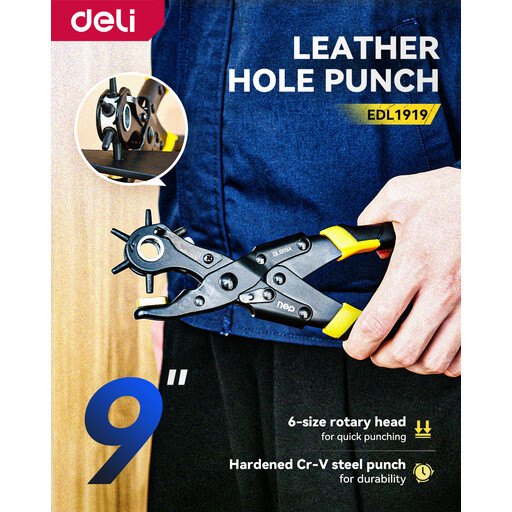
Why This Fits Their Persona: Leatherworkers, bag makers and crafters handling repeated hole-punching tasks can select from six sizes for straps, canvas, fabric and similar materials.
The interchangeable head sizes are listed clearly, while the double-lever mechanism is designed to reduce hand effort during repetitive work.
Plated steel construction, padded non-slip handles and six punch diameters from 2 mm to 4.5 mm.
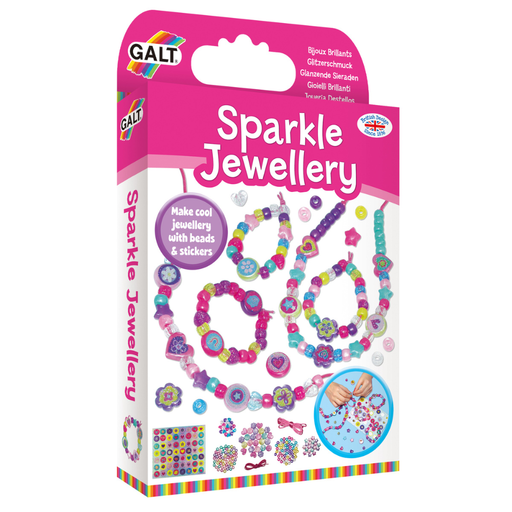
Why This Fits Their Persona: Families seeking a ready-to-use creative activity can choose this kit for children aged 5 and above, with beads, charms, string, fasteners and instructions included.
It is presented as a complete activity rather than an adult tool set. The age warning is clear: small parts can create a choking hazard and direct adult supervision is recommended.
Includes the main materials and instructions in one compact package, with no batteries required.
We have compiled a complete, real-time list of products that fully satisfy these strict selection criteria and UK safety regulations.
A practical starter selection usually includes needle-nose pliers, flat-nose pliers, side cutters, round-nose pliers if you plan to form loops, wire, findings and a small storage case. Choose tools with clearly stated dimensions and comfortable handles rather than buying a large kit with unknown specifications.
Lifespan depends on frequency of use, materials and maintenance. Clean jaws after use, avoid cutting hardened materials and oil pivot points periodically where appropriate. Rust prevention is particularly important if tools are stored in a humid workshop or shed.
A USB-C rotary tool does not require a dedicated mains power supply, but it does need regular charging. Running cost depends mainly on the electricity used for charging and how often the tool is operated. Check the stated charging time, battery indicator and accessory compatibility before purchase.