
24/7 Customer Support

Free returns

Same-day & Next-day Delivery

Quality Guaranteed

Unlock Your Welcome Offers: FREE Delivery | Up to 80% OFF | Free 30-day JoyPlus trial
Download the APP
A well-chosen jewellery organiser and display tray can make rings, earrings, necklaces, bracelets and watches easier to find while reducing clutter on a dressing table or shop counter. However, attractive product photography does not always reveal whether a tray will suit your collection, available space or intended use.
Before buying, look beyond colour and styling. Check the internal layout, usable dimensions, surface material and how you plan to access your jewellery each day.
A tray may look spacious in product images but have limited room for larger bracelets, watches or statement necklaces. Small ring slots can also be unsuitable for chunky rings, while shallow compartments may allow items to overlap.
Check the external dimensions and internal layout before ordering. A 35 x 24 x 3 cm tray, for example, provides a broad, low-profile surface for display but does not offer the enclosed storage of a jewellery box with drawers.
Velvet, microfibre, PU leather and other soft-touch finishes can provide a more suitable surface than bare wood or hard plastic. However, they still require careful handling. Dust, grit and metal edges can cause marking when jewellery is repeatedly moved across the lining.
A velvet jewellery tray or microfibre-lined wooden jewellery tray should be kept clean with a soft, dry cloth. Avoid harsh chemicals, abrasive materials and excess moisture unless the product instructions specifically allow them.
A lightweight tray may be convenient for occasional use but can slide when placed on a polished dresser or shop counter. Similarly, a tall rotating jewellery box needs enough clearance to turn freely and should be positioned where its drawers and hooks are accessible.
For retail displays and exhibitions, consider the viewing angle, base stability and whether items can be removed without disturbing neighbouring pieces. A jewellery shop display stand or bracelet and watch holder should support the display purpose rather than simply add decoration.
The material affects cleaning, appearance and suitability for frequent handling:
No material makes jewellery immune to damage. Store pieces separately where possible, particularly items with sharp settings or delicate chains.
Measure the surface where the organiser will sit, allowing space to open drawers or rotate a case. Compare product measurements in centimetres rather than relying only on lifestyle images.
For example, the featured PU leather trays measure approximately 35 x 24 x 3 cm, making them suitable for a broad, low-profile arrangement. The smaller solid wood tray measures 23 x 15 x 2 cm, while the larger version measures 30 x 23 x 2 cm.
If you need vertical capacity, the JOYFURNOS rotating jewellery box measures approximately 16 x 22.2 x 28 cm and includes five drawers, ring slots, earring holes and necklace hooks.
A useful ring and earring organiser should have slots or separated areas rather than one open compartment. Long necklaces benefit from individual hooks, helping to reduce tangling. Watches and wide bracelets need enough clearance to sit securely without pressing against nearby items.
For a mixed collection, look for a jewellery storage organiser with several storage formats. For a smaller collection, a simple display tray may be faster to use and easier to keep tidy than a large jewellery box with drawers.
The following options match different shopping needs, from compact home storage to shop and exhibition presentation.
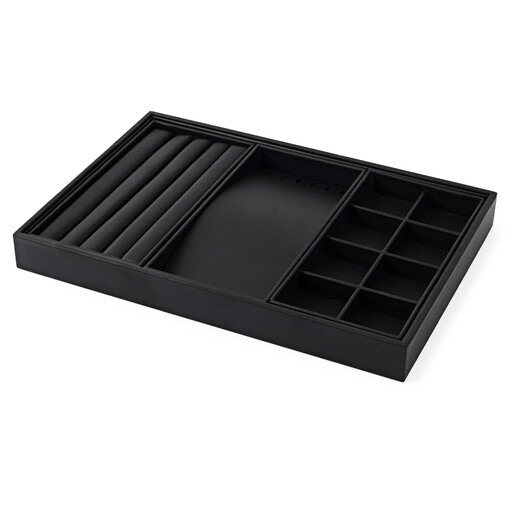
Why This Fits Their Persona: Its low-profile 35 x 24 x 3 cm format suits a bedside table, dresser or desk when you want visible access without a large box.
The compartmented layout is more organised than a single open dish, helping separate rings, earrings, necklaces, bracelets and watches.
PU leather surface; ready to use; can be wiped with a dry or slightly damp cloth.
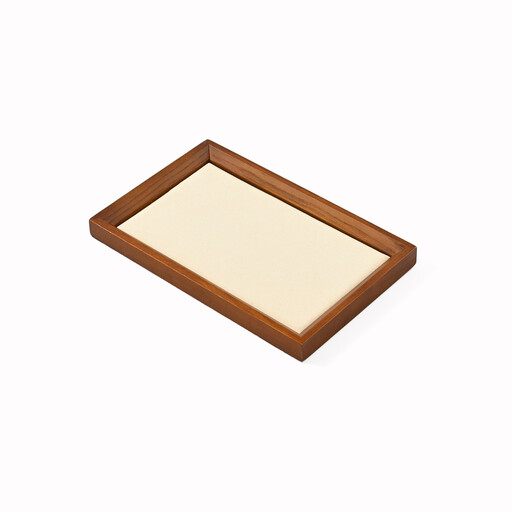
Why This Fits Their Persona: The solid wood construction and beige microfibre lining suit buyers who want a structured tray for a dresser, coffee table, photography setup or boutique counter.
Its stated 23 x 15 x 2 cm size makes the space requirement clear, reducing the risk of buying a tray that overwhelms a small surface.
Solid wood body; microfibre lining; no assembly required.
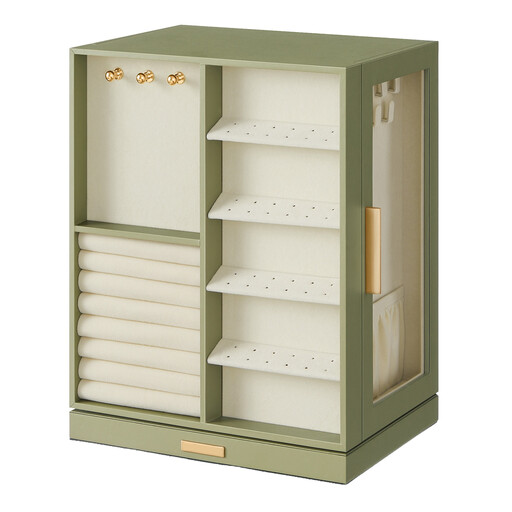
Why This Fits Their Persona: Vertical storage suits a larger collection in a UK bedroom or dressing area where drawer capacity matters more than a flat tray.
Its five drawers, ring slots, earring holes and 18 necklace hooks provide separate storage formats rather than relying on one shallow compartment.
360° rotation; glass window; velvet lining; approximately 16 x 22.2 x 28.5 cm.
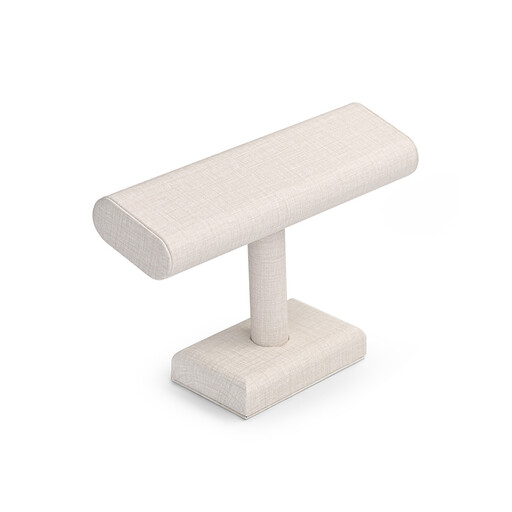
Why This Fits Their Persona: An upright format helps present watches, bracelets, chains and bangles at exhibitions, in shop displays or during product photography.
The weighted base addresses the stability issue associated with upright display stands, while the soft resting bar separates watches from the support.
Designed for approximately 4–5 watches or jewellery pieces; 20 x 14 x 6 cm; no assembly required.
We have compiled a complete, real-time list of products that fully satisfy these strict selection criteria and UK safety regulations.
Place a tray away from radiators, direct sunlight and areas exposed to condensation. Bathrooms can be unsuitable because humidity may affect wood, microfibre, velvet and PU-coated surfaces over time.
Keep chains in separate hooks or compartments, avoid overfilling drawers and remove dust with a soft cloth. For wooden or microfibre trays, avoid water and cleaning chemicals. For PU leather, follow the product instructions and use only a dry or slightly damp cloth where permitted.
Yes, provided the layout matches the collection. A flat tray is convenient for frequently worn pieces, while a jewellery box with drawers is more suitable when you need enclosed, separated storage.
Lifespan depends on handling, weight, cleaning and storage conditions. Keeping the tray dry, avoiding abrasive items and not overloading compartments can help preserve its appearance. Check seams, lining and base stability periodically.
Most jewellery trays, stands and standard jewellery display cases do not require electricity. A rotating jewellery box with a manual 360° design also operates without a power supply, so there is no ongoing electricity cost.