
24/7 Customer Support

Free returns

Same-day & Next-day Delivery

Quality Guaranteed

Unlock Your Welcome Offers: FREE Delivery | Up to 80% OFF | Free 30-day JoyPlus trial
Download the APP
A jug kettle is a daily kitchen appliance, so small design compromises quickly become frustrating. A model may look attractive online yet pour unevenly, leave water sitting around the minimum mark or become difficult to clean once limescale builds up.
Before buying, look beyond colour and headline boiling speed. The useful questions are: how much water do you normally boil, how easy is it to pour, and which maintenance and safety features are included?
A 1.7L jug kettle is suitable for many UK households, but filling it fully for one or two cups can waste water and energy. Check that the water gauge has a clearly marked minimum level and that it is easy to read from your usual position on the worktop.
For smaller households, a compact electric kettle may be more practical. Families, shared homes and people who regularly make several hot drinks may find 1.7L more convenient.
A 3kW kettle can heat water at a high power rating, but real-world convenience also depends on the amount of water added, the starting temperature, limescale and the heating element. A rapid boil feature does not remove the need to fill only what you require.
Check whether the kettle has a concealed element, automatic shut-off and a removable limescale filter. These features can have more impact on everyday use than a speed claim alone.
A retro jug kettle or textured jug kettle can complement a kitchen, but an attractive exterior does not guarantee comfortable serving. Look for an ergonomic handle, a stable base and a spout designed to control the flow.
The body and steam outlet may become hot during use. Always use the handle, keep the appliance on a level, heat-resistant surface and follow the supplied instructions.
For tea, coffee and instant meals, capacity should match your routine rather than simply being as large as possible.
A clear external gauge helps you avoid overfilling. A minimum-fill indicator is also useful because it shows the lowest safe operating volume.
A kettle rated at 3kW uses electricity at a maximum rate of approximately 3 kilowatt-hours per hour while heating. The cost of one boil depends on the volume of water and your electricity tariff:
Energy used in kWh × your tariff per kWh = approximate cost
For example, boiling less than the full capacity normally uses less energy than boiling 1.7L. A rapid boil kettle can save time, but it should still be used with an appropriate quantity of water.
Useful features to compare include:
In the UK, check the product information, supplied instructions and relevant compliance markings before purchase. Never immerse the kettle, base or power cord in water, and allow the appliance to cool before cleaning.
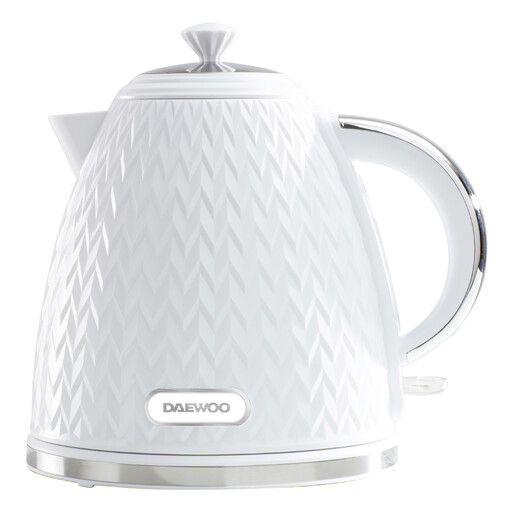
Why This Fits Their Persona: A practical choice for a first home, rented kitchen or family worktop where capacity and straightforward operation matter.
The external gauge, minimum and maximum markings and concealed element make quantity control and routine cleaning more manageable.
1.7L capacity, 3kW rating, 360° cordless swivel base, removable limescale filter and automatic shut-off.
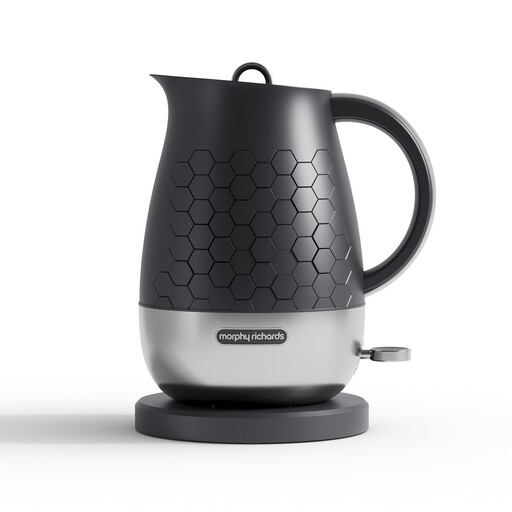
Why This Fits Their Persona: Suits style-conscious shoppers who want a defined countertop look without giving up everyday capacity and pouring control.
The textured finish is supported by a stated “Perfect Pour” spout, minimum-fill indicator and built-in cord storage, rather than relying on appearance alone.
1.7L capacity, 3kW rapid-boil element, 360° swivel base and a hexagonal-patterned black finish.
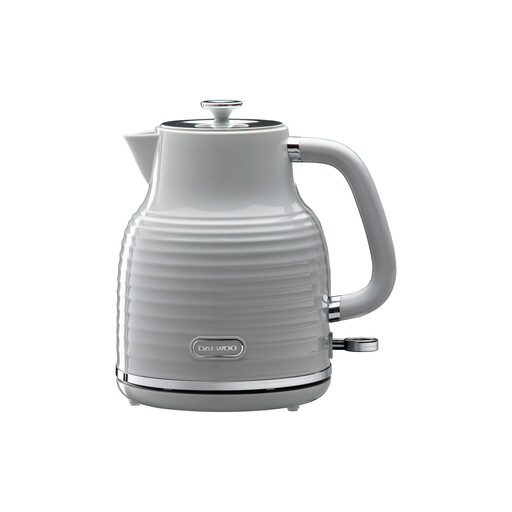
Why This Fits Their Persona: A suitable match for shoppers prioritising a classic grey-and-chrome aesthetic for a visible kitchen or entertaining area.
Its listed concealed element, removable filter, automatic shut-off and boil-dry protection address practical maintenance and safety checks.
1.7L capacity, 360° swivel base, ergonomic handle and removable filter.
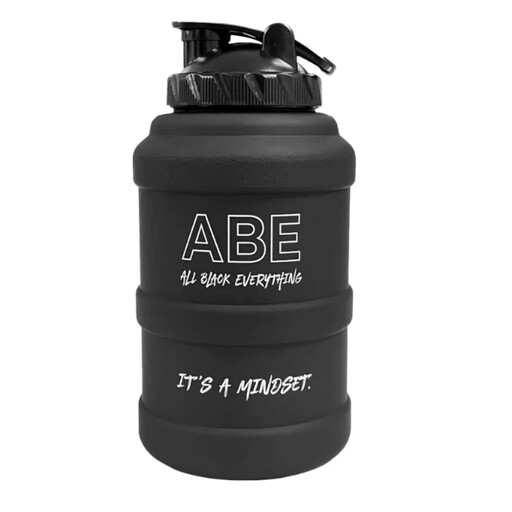
Why This Fits Their Persona: Designed for gym sessions, office days, travel and outdoor activities where a large reusable water container reduces frequent refilling.
It is clearly specified for cold or lukewarm drinks, with a separate drinking opening and leak-resistant screw cap. It should not be used with hot, boiling or carbonated liquids.
2.5L capacity, carry handle, wide filling opening and separate drinking spout. Hand wash only.
We have compiled a complete, real-time list of products that fully satisfy these strict selection criteria and UK safety regulations.
A kettle is not the right tool for every liquid-handling task. A glass measuring cup with graduation marks is more appropriate for baking, sauces and measured ingredients. The BJ 500ml Glass Measuring Cup with Scale and BJ 500ml Borosilicate Glass Measuring Cup are compact options to compare for kitchen preparation.
For garden gatherings, a reusable plastic jug offers lighter handling than glass or ceramic. The KitchenCraft Natural Elements Jug has a 1.6L capacity, lid and recycled-plastic construction. For a decorative table setting, the 3L Sintra Glazed Terracotta Jug provides a food-safe glazed terracotta finish, but it requires careful handling and is not suitable for a dishwasher, microwave or oven.
For many households, yes. A 1.7L capacity can prepare several cups at once, although the exact number depends on cup size. Avoid boiling the full amount when only one or two drinks are needed.
Not necessarily for each boil. A 3kW rating describes the maximum power draw while heating. The amount of electricity used depends mainly on how much water is boiled and for how long. Filling accurately to the required level helps control usage.
Descaling frequency depends on local water hardness and how often the kettle is used. If you notice visible deposits, slower heating or a change in pouring, follow the manufacturer’s cleaning guidance and use a suitable descaler.