
24/7 Customer Support

Free returns

Same-day & Next-day Delivery

Quality Guaranteed

Unlock Your Welcome Offers: FREE Delivery | Up to 80% OFF | Free 30-day JoyPlus trial
Download the APP
Buying a juicer can seem straightforward until you compare feed chutes, motor ratings, pulp containers and cleaning instructions. Marketing language can also make similar-looking products appear very different. The right choice depends less on impressive-sounding claims and more on what you intend to juice, how often you will use the appliance and how much cleaning you are prepared to do.
A powerful motor can help process firm ingredients, but wattage alone does not determine juice texture, noise, preparation time or cleaning effort. A centrifugal juicer may be suitable for apples and carrots, while a slow juicer uses a slower squeezing process and may be more appropriate if you prefer a quieter appliance or regularly juice softer produce.
Look at the complete specification: motor power, speed settings, chute size, pulp capacity and the manufacturer’s operating limit.
A wide-mouth juicer can reduce chopping, but whole produce still needs to be washed, inspected and prepared according to the instructions. Hard stones, tough stalks and unsuitable skins may damage the appliance or affect the result.
A large chute is useful for busy households, but it should be paired with a stable lid, a suitable food pusher and a pulp basin large enough for your typical batch.
The most attractive feature list will not matter if the juicer is difficult to rinse after every use. Filters can collect fine pulp, while narrow channels may require a brush. Check whether removable parts are dishwasher-safe, whether the motor base must be wiped rather than immersed and how easily the bowl and auger separate.
For a broader selection, browse the juicers easy clean range and compare cleaning features alongside price.
No type is suitable for every ingredient. Citrus-focused appliances are not a substitute for a fruit and vegetable juicer, and a general juicer may be unnecessary if you only want fresh orange juice.
Capacity should match the number of people you are serving. A 470ml pitcher may suit one person, while a 1L or larger container can reduce interruptions when preparing drinks for a family.
Measure your available worktop and cupboard space before ordering. Check the full height with the pusher fitted, as well as the width needed to remove the pulp basin. A compact fresh juice maker is easier to store, but a larger machine may reduce preparation and emptying during batch use.
Look for secure locking parts, a supplied pusher and clear instructions to unplug the appliance before assembly, disassembly or cleaning. Never place fingers or utensils into a moving feeding chute.
For electrical models, check the listing and product documentation for UK plug and voltage compatibility before use. Some product specifications show different regional voltage versions, so do not assume that an appliance listed for global markets is automatically ready for a UK socket.

Why This Fits Their Persona: A practical option for UK shoppers who mainly want lemon, lime or orange juice without adding another powered appliance to a small footprint kitchen.
It avoids unnecessary motor specifications and has a simple design with a non-slip base and built-in strainer.
Manual operation, BPA-free polypropylene construction and dishwasher-safe parts.
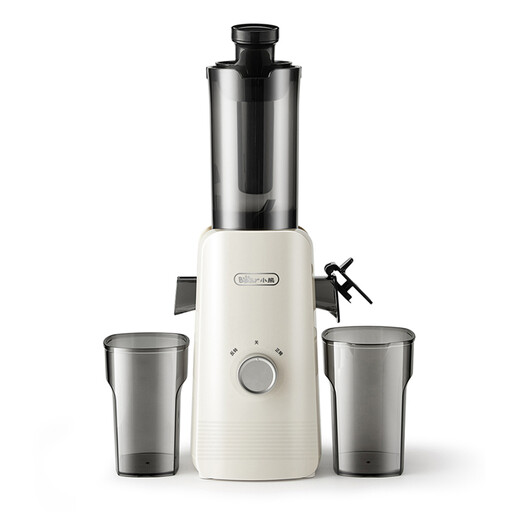
Why This Fits Their Persona: Suitable for shoppers who want a slow masticating format, a 1L capacity and a wider chute for regular mixed-produce preparation.
Its specifications state an 80mm feeding chute, approximately 60dB sound level and a reversible function for clearing blockages.
50–80 RPM operation, 1L juice capacity and a stated one-rinse cleaning design.

Why This Fits Their Persona: A match for families or regular users who want to process fruit and vegetables in larger batches with less chopping.
The 1.5L pulp basin helps limit frequent emptying, while the two speed settings provide separate options for soft and hard produce.
800W motor, 3-inch feed chute, 1.5L pulp basin and dishwasher-safe sieve, pitcher and pulp basin.
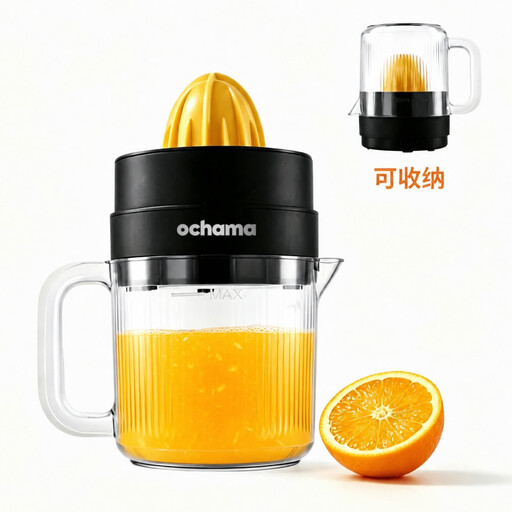
Why This Fits Their Persona: Designed for households that mainly prepare orange, lemon, tangerine or similar citrus juice and prefer powered pressing.
It is purpose-built for citrus rather than presenting a general-purpose machine as suitable for every ingredient.
30W electric press, 1.4L capacity, pulp separation and a bladeless design with removable parts.
We have compiled a complete, real-time list of products that fully satisfy these strict selection criteria and UK safety regulations.
The electricity cost depends on the motor wattage, usage time and your tariff. A 30W electric citrus juicer uses considerably less rated power than an 800W centrifugal juicer during operation, but actual cost also depends on how long each appliance runs. Manual citrus juicers avoid electricity use altogether.
A juicer’s lifespan depends on frequency of use, ingredient preparation, cleaning and storage. Do not exceed the stated continuous operating limit. For example, the Bear model information advises a maximum continuous operation period of 20 minutes. Replace damaged filters, seals or other parts rather than continuing to use an appliance with loose or broken components.