Busy family batch makers
You need several breakfast servings without repeatedly chopping ingredients or emptying containers. Hopper, jug and pulp-container capacities matter, as does space on the worktop.


Choose a masticating juicer whose instructions cover leafy greens if celery or kale is central to your family’s juice. For several servings, check the ingredient hopper, finished-juice jug and pulp container separately; a centrifugal model may suit a quicker routine when greens are a smaller part of the recipe. Neither motor wattage nor a wide chute alone settles the choice.
You need several breakfast servings without repeatedly chopping ingredients or emptying containers. Hopper, jug and pulp-container capacities matter, as does space on the worktop.
Celery, kale or similar greens are a routine ingredient, so you need a fruit-and-vegetable juicer with model-specific guidance for them, rather than a citrus-only appliance.
A juicer is more likely to fit your mornings if ingredient preparation and washing the removable parts are manageable after every use.
Start with the ingredients you juice most often, then work out how many servings you need before comparing preparation and clean-up.
Consider it when: You regularly make several green-juice servings and want to load ingredients ahead of other breakfast tasks. Kuvings describes its AUTO10S as holding up to 3,000 ml of ingredients in its hopper.
Trade-off: That model needs substantial space: Kuvings lists it at 207 × 254 × 459 mm and 7.5 kg.
Consider it when: Greens are an everyday ingredient but a large pre-loading hopper is not essential. The Philips Viva Collection HR1889/71 listing identifies leafy greens as a use for that model.
Trade-off: A slow-juicing format does not remove the need to feed ingredients or check whether the collection jug holds enough for your family.
Consider it when: Quick preparation of fruit and vegetables matters most and leaves make up a smaller part of your recipes.
Trade-off: Check the exact model’s ingredient guidance rather than assuming its motor power establishes how it handles a greens-heavy recipe.
| Concern | What to check | Who this matters to |
|---|---|---|
| Batch workflow | Compare ingredient-hopper, finished-juice jug and pulp-container capacities separately; check the machine’s dimensions. | When several people need juice at breakfast, I want to avoid stopping repeatedly to refill or empty the machine. Around 40% of consumers would put uninterrupted batch-making first. |
| Leafy greens | Check the exact model’s guidance for your greens and whether it is a fruit-and-vegetable juicer, not a citrus-only model. | If celery or kale is central to my recipe, I need a machine whose stated uses cover those ingredients. For around 30% of consumers, handling leafy greens would be the primary concern. |
| Daily upkeep | Check feed-chute size, cleaning instructions, dishwasher-safe parts and assembled dimensions. | I need preparation, washing and storage to fit an ordinary morning, or making juice will become a chore. Ease of daily use would come first for around 30% of consumers. |
Centrifugal and masticating juicers use different mechanisms. Motor wattage alone cannot tell you whether a model suits your greens, serving quantity or cleaning routine.
Compare the juicing format and model-specific ingredient guidance alongside container capacities and cleaning instructions. Which? identifies juice output, cleaning and ease of use as separate test criteria.
These hold ingredients, waste and finished juice respectively. A 1.5 L pulp basin does not promise 1.5 L of juice, and a 3,000 ml ingredient hopper is not a finished-juice jug.
Work out how much juice your household wants, then check what each capacity figure actually measures.
A machine intended for larger batches still needs room to load ingredients and remove its parts. Kuvings lists the AUTO10S at 207 × 254 × 459 mm and 7.5 kg.
Measure its intended position and allow clearance for opening and cleaning it.
Extraction and quick-clean claims may describe one model under its seller’s conditions; they do not establish how it performs against another juicer.
Use the model instructions to check suitability, and compare independently tested juice output and ease of cleaning where comparable results are available.
The AUTO10S illustrates a large-hopper slow-juicer route for households making several servings.
The Viva Collection HR1889/71 is a masticating option whose listing identifies leafy greens as a suitable use.
The Nutri Juicer Cold XL illustrates a centrifugal route with a large collection jug.
The listed Nutribullet Juicer offers a centrifugal route for households focused on preparation and clean-up.
These models cover masticating and quicker centrifugal approaches to a family breakfast. Choose by the ingredients in your recipe, the number of servings and the work you are willing to do before and after juicing.
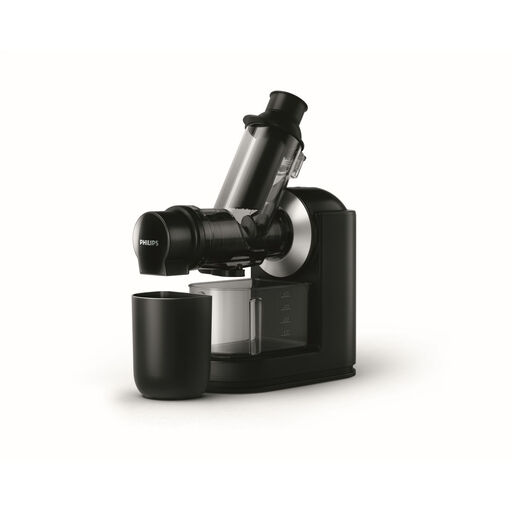 No image available
Consider this model when leafy greens are a regular breakfast ingredient: its listing names them as a suitable use.
The HR1889/71 listing specifies a 100 RPM masticating format, a 70 mm feed tube and removable dishwasher-safe parts. Check that the finished-juice container suits the servings you need.
 No image available
Consider this centrifugal model when a quicker fruit-and-vegetable routine matters more than a slow-juicing format.
Its listing specifies a 3-inch feed chute and dishwasher-safe parts. The stated 1.5 L capacity belongs to the pulp basin, not the finished-juice pitcher; check the pitcher size against your serving needs.
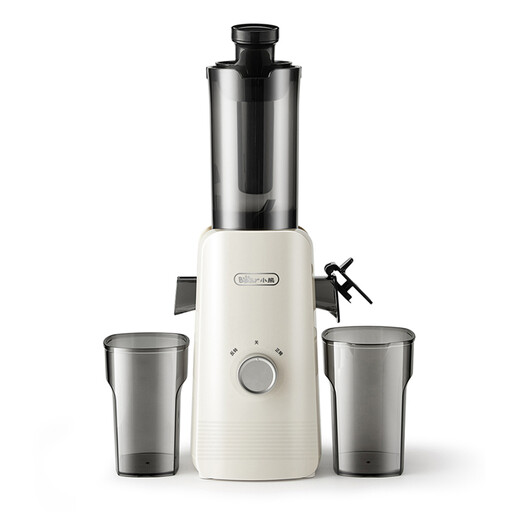 No image available
Consider this slow-juicer format if you want a wider opening for suitable produce, but check the model instructions before making leafy greens a regular part of the recipe.
The product title states an 80 mm feed chute and 1 L capacity. Confirm what that capacity measures and whether it covers your family’s servings.
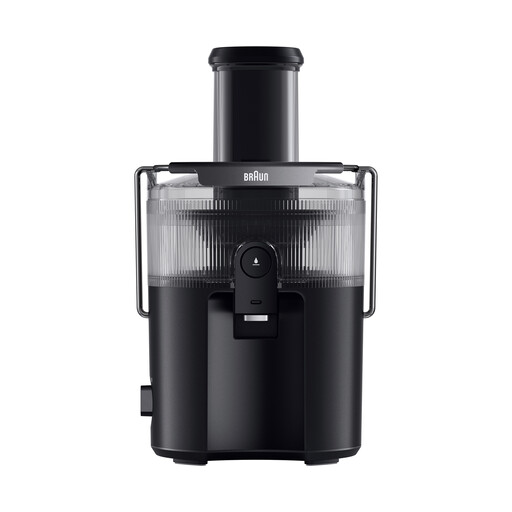 No image available
Consider this model for a quicker breakfast workflow if its instructions cover the ingredients you plan to juice.
For a family batch, confirm the collection-jug and pulp-container capacities separately. Check the ingredient guidance if leafy greens make up much of your recipe.
Choose a masticating model with stated leafy-green suitability when greens are central to the recipe; consider a centrifugal model when quick preparation of fruit and vegetables matters more and greens are a smaller component. Check the exact model’s ingredient instructions, finished-juice capacity and cleaning requirements before deciding.
The finished-juice jug tells you what can be collected at one time, while the ingredient hopper and pulp container describe different interruptions in the workflow. For instance, Kuvings lists a 3,000 ml ingredient hopper for the AUTO10S, Sage a 2 L juice jug for the Nutri Juicer Cold XL, and the Nutribullet Juicer listing a 1.5 L pulp basin; those figures cannot be compared as if they all measured finished juice.
No. A wide chute can accommodate suitable ingredients within the model’s size and preparation instructions, but it does not make every ingredient preparation-free. You will still need to clean food-contact parts; check which removable components are dishwasher-safe.
Check the exact model’s ingredient instructions, supplied accessories, manufacturer warranty and retailer return terms. Also confirm the plug and electrical specifications for where you will use it, rather than assuming that details for another variant apply.