Hosts serving several glasses
You want to make apple juice for visiting friends without repeatedly stopping to empty pulp or transfer juice. Compare both containers: a large pulp basin does not tell you how much the juice jug holds.


For an occasional round of apple juice for friends, start with a centrifugal juicer if quick preparation matters most: check the feed-chute limit, pulp-container capacity and cleaning instructions together. Consider a slow-press juicer if you prefer that method and expect to use it for leafy or fibrous ingredients too, accepting a slower process rather than assuming it will produce more juice from apples.
You want to make apple juice for visiting friends without repeatedly stopping to empty pulp or transfer juice. Compare both containers: a large pulp basin does not tell you how much the juice jug holds.
You would rather spend less of the visit cutting apples and less time washing parts afterwards. Check the chute’s stated fruit-size limit and the cleaning instructions for the exact model.
You are willing to take more time over juicing and expect to use the machine for ingredients beyond apples, including leafy or fibrous produce. The pressing method matters more to you than finishing a quick batch.
For apple juice when friends visit, decide which part of the job you most want to simplify. A wide chute may mean less cutting, while container sizes determine when you need to pause; neither tells you everything about washing up afterwards.
| Concern | What to check | Who this matters to |
|---|---|---|
| Serving without pauses | Compare juice-jug and pulp-container capacities separately, then consider your usual glass size. | If several friends want a glass, I would rather make a batch than keep stopping to empty containers. Around 29% of consumers put uninterrupted serving first. |
| Preparation and clean-up | Check the chute’s stated diameter against your apples and identify which removable parts can go in the dishwasher. | I want to spend less time cutting apples before guests arrive and washing the juicer afterwards. Roughly 36% of consumers make preparation and clean-up their primary concern. |
| Juicing method | Choose between quicker centrifugal processing and slower pressing; check the exact model’s feed and cleaning arrangements. | If I will also juice leafy or fibrous ingredients, I may care more about the pressing method than speed. About 21% of consumers put their preferred juicing approach first. |
| Space and frequency of use | Measure worktop and cupboard space, and consider whether you would also use a combined juicer-blender for blended drinks. | For a machine used mainly when friends visit, I need it to fit at home and justify the storage space. Around 14% of consumers prioritise that fit over the other concerns. |
A chute still has a size limit. The Joybuy listing for the Nutribullet Juicer 800W specifies produce under 3 inches in diameter, so a larger apple needs cutting.
Compare the apples you normally buy with the model’s stated opening, and follow its preparation and feeding instructions.
Wattage does not tell you how often you will need to empty pulp or transfer juice while serving friends.
Check the chute, pulp basin and juice jug alongside the cleaning instructions and the space available for storage.
Sage Appliances UK describes differences between centrifugal and slow-press mechanisms, but that general guidance does not establish the apple-juice yield of every model.
If yield will decide your purchase, look for comparable, model-specific tests using apples before drawing a conclusion.
Fresh juice goes from preparation to the glass without a cooking step. Royal Surrey NHS Foundation Trust advises washing fruit and vegetables before consumption.
Wash the apples and your hands before preparation, and clean food-contact parts after use according to the juicer’s instructions.
Its Juicer 800W is a centrifugal option for hosts looking at chute size, pulp capacity and washing-up together.
The Viva Collection HR1857/81 is worth examining if you prefer to prepare a batch before guests are served.
Its range gives buyers a way to consider centrifugal juicing alongside appliances intended for other drink-making needs.
Its UK slow-juicer range is relevant if the slower pressing approach is a deliberate priority rather than speed of serving.
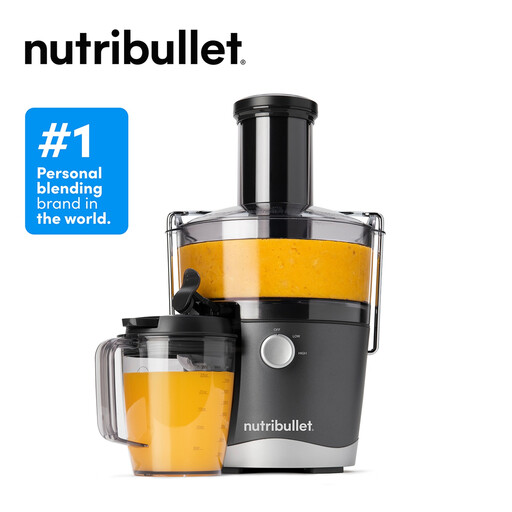
This centrifugal Nutribullet model is a choice to consider when you want to prepare apple juice promptly for friends. Its chute and pulp basin address different pauses in the job, so check your serving-jug needs as well.
 No image available
For a session of juicing several apples, the 1.5L pulp basin may mean fewer stops to empty pulp; check the juice-jug capacity against the number of glasses you intend to serve.
The 3-inch chute is stated for produce under 3 inches in diameter, so larger apples need cutting. The listing describes dual speeds and dishwasher-safe parts; follow the exact model’s instructions when cleaning each part.
A centrifugal juicer is the more direct choice if making apple juice promptly is your priority; consider slow pressing if you accept a slower process and also plan to juice leafy or fibrous ingredients. Sage Appliances UK describes these as different juicing methods, not proof that every slow model produces more juice from apples.
Only apples within the exact model’s stated size limit should be considered for whole-fruit feeding, subject to its instructions. The Joybuy listing for the Nutribullet Juicer 800W specifies produce under 3 inches in diameter; cut larger apples.
Wash your hands and the apples before preparation, and use clean food-contact parts and utensils. Royal Surrey NHS Foundation Trust advises washing fruit and vegetables; follow the juicer’s instructions for cleaning its components after serving.
No: check which parts the exact model’s instructions identify as dishwasher-safe. The Joybuy listing describes dishwasher-safe parts for the Nutribullet Juicer 800W, but that does not establish the cleaning method for another model or its motor base.