Short-stay mixed-produce juicers
If breakfast includes apples, carrots, ginger or vegetables, look for a model intended for those ingredients and a cleaning routine that fits the time you have before heading out.


Choose a centrifugal juicer for mixed fruit-and-vegetable breakfasts, or a citrus press if you will juice only oranges, grapefruit, lemons or limes. Consider a slow juicer if its approach to your planned ingredients warrants the extra space and weight; whichever type you choose, check the exact model’s cleaning instructions, dimensions and serving capacity before taking it to a holiday cottage.
If breakfast includes apples, carrots, ginger or vegetables, look for a model intended for those ingredients and a cleaning routine that fits the time you have before heading out.
If you mainly want orange, grapefruit, lemon or lime juice, a dedicated citrus appliance may meet your needs without the extra parts of a full-produce juicer.
For several servings in one session, check juice and pulp capacity alongside how often you would need to stop, empty parts or wipe the worktop.
Start with the ingredients you intend to use. A citrus press, a centrifugal juicer and a slow juicer serve different plans; space and clear-up then determine which model is practical for the cottage.
Choose it when: Breakfast juice will be citrus-only and you want a dedicated appliance.
Trade-off: It does not take the place of a juicer for apples, carrots or vegetables.
Choose it when: You plan mixed fruit-and-vegetable juice and want to limit chopping during a short stay.
Trade-off: Pulp collection and sieve cleaning remain part of the breakfast routine.
Choose it when: Its stated ingredient handling suits your menu and you have room for the particular model.
Trade-off: Do not assume it will be easy to pack or store: Kuvings lists its B8200S at 6.6 kg and 228 × 208 × 450 mm.
| Concern | What to check | Who this matters to |
|---|---|---|
| Space and cleaning | Check assembled dimensions and the exact instructions for washing removable parts. | If cupboard space is tight and I need to clear up before going out, footprint and washing-up come first. Around 33% of consumers put space and cleaning first. |
| Ingredients and preparation | Check that the model is intended for your planned produce, then compare feed-chute sizes if cutting time matters. | When I want apples or carrots as well as citrus, the machine needs to handle that mix without making preparation a chore. Around 27% of consumers prioritise ingredient flexibility and preparation. |
| Several servings | Compare stated juice and pulp capacities, including when the pulp container needs emptying. | Making juice for several people, I would rather finish the batch than keep stopping to empty the machine. Around 20% of consumers put uninterrupted group servings first. |
| Citrus-only simplicity | Check supported citrus sizes, pulp settings if wanted, and whether the spout controls drips. | If oranges are the whole breakfast plan, I want a straightforward citrus appliance rather than features for ingredients I will not use. Around 20% of consumers prioritise citrus-only simplicity. |
A citrus press will not cover a breakfast plan built around apples, carrots or vegetables. Its simpler operation helps only when its ingredient range matches your menu.
List the fruit and vegetables you expect to use before choosing between a citrus press and a full-produce juicer.
Cleaning instructions differ by model and component. Braun describes removable dishwasher-safe parts for the SJ5000BK, while directing users to its instructions for details.
Check the exact instructions for the sieve, pulp container, jug and lid, and allow time to clean any mesh filter by hand where required.
A wide chute does not make the whole appliance compact. Kuvings lists its B8200S slow juicer as 450 mm high and 6.6 kg, both relevant if you will pack it or move it between uses.
Measure the available worktop and storage space, then compare assembled height and weight as well as chute width.
The Health and Safety Executive says annual portable appliance testing is not automatically required in low-risk workplaces; equipment maintenance should instead reflect the risks. A damaged cable or plug still calls for action.
If you supply a juicer to guests, establish which duties apply to your accommodation and use an appropriate inspection and maintenance approach. Remove visibly damaged equipment from service.
Its UK range includes compact and larger-batch centrifugal models, alongside a separate masticating line.
Its cited models offer distinct choices for citrus-only juice and mixed-produce juice.
Its cited BCP600SILUK is an electric press for citrus-only breakfasts.
Its cited B8200S is a slow-juicer option to assess when planned ingredients and available space justify a larger appliance.
Its cited 800W Juicer is a centrifugal model for mixed fruit-and-vegetable juice.
These choices cover a centrifugal juicer for mixed-produce breakfasts and two citrus-only options, one electric and one manual. Choose by your ingredients first, then check the practical details that matter in the cottage.
 Image unavailable
For a mixed fruit-and-vegetable breakfast, this centrifugal model has a stated 3-inch chute and dishwasher-safe parts; follow the instructions for the exact components.
Check that this variant’s voltage and plug suit the mains supply where you will use it before buying.
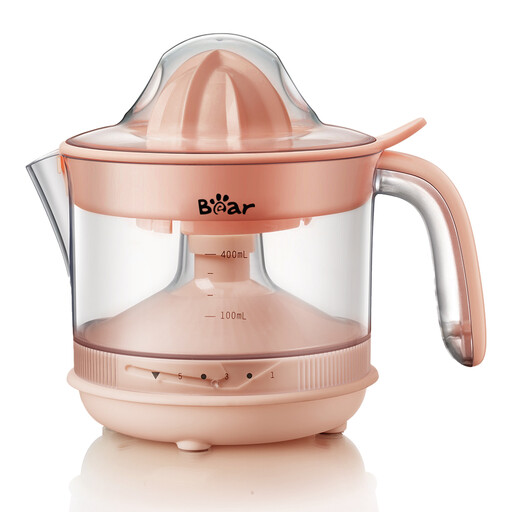 Image unavailable
For citrus-only breakfasts, this electric model lists one-touch operation, five adjustable pulp levels and a 110 mm feed chute.
Check its dimensions, serving capacity and instructions for cleaning removable parts if storage or quick clear-up will affect your choice.
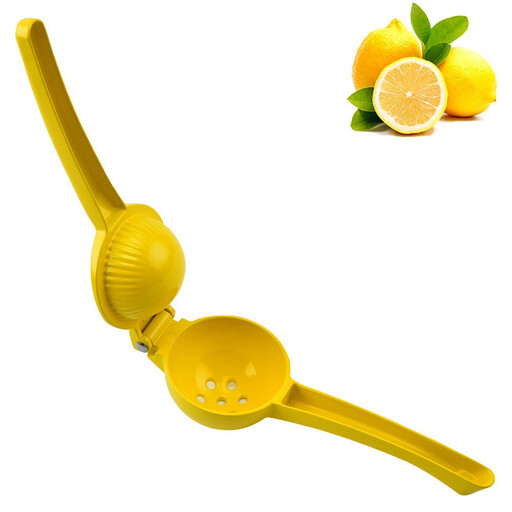 Image unavailable
For squeezing halved lemons, limes and small oranges without electricity, this is a manual citrus option rather than a mixed-produce juicer.
Check its dimensions, cleaning instructions and the effort involved if you plan to make several servings.
Choose a citrus press if breakfast juice will use only oranges, grapefruit, lemons or limes. If apples, carrots, ginger or other non-citrus produce are on the menu, look at a centrifugal or slow juicer intended for those ingredients instead.
Clean the food-contact parts promptly, following the exact model’s instructions and unplugging an electric juicer before handling removable parts. For a model with a mesh sieve, check whether it needs a brush and which parts the manufacturer permits you to put in a dishwasher.
Do not treat an annual PAT test as a universal rule for every holiday cottage. The Health and Safety Executive says low-risk workplace equipment should be maintained to prevent danger but does not prescribe a fixed annual testing interval; an accommodation provider should check the duties that apply to their arrangement and take damaged equipment out of service.
The Home Office guidance addresses people responsible for fire safety in small paying guest accommodation, including self-catering accommodation. If you supply a juicer, include it in your approach to managing the property’s risks; if you are a guest, report visible damage to the host rather than using the appliance.