
24/7 Customer Support

Free returns

Same-day & Next-day Delivery

Quality Guaranteed

Unlock Your Welcome Offers: FREE Delivery | Up to 80% OFF | Free 30-day JoyPlus trial
Download the APP
Choosing a juicer machine involves more than comparing wattage and promotional claims. The right appliance depends on the fruit and vegetables you use, how much juice you prepare and how willing you are to clean it after every session.
A compact citrus press may suit someone who mainly prepares orange juice, while a centrifugal juicer is more appropriate for apples, carrots, celery and other firm produce. Before buying, consider these common pitfalls.
A higher wattage figure does not automatically mean better results. A motor must work with a suitable feed chute, sieve, reamer or pressing mechanism. A powerful fruit and vegetable juicer may still be inconvenient if ingredients require extensive chopping or the pulp container needs frequent emptying.
For citrus fruit, a 30W or 40W electric citrus juicer may be sufficient because the reamer presses juice directly from halved fruit. A centrifugal juicer designed for harder produce generally uses a faster motor and rotating sieve.
Removable parts, accessible pulp containers and dishwasher-safe components can make a significant difference to regular use. A juicer that takes several minutes to scrub after each glass may soon be left in a cupboard.
Check whether the sieve, jug, filter and pulp container can be removed easily. The motor base should not be immersed in water; it normally requires wiping with a damp cloth.
A wide feed chute reduces preparation, but its actual diameter matters. A 75mm or 3-inch opening may accommodate larger pieces of apple or certain vegetables, but fruit may still need trimming. Hard stones, seeds, tough rinds and stems should be removed where the instructions require it.
If you mainly want an orange juicer, lemon juicer or lime press, look for a suitable reamer and a filter that separates seeds and pulp. A stainless steel filter can produce a smoother drink, while adjustable pulp settings allow you to choose a more textured result.
A pulp separation juicer is useful when different household members prefer different consistencies. However, “pulp-free” should not be treated as a universal result: small particles may still pass through depending on the fruit and filter design.
A 1L jug suits several glasses of citrus juice, while a larger juice container and pulp basin are more practical for families. The Braun SJ5000 is specified with up to 2 litres of juice capacity, while the Nutribullet model has an 800ml juice jug and a 1.5L pulp basin.
Capacity should match your routine. A large container may be unnecessary for one person, whereas a small jug can require repeated emptying during breakfast preparation.
A juicer with wide feed chute can reduce slicing time. Dual-speed controls are useful when switching between softer fruit and firmer vegetables. Always use the supplied food pusher rather than fingers or kitchen utensils.
For UK households, check that a corded appliance is suitable for 220–240V, 50–60Hz supply where specified. Look for stable feet, secure assembly and clear instructions to unplug the machine before cleaning or disassembly.
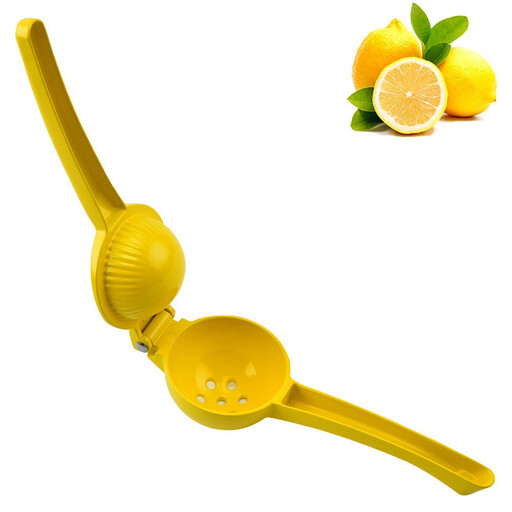
Why This Fits Their Persona: A manual lemon squeezer is suitable for occasional drinks, dressings and cooking without committing to a powered appliance or storing a larger machine.
Its manual format avoids electrical setup, motor-base cleaning and unnecessary capacity for small quantities.
Portable clip-style design; no plug, motor or installation required.
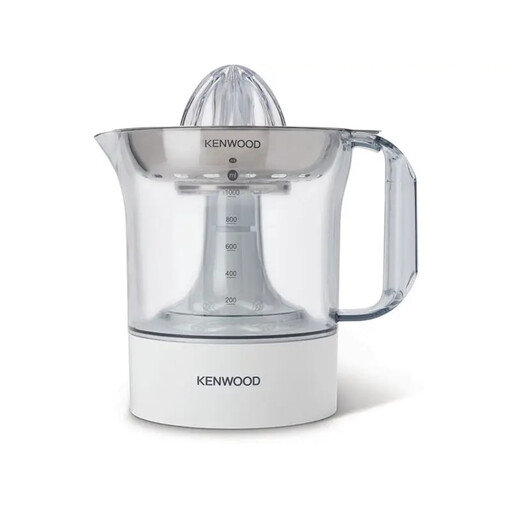
Why This Fits Their Persona: This electric citrus juicer is designed for regular orange, lemon, lime and grapefruit preparation, with a 1L jug for serving or storing a batch.
The stated 1L capacity, stainless steel filter and detachable dishwasher-safe parts make its practical limits clear.
40W motor with two-way rotation; dishwasher-safe detachable parts and built-in cord storage.

Why This Fits Their Persona: Families and frequent juice makers can process soft and firm produce using the wide chute, dual-speed control and larger pulp basin.
The 3-inch feed chute is paired with a stated 1.5L pulp basin, helping reduce preparation and interruptions during larger sessions.
800W motor with two speed settings; dishwasher-safe sieve, pulp basin and pitcher.
We have compiled a complete, real-time list of products that fully satisfy these strict selection criteria and UK safety regulations.
Running cost depends on motor power and how long each session lasts. A citrus juicer with a 30W or 40W motor generally uses less electricity per short pressing session than an 800W centrifugal juicer. However, preparation time and the quantity processed also affect overall convenience.
Only place parts specifically identified as dishwasher-safe in the appliance instructions. For example, the Kenwood JE290A lists its detachable reamer, jug and filter as dishwasher-safe, while the motor base should not be immersed. Always unplug the appliance before disassembly.
Lifespan depends on frequency of use, cleaning, correct assembly and handling of hard produce. Avoid overloading the feed chute, forcing the pusher or operating with damaged parts. Storing the juicer dry and following the manufacturer’s instructions can help maintain reliable everyday use.