
24/7 Customer Support

Free returns

Same-day & Next-day Delivery

Quality Guaranteed

Unlock Your Welcome Offers: FREE Delivery | Up to 80% OFF | Free 30-day JoyPlus trial
Download the APP
A flat battery or a soft tyre can turn a routine commute or a holiday road trip into a major headache. While breakdown services are an option, waiting on the side of a busy A-road is never ideal. This is where a jump starter with air compressor comes in, offering a self-sufficient solution in a single, portable package.
However, the market is flooded with devices making bold claims. As a Joybuy Product Recommendation Officer, my role is to help you see past the marketing jargon and identify the features that truly matter. Many drivers end up with a device that fails when they need it most due to a few common, but easily avoidable, purchasing pitfalls.
By understanding a few core parameters, you can confidently select a reliable emergency booster pack that will serve you well for years.
To avoid disappointment, focus on these three non-negotiable specifications. They are the true indicators of a quality, dependable unit.
The peak amperage is the maximum current the jump starter can deliver. A small 1.2L petrol engine requires far less power to start than a 3.0L diesel engine, which needs a significant amount of cranking power, particularly on a cold morning.
A portable jump starter's utility extends to being a power bank for your devices. Pay attention to the rated capacity, which is often listed separately from the larger advertised capacity and gives a more honest measure of its charging ability.
Also, check the output ports. A standard USB port is useful, but models with QC3.0 (Quick Charge) or PD (Power Delivery) can charge compatible phones, tablets and even laptops significantly faster, making them a much more versatile portable car battery booster.
The integrated tyre inflator should be more than just an afterthought. Look for a maximum pressure of at least 120-150 PSI, which is more than enough for any car tyre in the UK (typically 32-36 PSI).
Two features are particularly important: a clear digital display for setting pressure and an auto-shutoff function. This allows you to set your car's required PSI and the compressor will automatically stop once it's reached, preventing dangerous over-inflation. A sturdy, screw-on brass connector for the air hose is also a sign of better build quality than a flimsy plastic clip.
Instead of a generic list, we have matched our recommendations to specific UK driver profiles. This ensures you get a tool that fits your vehicle and your lifestyle.
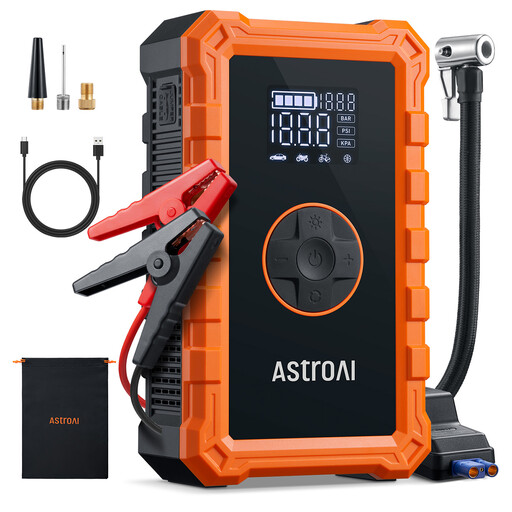
Why This Fits Their Persona: This unit is ideal for drivers of typical UK petrol cars (e.g., Ford Fiesta, VW Golf). It is compact enough to live in the glovebox and provides peace of mind for daily commutes and school runs without being overly complex or powerful for their needs.
It avoids the "Peak Amp Myth" by offering a realistic 1500A, which is ample for most petrol engines up to 6.0L, rather than an inflated, unnecessary number. The design also includes a clear 2.4" screen, countering the "Flimsy Inflator" trap of inaccurate analogue gauges.
Its all-in-one, compact design with built-in storage for accessories is a major plus. The 150 PSI compressor with auto-shutoff provides reliable and safe tyre inflation.
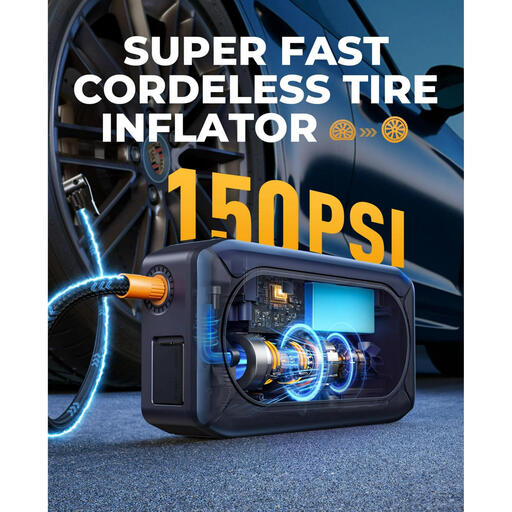
Why This Fits Their Persona: For those driving larger SUVs, people carriers or diesel cars (e.g., a Land Rover Discovery or VW Transporter), more power is essential. This unit's high peak current provides the necessary grunt, while the preset inflation modes are handy for topping up everything from car tyres to the kids' footballs.
It delivers a genuine 4500A peak current, suitable for diesel engines up to 8.0L. This directly counters the trap of buying an underpowered unit based on an inflated but weak amperage claim, ensuring it works on tougher-to-start diesel engines.
The combination of very high starting power and a smart air compressor with 5 preset modes makes it exceptionally versatile for family and heavy-duty vehicle use.
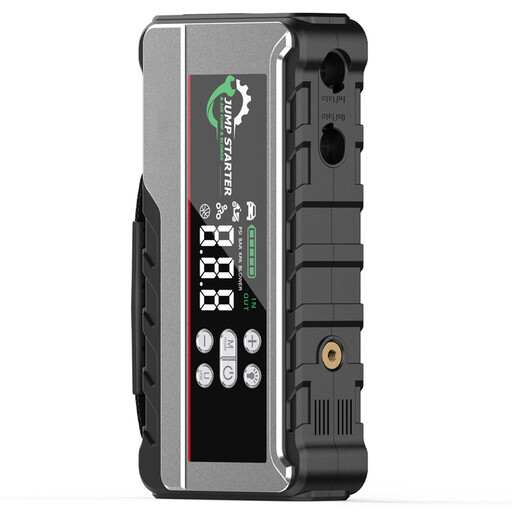
Why This Fits Their Persona: This user relies on technology for work and travel. They need a device that not only starts their car but also serves as a high-performance power hub. The ability to fast-charge a laptop is a game-changer for remote working or long trips.
It sidesteps the "Disappearing Battery Capacity" trap by pairing a large 24800mAh battery with genuinely useful, high-speed outputs. The PD65W charging isn't just marketing fluff; it's a functional feature that delivers on its promise to power demanding electronics like laptops.
The standout feature is the PD65W Type-C port, enabling super-fast charging of laptops and other large devices. It also includes a unique air blower function for inflatables, adding extra utility for camping and outdoor activities.
We have compiled a complete, real-time list of products that fully satisfy these strict selection criteria and UK safety regulations.
With proper care, a quality lithium-ion jump starter should last between 3 to 5 years. The key to longevity is battery maintenance. To preserve its health, it is advisable to recharge the unit at least once every 3 to 4 months, even if it has not been used. This prevents the battery from deep discharging, which can shorten its lifespan.
Yes, most modern jump starters are designed to operate in a wide temperature range, typically from -20°C to 60°C, making them suitable for storage in a car through British winters and summers. However, be aware that extreme cold can temporarily reduce the battery's efficiency and power output. For optimal performance in freezing conditions, it can be a good idea to bring the unit indoors to warm up slightly before use if possible.
It depends entirely on the engine size. A 1500A starter might be sufficient for a very small diesel engine (e.g., under 1.6L), but it will likely struggle with the majority of UK diesel cars, especially larger 2.0L to 3.0L engines found in SUVs and vans. For reliable starting, it is always recommended to choose a model with at least 2500A peak current specifically rated for your diesel engine's displacement. Always refer to the jump starter's specifications to confirm it matches your vehicle.