
24/7 Customer Support

Free returns

Same-day & Next-day Delivery

Quality Guaranteed

Unlock Your Welcome Offers: FREE Delivery | Up to 80% OFF | Free 30-day JoyPlus trial
Download the APP
A flat battery or a soft tyre can turn a routine commute or a family holiday into a roadside headache. While breakdown cover is useful, having an all-in-one car emergency tool in your boot provides immediate self-sufficiency. A jump starter with air compressor is a popular solution, combining a battery booster and a tyre pump into one portable unit.
However, the market is flooded with devices making bold claims. Many UK drivers end up with a gadget that fails when needed most. As a Joybuy Product Recommendation Officer, my role is to help you see past the marketing jargon. Here are the common pitfalls to avoid and the key features to scrutinise before you buy.
The "Peak Amps" Illusion: You will see figures like 2000A or 3000A battery booster pack advertised prominently. This "peak" current is the maximum output in a short burst, but it doesn't tell the whole story. A more crucial, yet often hidden, figure is the cranking or starting amps, which determines the sustained power needed to turn over a cold engine. A high peak amp rating on a poorly made unit may not be enough to start a larger diesel van on a frosty morning.
Misleading Battery Capacity (mAh): Many products advertise a high milliamp-hour (mAh) figure, which often represents the combined capacity of the internal cells, not the actual rated or usable output. This discrepancy means the device may only deliver a fraction of the advertised charges for your phone or manage fewer jump starts than you expect from a portable power bank with air compressor.
Ignoring Temperature Resilience: Standard lithium-ion batteries, common in these devices, lose significant performance in the cold and can be a safety concern if left in a hot car during a summer heatwave. A device that works perfectly in your garage might fail to deliver the necessary power on a freezing winter's day—exactly when you are most likely to need it.
To ensure you get a reliable tool, focus on these three non-negotiable specifications.
Instead of fixating on peak amps, check the device's compatibility with your vehicle's engine size (in litres) and type (petrol or diesel). Diesel engines require more power to start. A good 12v jump starter with tyre inflator will clearly state the engine sizes it can handle, for example, "up to 8.0L petrol, 6.0L diesel." This is a far more practical measure of its power than a standalone amp figure. Also, look for safety features like reverse polarity, short-circuit and over-current protection, which are essential for any portable car jump starter.
The integrated car battery booster with tyre pump should provide both adequate pressure and speed.
The battery is the heart of the device. Consider its standby time—how long it holds a charge when stored. A standard lithium-ion unit may need topping up every 2-3 months. Newer technologies, such as sodium-ion, offer significantly lower self-discharge rates, meaning they can sit in your boot for years and still be ready to go. They also tend to have a wider safe operating temperature range, making them a more dependable choice for the UK's varied climate.
Based on these practical criteria, here are a few options suited to different types of UK drivers.
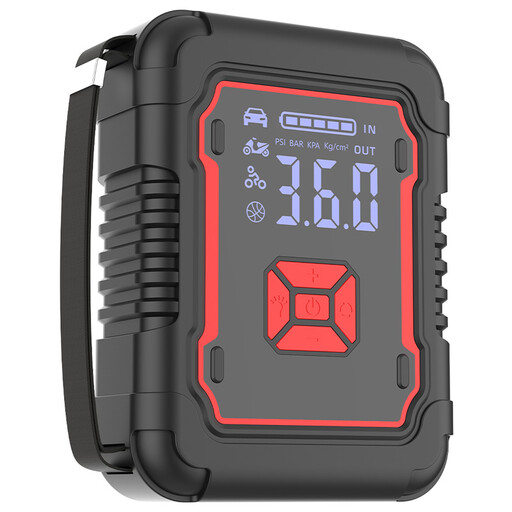
Why This Fits Their Persona: This is a solid, all-round unit for drivers of typical petrol or diesel cars and SUVs. It's compact enough to live in the boot without taking up much space, providing peace of mind for daily commutes and school runs.
While it lists a 3000A peak current, its description specifies suitability for a wide range of 12V vehicles and the 10,000mAh rated capacity is stated alongside the 20,000mAh battery capacity, offering more transparency than many competitors.
Features a 150 PSI tyre inflator with an auto-stop function to prevent over-inflation. It also includes a QC3.0 fast-charging USB port for devices.
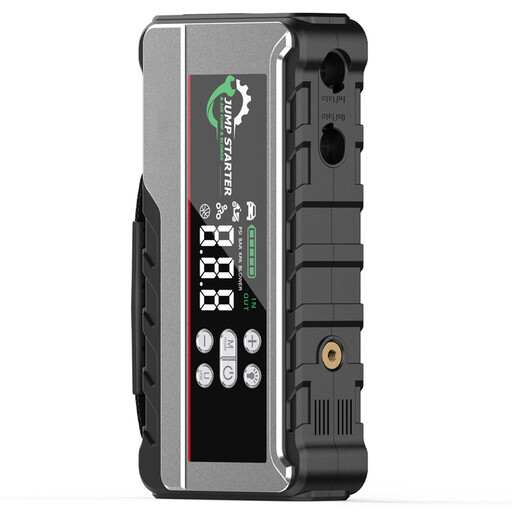
Why This Fits Their Persona: For those with larger vehicles (SUVs, vans) or who rely on multiple electronic devices during travel, this unit offers more power and versatility. The ability to fast-charge a laptop is a significant benefit on long family trips.
It provides a higher rated capacity (14,800mAh) to back up its larger battery, giving a more realistic expectation of its power bank performance. The inclusion of PD65W charging is a specific, verifiable feature, not just a vague claim.
The standout feature is the PD65W fast-charging Type-C port, capable of powering laptops and other large devices. It also includes an air blower function for inflatables like air mattresses, adding value for camping.
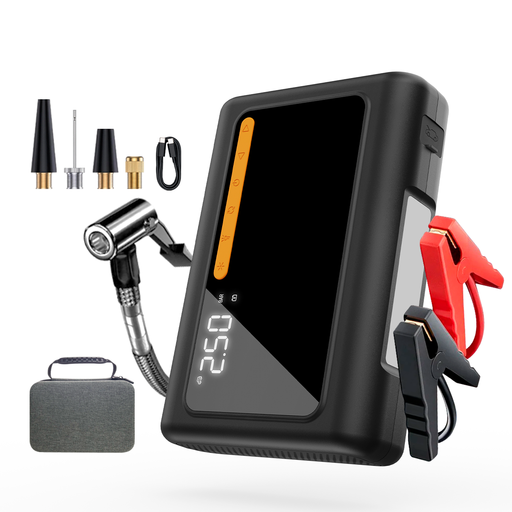
Why This Fits Their Persona: This is for the driver who values a "set and forget" tool. If you want a device you can charge once, leave in the car for years and trust to work in extreme heat or cold, the underlying battery technology here is a major advantage.
It directly tackles the temperature and battery degradation pitfalls. The use of a sodium-ion battery provides a stated operating range of -40°C to 80°C and a very low self-discharge rate, making it far more reliable for long-term storage in a vehicle than typical lithium-ion units.
Exceptional longevity and safety. According to the manufacturer, the battery supports over 6,000 charge cycles and can hold a charge for up to 5 years, eliminating the need for frequent recharging. It also features PD60W fast charging.
We have compiled a complete, real-time list of products that fully satisfy these strict selection criteria and UK safety regulations.
This depends entirely on the battery technology and its self-discharge rate. Most standard lithium-ion models should be checked and recharged every 2 to 3 months to ensure they are ready for an emergency. However, models with newer battery chemistries, like sodium-ion, have a much lower self-discharge rate and can hold a usable charge for a year or even longer.
You can, but performance may be affected. Standard lithium-ion batteries lose efficiency in cold temperatures, meaning a fully charged unit might struggle to deliver enough power to start an engine below freezing. If you live in a colder part of the UK, it is wise to look for a model specifically rated for low-temperature operation (e.g., down to -20°C or lower).
For a typical 4-cylinder petrol hatchback, a 3000A peak current is more than you will likely ever need. A smaller, more compact unit with a peak rating of 1500A-2000A is generally sufficient. The key is to check the manufacturer's recommendation for engine size compatibility, as this is a more practical indicator of its real-world capability.