
24/7 Customer Support

Free returns

Same-day & Next-day Delivery

Quality Guaranteed
Download the APP
Categories
For the dedicated home baker, a reliable stand mixer isn't just an appliance; it's the heart of the kitchen. It’s the difference between a lumpy batter and a silky-smooth one, or a tired arm and perfectly kneaded dough. Kenwood has long been a staple in British kitchens, known for its durable and powerful machines. But with various models available, choosing the right one can feel like a challenge.
This guide is designed to help you navigate the key features of a Kenwood stand mixer. We'll break down what matters most, from motor power to bowl capacity, so you can find a machine that truly matches your baking ambitions and kitchen space.
Before looking at specific models, consider these practical points to narrow down your options.
The power of a stand mixer, measured in watts (W), determines its ability to handle different tasks. A motor of 1000W is ample for most baking, from cakes to occasional bread making. For those who frequently work with heavy, dense mixtures like sourdough or large batches of dough, a 1200W motor provides extra torque and resilience, making it a true heavy duty stand mixer.
Bowl capacity is equally important. A 4.3-litre bowl is great for everyday baking and smaller households, while a 4.6-litre bowl offers more room for larger family-sized cakes or double batches of biscuits.
All Kenwood mixers feature the signature planetary mixing action, where the tool spins on its axis while sweeping around the bowl for total ingredient incorporation. The key difference lies in the extras. Do you value the convenience of in-built scales to weigh ingredients directly into the bowl? Or is a straightforward, powerful dough mixer with variable speed control all you need? Deciding which features will genuinely enhance your process helps focus your search.
A Kenwood is more than just a cake mixer; it's a versatile kitchen machine. Many models are compatible with over 25 optional attachments, transforming your mixer into a blender, food processor or even a pasta maker. If you envision your mixer becoming a central food preparation hub, check the compatibility of the model with the specific stand mixer with attachments you might want in the future.
Based on features, performance and user needs, here are our recommendations from the current Kenwood lineup.
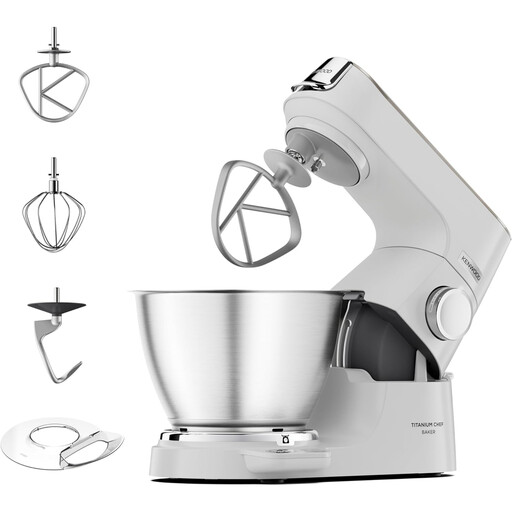
Why It Stands Out: This model is built for the baker who values precision and efficiency. The standout feature is the in-built EasyWeigh scales, which allow you to weigh ingredients directly into the bowl. This saves time, reduces washing up and helps ensure accuracy. Combined with a powerful 1200W motor, it handles demanding tasks with ease.
Pros:
Who is it for? The passionate home baker who wants to streamline their workflow with smart features and requires robust power for a wide range of recipes.
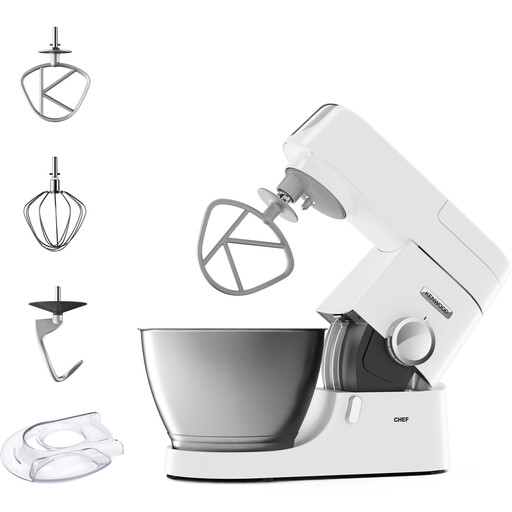
Why It Stands Out: The KVC3100W is a modern incarnation of the classic Kenwood Chef mixer. It focuses on doing the fundamentals exceptionally well. With a reliable 1000W motor and a generous 4.6-litre stainless steel bowl, it's a workhorse designed for durability and consistent performance. It offers the full versatility of the Chef range, compatible with a vast array of attachments.
Pros:
Who is it for? The home cook looking for a no-fuss, highly dependable and versatile kitchen machine that will last for years.
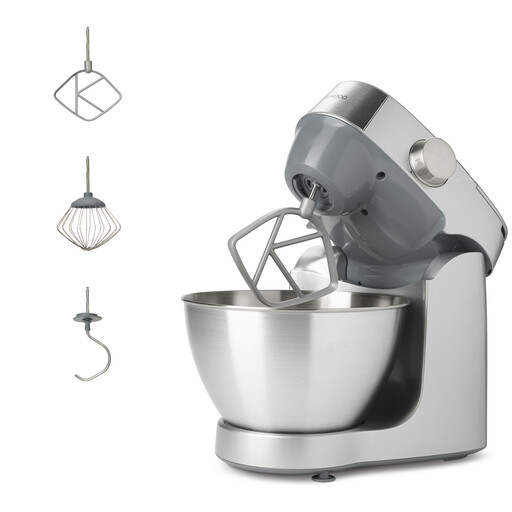
Why It Stands Out: The Prospero+ proves that you don't need a large kitchen to own a powerful mixer. It packs a 1000W motor into a compact, space-saving design. Despite its smaller footprint, it doesn't compromise on performance, easily handling dough with its 4.3-litre bowl and included tools.
Pros:
Who is it for? Bakers and cooks with smaller kitchens who need a capable and powerful mixer without sacrificing valuable worktop space.
While these three models cater to a wide range of needs, your perfect match might be waiting elsewhere. If you're looking for different capacities, features or price points, it's worth exploring a broader selection.
Explore our full range of flour mixer models to find the ideal appliance for your culinary projects.
1. What is the main difference between the Kenwood Chef and Prospero ranges? The primary difference is size and design focus. The Chef range (including the Chef Baker) is generally larger, with a die-cast metal body built for heavy-duty use and maximum versatility with attachments. The Prospero range is designed to be more compact and lightweight, making it an excellent choice for smaller kitchens while still providing strong motor performance.
2. Can a Kenwood stand mixer knead bread dough effectively? Yes. Models with a 1000W motor or higher, when used with the included dough hook, are very effective as a dough mixer. They are designed to knead bread, pizza and brioche doughs efficiently. Always check the model's specifications for the maximum recommended dough capacity to ensure optimal performance and avoid overloading the motor.
3. Are Kenwood attachments interchangeable between all models? Not always. Attachments are typically designed for specific ranges and attachment hubs (e.g., high-speed outlet, slow-speed outlet). An attachment for a Kenwood Chef model may not fit a Prospero model, and vice versa. It is crucial to check the compatibility of any attachment with your specific mixer model before purchasing.