People counting small carbohydrate sources
If you account for gum within a daily carbohydrate allowance, compare the exact pack’s carbohydrate figure with the amount you are likely to chew. “Sugar-free” does not give you that figure.


For a keto-style eating pattern, choose chewing gum by its declared carbohydrate, sweeteners and the number of pieces you expect to use—not by “dark” wording or a sugar-free claim alone. A xylitol-only gum may suit someone who wants to avoid aspartame, but it can still declare carbohydrate and carry a warning about excessive consumption. Check the exact pack before deciding whether either that option or a mainstream sugar-free gum fits your own plan.
The useful label details depend on whether you are counting carbohydrate, avoiding a sweetener or considering a wider change to your diet.
If you account for gum within a daily carbohydrate allowance, compare the exact pack’s carbohydrate figure with the amount you are likely to chew. “Sugar-free” does not give you that figure.
A gum that names xylitol as its only sweetener offers a way to follow that preference. Check its carbohydrate and allergen information too; the sweetener choice does not settle every dietary question.
Gum is only one part of a wider dietary decision. Diabetes UK advises speaking to your diabetes healthcare team before making significant dietary changes, particularly if you take insulin or medication that increases the risk of hypos.
Start with the nutrition panel and ingredients, then check the portion and pack warnings. A dark or cocoa-related description cannot replace those checks.
| Priority | What to check | Your needs |
|---|---|---|
| Declared carbohydrate | Read carbohydrate and sugars as separate lines on the exact pack. The carbohydrate definition published by legislation.gov.uk includes polyols, while its sugars definition excludes them; a zero-sugars figure need not mean zero declared carbohydrate. | I count gum within my carbohydrate allowance, so the carbohydrate figure matters more to me than “sugar-free” on the front of the pack. |
| Sweeteners and allergens | Read the ingredient and allergen statements rather than assuming all sugar-free gums use the same sweetener. Peppersmith describes its peppermint gum as sweetened with xylitol and free from aspartame; other formulations need their own check. | If I prefer to avoid aspartame, I want the sweetener named. I also need to check ingredients that matter to my own dietary requirements. |
| Amount per piece | Compare the per-100 g carbohydrate figure with pack weight and piece count when all three are stated. Keep any calculated per-piece amount tied to that particular pack. | For several pieces a day, I need to account for what I actually chew rather than treat the whole pack as one portion. |
| Pack warnings | Check warnings about excessive consumption alongside the ingredients. Peppersmith and Ocado display a laxative-effect warning for the Peppersmith xylitol gum. | I may chew gum regularly, so a warning about frequent or excessive use affects which pack I choose and how I use it. |
| Format and flavour | Check whether a bottle or multipack suits how you carry gum, then confirm the flavour and nutrition on that exact variant. A “dark” or cocoa cue does not establish its carbohydrate content. | A portable pack would be useful at work or while travelling, but I still want the flavour and label details to match the product I receive. |
Sugars and carbohydrate are different label figures. Ocado lists Peppersmith 100% Xylitol Peppermint Gum at 0 g sugars but 68 g carbohydrate per 100 g.
Use the carbohydrate line for your comparison, and calculate an amount per piece only when the exact pack gives you the weight and piece count needed.
A dark or cocoa-related description does not tell you which sweeteners a gum contains or how much carbohydrate it declares.
If that wording attracts you, check the product’s actual ingredients, nutrition panel and portion before deciding whether it fits your plan.
Peppersmith warns that excessive consumption of its xylitol peppermint gum may produce laxative effects and marks the product as unsuitable for animals.
Follow the pack warning and keep the gum away from pets, especially if you keep a bottle or pouch within easy reach.
A brand’s description cannot determine how a gum fits an individual carbohydrate allowance or a wider dietary change.
Check the pack for the gum decision. If you take diabetes medication and are considering significant carbohydrate restriction, Diabetes UK advises discussing the dietary change with your diabetes healthcare team first.
These examples show different formulations and pack formats; a brand name alone cannot establish the nutrition of every variant.
Its xylitol peppermint gum is an example for shoppers who want an explicitly named sweetener and a published nutrition panel.
Tesco Groceries lists sugar-free gums from these names in bottle and multipack formats, including several flavours.
The PUR Company describes its gum as sugar-free and sweetened with 100% xylitol.
These bottle and multipack options represent mainstream sugar-free gum. They are not xylitol-only alternatives, and each needs its own carbohydrate and ingredient check.
 No image available
The 67 g bottle provides 30 pieces for carrying gum during the day. The product information lists 69 g carbohydrate and 0 g sugars per 100 g, so use the carbohydrate figure when assessing a portion. Its named sweeteners include xylitol and aspartame; it also identifies soya, a source of phenylalanine and a warning that excessive consumption may produce laxative effects.
 No image available
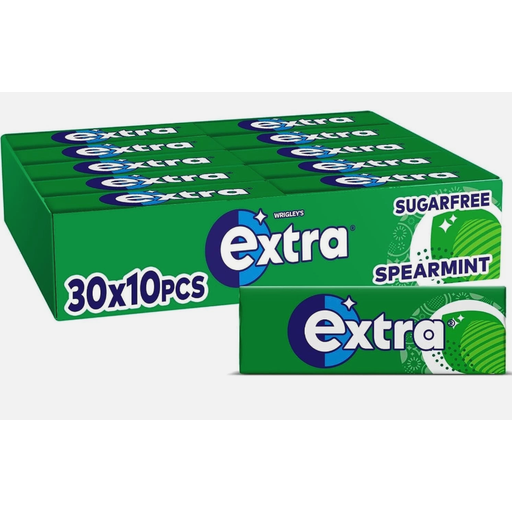
The individual packs offer a format for carrying or sharing gum. The product information lists 62 g carbohydrate, 62 g polyols and 0 g sugars per 100 g; check the pack weight if you need to work out an amount per piece. The ingredients include aspartame and the information identifies soya, a source of phenylalanine and an excessive-consumption laxative-effect warning.
 No image available
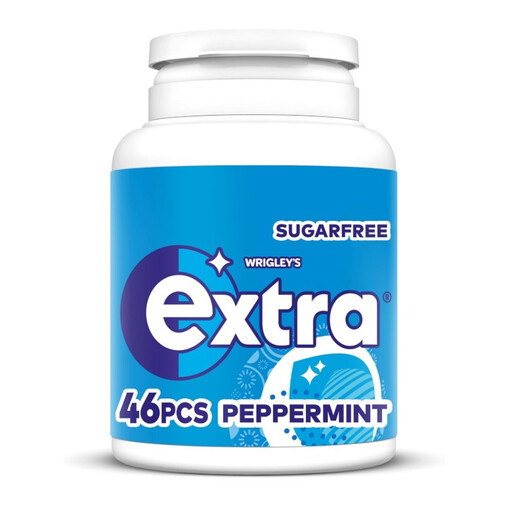
The bottle contains 46 pieces and may suit someone who prefers that pack format. The title says Peppermint, while the detailed description says Ice Mint, so confirm the flavour on the pack. Check the pack’s carbohydrate figure and its basis before counting by piece; the product information names several sweeteners, including aspartame, and identifies soya.
No. A sugar-free claim does not tell you the total declared carbohydrate. The definitions published by legislation.gov.uk include polyols in carbohydrate but exclude them from sugars; Ocado, for example, lists Peppersmith xylitol peppermint gum at 0 g sugars and 68 g carbohydrate per 100 g. Compare the exact pack and the amount you chew with your own plan.
If the exact pack states carbohydrate per 100 g, net weight and number of pieces, multiply the per-100 g figure by the pack weight, divide by 100, then divide by the number of pieces. The result is an estimate based on that pack’s declared figures, not a value that applies to other gums.
Some products do. Peppersmith’s xylitol peppermint gum warns that excessive consumption may produce laxative effects. Read the warning on the exact pack, particularly if you expect to chew several pieces.
Yes, discuss a significant reduction in dietary carbohydrate with your diabetes healthcare team first. Diabetes UK particularly advises this for people taking insulin or diabetes medicines that increase the risk of hypos.
No. Peppersmith marks its xylitol peppermint gum as unsuitable for animals. Keep gum away from pets and seek veterinary advice promptly if a pet consumes it.