What should you check?
Decide whether you need a drink or a cooking ingredient before comparing nutrition panels; then work out how much of the chosen format you will actually use.
| Priority | What to check | Your needs |
|---|
| Carbohydrate |
Read carbohydrate, not just sugars, for the exact product. Note whether the label gives values per 100ml or per 100g, and calculate the amount in your drink or recipe. |
I want to account for the portion I will use, rather than assume that ‘no sugars’ or ‘reduced fat’ tells me its carbohydrate content. |
| Cooking format |
Check whether it is a pouring drink or tinned cooking milk. For a recipe where richness matters, compare the fat value of the exact tins under consideration as well as the carbohydrate value. |
For a curry or dessert, I need a coconut base that suits the recipe; for tea or cereal alternatives, I need something I can pour regularly. |
| Pack and storage |
Compare the number and size of unopened cartons with your usual use, or count the 400ml tins a recipe needs. Read the storage and use-after-opening instructions on each pack. |
A case of cartons makes sense only if we will use them. When I open a tin for cooking, I need a plan for any leftovers. |
Brand and own-label references
These product-line examples show how carton and tin labels differ; their inclusion does not indicate that the products are in the Joybuy selection below.
Alpro
Coconut No Sugars is a 1L pouring drink; an 8 × 1L carton pack is listed by Amazon UK.
- Alpro UK lists 0.0g carbohydrate per 100ml for Coconut No Sugars.
- It is a drink rather than tinned coconut milk for recipes requiring a richer base.
Koko
Unsweetened coconut drink is listed in 1L cartons, including a 12 × 1L pack on Amazon UK.
- Tesco lists 0.4g carbohydrate per 100ml for its chilled 1L Koko Unsweetened drink.
- Check the nutrition and storage instructions on the carton purchased: the cited chilled listing and multipack listing give different carbohydrate figures.
Sainsbury's
Its cited own-label coconut milk is a 400ml cooking tin, not a drink carton.
- Sainsbury's lists 68% coconut extract and 2.7g carbohydrate per 100ml for this tin.
- The cited instructions say to use the contents within three days of opening.
M&S
Its cited 400ml cooking tins include full-fat and reduced-fat versions.
- M&S lists 17.3g fat and 2.9g carbohydrate per 100g for its full-fat Coconut Milk, compared with 9.3g fat and 1.8g carbohydrate per 100g for its Reduced Fat version.
- Both cited tins direct users to refrigerate leftovers and use them within two days.
Waitrose Essential
Its cited 400ml coconut milk tins offer full-fat and reduced-fat cooking options.
- Waitrose lists 18.1g fat and 2.4g carbohydrate per 100ml for the full-fat tin, and 6.2g fat and 2.1g carbohydrate per 100ml for the reduced-fat tin.
- Both cited products direct users to refrigerate opened contents and consume them within two days.
Joybuy cooking coconut milk options
These are individual 400ml tins for the cooking side of the decision. If you mainly need coconut drink for pouring, compare drink cartons instead; a cooking tin is not a substitute for planning a carton multipack.
 No image available
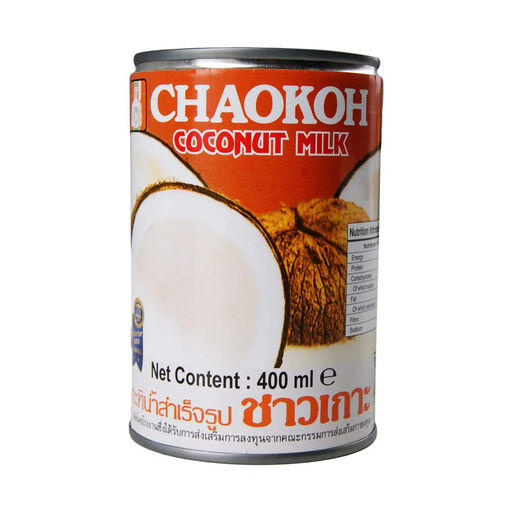
Chaokoh Coconut Milk 400ml Tin
A 400ml cooking tin to count against the amount needed for a curry or soup. Check the current pack for its nutrition values and instructions for any contents left after opening.
 No image available
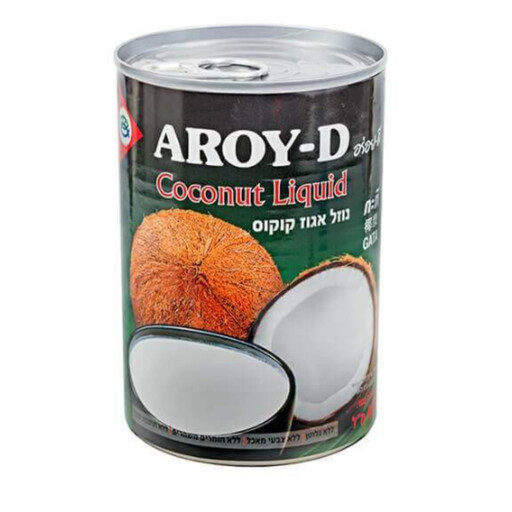
AROY-D Coconut Milk 17% Fat 400ml
A 400ml cooking option whose name specifies 17% fat. If comparing it with another tin for a recipe, read the carbohydrate value and storage directions on the current pack too.
 No image available
Tropical Sun Coconut Milk 400ml Can
A single 400ml tin for a recipe that calls for cooking coconut milk. Compare its current fat and carbohydrate label with other tins if those values affect your choice.
 No image available
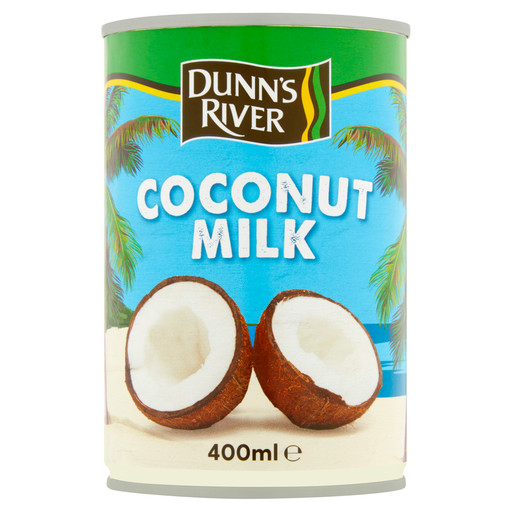
Dunns River Coconut Milk 400ml
A 400ml cooking tin for households buying by recipe rather than by carton case. Check how much the dish uses and follow the pack directions for storing leftovers.
 No image available
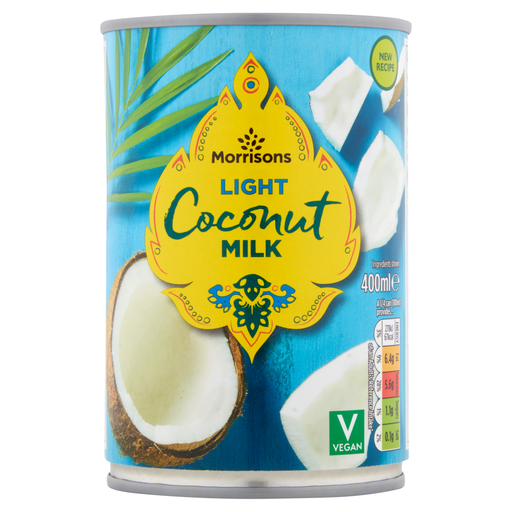
Morrisons Reduced Fat Coconut Milk 400ml
A 400ml reduced-fat cooking tin to consider when the recipe calls for that format. Reduced fat does not settle the carbohydrate question: check both values on the current pack.
Questions about coconut milk
Can I use coconut drink instead of tinned coconut milk in a curry?
Not as a like-for-like swap when the recipe needs a rich coconut base. Tesco lists 1.4g fat per 100ml for its cited Koko chilled drink, while the cited full-fat M&S and Waitrose cooking tins list 17.3g per 100g and 18.1g per 100ml respectively. Choose the tinned format when its cooking role matters.
Does ‘no sugars’ tell me how much carbohydrate a coconut product contains?
No. Read the carbohydrate line for the exact product and work out the amount in your portion. Alpro UK lists 0.0g per 100ml for Coconut No Sugars; Tesco lists 0.4g per 100ml for its Koko chilled drink, and Sainsbury's lists 2.7g per 100ml for its cooking coconut milk.
How long can I keep an opened carton or tin?
Follow the instructions on the product you open. Tesco says to refrigerate its cited Koko chilled drink and use it within five days; the cited M&S and Waitrose cooking tins say to refrigerate leftovers and use them within two days, while the cited Sainsbury's tin says three days. Follow any pack direction to transfer leftover tinned contents to a suitable container.
Can these comparisons determine what fits a medically prescribed ketogenic diet?
No. Great Ormond Street Hospital describes medical ketogenic diets as individually calculated, and NHS Specialist Pharmacy Service guidance says patients need to weigh food and drink. Use the current nutrition label within the prescribed plan from the responsible clinical team.


