People following a strict keto plan
A dried-fruit portion needs to fit the carbohydrate amount in their own plan. The useful comparison is carbohydrate in the amount they will eat, not whether the product is reduced in fat.


Reduced-fat dried fruit is not a reliable choice for a strict ketogenic diet: a claim about fat does not tell you how much carbohydrate is in the portion. Tesco Groceries lists 18.8 g available carbohydrate per 30 g of Tesco Seedless Raisins and 20.8 g carbohydrate per 30 g of Whitworths Extra Juicy Snacking Raisins, so check the exact product and the amount you plan to eat. For medically prescribed ketogenic dietary therapy, follow the individual plan set by your clinical team rather than general snack advice.
A dried-fruit portion needs to fit the carbohydrate amount in their own plan. The useful comparison is carbohydrate in the amount they will eat, not whether the product is reduced in fat.
A low-fat or reduced-fat description concerns fat, not carbohydrate. Reading the nutrition panel helps separate that claim from the question of whether a portion fits a carbohydrate limit.
Great Ormond Street Hospital describes its medical ketogenic diet as very low in carbohydrate, with fruit provided only in small amounts. Parents and carers should use the child’s individual clinical plan when considering a product or substitution.
Start with the carbohydrate figure for the portion you intend to eat. Then check the ingredients and any fat-related wording as separate pieces of information.
| Priority | What to check | Your needs |
|---|---|---|
| Carbohydrate per portion | Check carbohydrate per 100 g and per serving, then calculate it for the amount you will eat. Tesco Groceries lists 18.8 g available carbohydrate per 30 g of Tesco Seedless Raisins. | I need to know whether a measured portion fits alongside the rest of the day’s food. |
| Fat-related wording | Read a fat claim for what it says about fat; check carbohydrate and sugars separately. A fat claim does not establish keto suitability. | A reduced-fat description might catch my eye, but I still need to assess the carbohydrate in the snack. |
| Ingredients and format | Read the ingredient list for the exact product, particularly a mixed-fruit snack. Ocado’s M&S Mixed Fruit listing names sultanas, raisins, currants and sunflower oil. | If I choose a mix rather than plain dried fruit, I want to know what is in the pack before comparing nutrition figures. |
| Prescribed dietary plan | For medical ketogenic therapy, use the food quantities and substitutions agreed with the ketogenic clinical team. Great Ormond Street Hospital describes fruit as available only in small amounts within its approach. | For someone following prescribed therapy, I need the clinical plan—not a general retail label—to determine whether this food can be used. |
Fat and carbohydrate are different label values. Tesco Groceries lists 0.3 g fat but 18.8 g available carbohydrate per 30 g of Tesco Seedless Raisins.
Check carbohydrate for your intended portion before deciding whether the product fits your plan.
A 30 g serving of Tesco Seedless Raisins contains 18.8 g available carbohydrate, according to Tesco Groceries. University Hospitals Sussex NHS Foundation Trust describes 20–50 g carbohydrate per day as a very-low-carbohydrate range in its information for people with type 1 diabetes; that range is not an individual dietary target.
Measure the portion you intend to eat and account for its carbohydrate alongside other foods in your plan.
Ingredients can differ by product. Ocado’s M&S Mixed Fruit listing includes sunflower oil alongside the dried fruit.
Read the ingredients and nutrition panel on the exact pack rather than relying on the category name.
Great Ormond Street Hospital describes its ketogenic diet as very high in fat and very low in carbohydrate, with fruit provided only in small amounts. A retail snack comparison cannot determine an individual patient’s food quantities.
Confirm any proposed product or substitution with the ketogenic dietitian and clinical team.
These product listings illustrate why the carbohydrate declaration matters more to this decision than a fat-related description; they are not recommendations for a strict keto plan.
Tesco’s Seedless Raisins listing provides figures per 100 g and per 30 g serving.
Whitworths Extra Juicy Snacking Raisins provide a branded snacking example.
M&S lists several dried-fruit and fruit-snack formats; its Mixed Fruit provides an example of a blend.
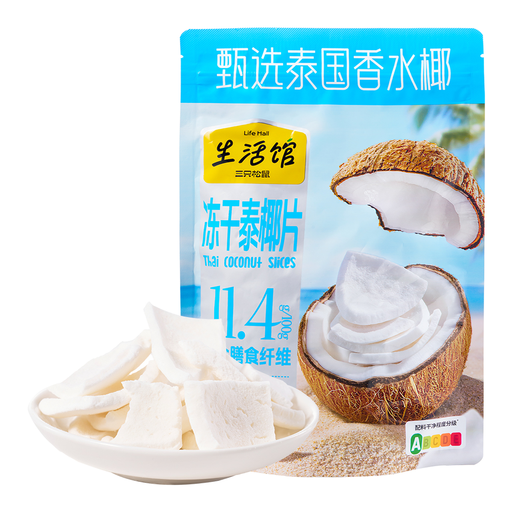
This freeze-dried coconut snack is an option for readers considering fruit-based snacks. Its place in a carbohydrate-limited plan depends on the current pack label and the portion eaten; it should not be assumed to suit strict keto.
 No image available
If you are considering this snack for a carbohydrate-limited plan, check the pack’s carbohydrate figure against the amount you intend to eat; the product name alone cannot establish keto suitability.
Freeze-dried Thai coconut flakes in a 100 g pack.
Not on the strength of its fat claim. A strict ketogenic plan limits carbohydrate, so check the carbohydrate in the portion and whether your individual plan permits it. Great Ormond Street Hospital describes its medical ketogenic diet as very high in fat and very low in carbohydrate.
It varies by product. Tesco Groceries lists 18.8 g available carbohydrate per 30 g of Tesco Seedless Raisins and 20.8 g carbohydrate per 30 g of Whitworths Extra Juicy Snacking Raisins. Check the current label for the pack you buy.
Use the label’s carbohydrate figure for the amount you plan to eat, then read sugars and ingredients for further detail. Keep the portion size and the label’s wording consistent when comparing products.
No. A low-fat claim concerns fat; it does not describe the product’s carbohydrate content. Check the nutrition declaration separately before deciding whether a dried-fruit portion fits a carbohydrate limit.
Check with the child’s ketogenic dietitian and clinical team before making a substitution. Great Ormond Street Hospital describes fruit as provided only in small amounts within its medical ketogenic diet, so a general shopping comparison cannot set the appropriate product or quantity.