Who needs to check what?
Carbohydrate and allergen checks answer different questions: a product can fit a planned portion yet still be unsuitable for someone avoiding an ingredient or a stated cross-contact risk.
Keto-style snackers who can eat nuts
Compare total carbohydrate for the portion you expect to eat, as well as the per-100g figure when comparing packs. The British Dietetic Association describes a very-low-carbohydrate ketogenic diet as 20–50g carbohydrate per day; the amount in one snack needs to be considered alongside the rest of the day’s food.
Shoppers avoiding another named allergen
If nuts themselves are suitable for you but milk, soya or gluten is not, check seasonings and precautionary wording. KP’s Dry Roasted Snack Pack, for example, says it may contain other nuts, milk, soya and gluten.
People avoiding peanuts or tree nuts
Identify the particular allergen before considering a nut mix. The Food Standards Agency lists peanuts and tree nuts separately among allergens that must be declared when used as ingredients; a mix without peanuts in its recipe can still carry a peanut warning.
What matters when choosing?
Start with the allergen you need to avoid. If a product passes that check, compare carbohydrate using the portion you intend to eat, then review seasoning and pack size.
| Priority |
What to check |
Your needs |
| Named allergens |
Read the ingredients for peanuts, individual tree nuts and other allergens you avoid. Check any “may contain” or “not suitable” statement on the current pack as well. |
Peanuts may be fine for me, but milk or soya may not be. I need the wording for my particular allergen, not a general impression that a product is “free from”. |
| Carbohydrate |
Use total carbohydrate per 100g to compare products, then calculate it for the amount you plan to eat. Sainsbury’s lists 3.7g per 100g for its Unsalted Mixed Nuts; Tesco lists 6.5g per 100g for its differently composed Mixed Nuts. |
I want to know what my actual snack portion contributes to my carbohydrate allowance, rather than relying on a keto-style description. |
| Seasoning |
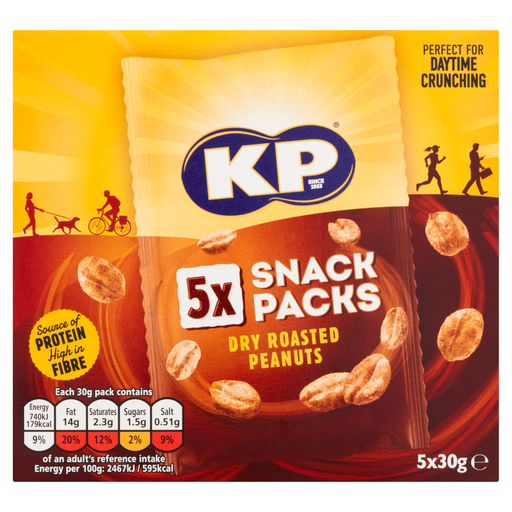
Compare the ingredient list and salt declaration for each variant. KP states 2.2g carbohydrate and 0.51g salt per 30g Dry Roasted Snack Pack; its pack also carries warnings for other nuts, milk, soya and gluten. |
A savoury, seasoned snack appeals to me, but I need to check what the seasoning adds and whether its allergen warnings affect my choice. |
| Portions and storage |
Check the labelled serving size, pack format and instructions for storage after opening. A serving declaration may differ from the amount you usually pour out. |
Smaller packs may make my planned portion easier to identify; for a larger bag, I’ll check how it should be stored and decide how much to serve. |
Brand and product-line references
These named products illustrate differences in ingredients, carbohydrate declarations and allergen wording. A brand name alone does not establish whether another product in its range has the same characteristics.
KP
KP’s Dry Roasted Snack Pack is a seasoned peanut option for shoppers who can eat peanuts and want a stated 30g serving.
- KP declares 2.2g carbohydrate and 0.51g salt per 30g snack pack.
- It contains peanuts and may contain other nuts, milk, soya and gluten.
Sainsbury’s
Sainsbury’s Unsalted Mixed Nuts combine almonds, peanuts, hazelnuts and walnuts.
- The product listing declares 3.7g carbohydrate per 100g.
- It contains peanuts and named tree nuts; Sainsbury’s also says it is not suitable for customers allergic to other nuts because of manufacturing methods.
Tesco
Tesco Mixed Nuts contain cashews, almonds, hazelnuts and walnuts, without peanuts listed as an ingredient.
- Tesco declares 6.5g carbohydrate per 100g.
- The product may contain peanuts and other nuts, so its ingredient list alone does not settle a peanut-allergy decision.
Asda
Asda Mixed Nut Selection combines pecans, peanuts, almonds and cashews.
- The four named nuts make the mix’s main ingredients clear; Asda declares 12g carbohydrate per 100g.
- The product contains peanuts and tree nuts and carries precautionary warnings for further types of nut.
M&S
M&S Nut Collection contains almonds, Brazil nuts, cashews and hazelnuts.
- Ocado’s listing declares 4.6g carbohydrate per 100g for this product.
- It may contain peanuts and sesame; its tree-nut ingredients also rule it out for anyone avoiding those nuts.
Joybuy product options
These options include unsalted peanuts, chopped mixed nuts, seasoned peanuts and chia seeds as a separate seed option. Check each current pack for the particular allergen you avoid; the chia seeds should not be treated as a verified nut-free substitute.
 No image available
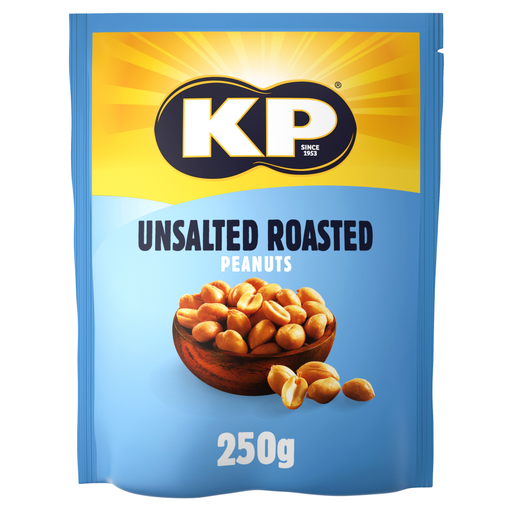
KP Snacks Unsalted Roasted Peanuts 250g
An unsalted peanut option if peanuts are suitable for you. Compare the carbohydrate declaration for your planned portion and check the current pack for any other allergen warnings.
View on Joybuy
 No image available
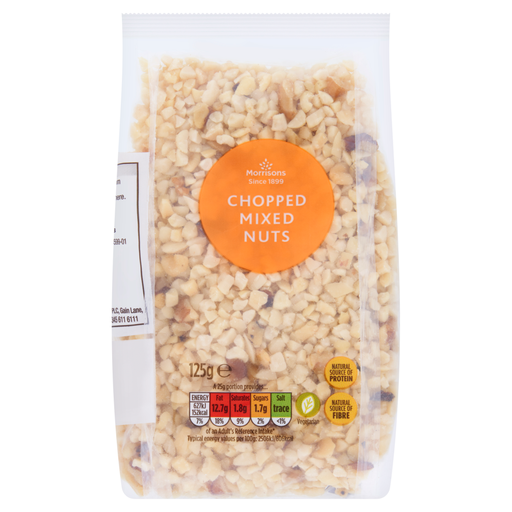
Morrisons Chopped Mixed Nuts 125g
A chopped mix for shoppers considering nuts as a snack or food ingredient. Check which nuts it contains and read any precautionary wording for other nuts or soya before choosing it.
View on Joybuy
 No image available
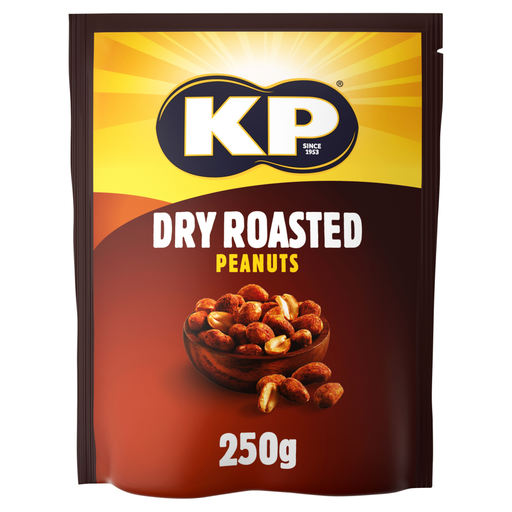
KP Dry Roasted Peanuts Reclose Pack 250g
A seasoned peanut option in a reclose pack. Peanuts are an ingredient; check this pack’s seasoning, carbohydrate declaration and warnings for other nuts, milk, soya or gluten.
View on Joybuy
 No image available
KP Snacks Dry Roasted Peanuts 5 × 30g
The stated individual 30g packs may help you plan a snack portion. Confirm the pack format and check its full ingredient and precautionary allergen information before buying.
Purchase link unavailable
 No image available
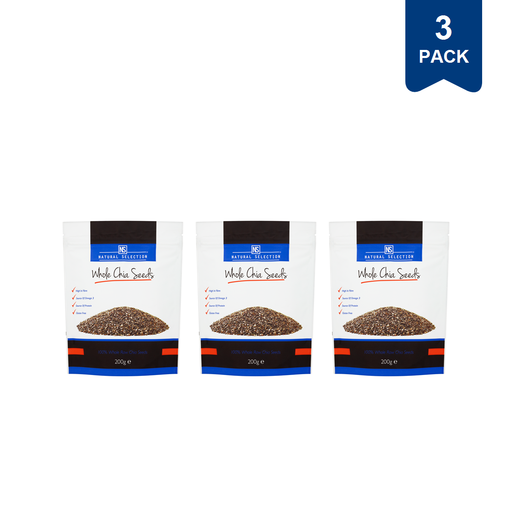
Natural Selection Whole Chia Seeds 200g (3 Packs)
Chia seeds are a seed option rather than a nut snack. If you avoid peanuts or tree nuts, check the current packaging for ingredients and precautionary allergen wording before treating them as an alternative.
View on Joybuy
Questions about nuts and allergens
Can a mixed-nut product be suitable if I have a nut allergy?
Not if it contains the nut you must avoid, and a relevant precautionary warning also matters. Peanuts and tree nuts are distinct allergens in Food Standards Agency guidance, so check the exact ingredients and warnings rather than assuming one nut-allergy label covers every situation. If you must avoid both peanuts and tree nuts, look for a separately checked alternative outside the nuts category.
Does “unsalted” mean nuts fit a keto-style eating plan?
No. “Unsalted” describes the salt choice, not the carbohydrate amount. Check total carbohydrate for the portion you intend to eat: Sainsbury’s lists 3.7g per 100g for its Unsalted Mixed Nuts, while Tesco lists 6.5g per 100g for its Mixed Nuts, which contain a different combination of nuts.
What does a “may contain” warning mean for my choice?
It signals a precautionary allergen risk that needs to be considered for the allergen you avoid; it is not a free-from claim. UK Food Standards Agency guidance says businesses should use precautionary allergen labelling when an identified cross-contact risk cannot be controlled.
How should I store nuts after opening?
Follow the instructions on the particular pack, including any resealing and use-after-opening directions. Do not assume that guidance for one nut product applies to another pack or format.


