People following a strict keto plan
Compare carbohydrate for the entire bar with your remaining daily allowance. Do not treat a low-calorie or low-sugar claim as a substitute for that figure.


Choose a snack bar by its carbohydrate content per whole bar first, then compare kcal among bars that fit your own plan: a lower-calorie bar is not automatically keto-friendly. The British Dietetic Association describes very-low-carbohydrate ketogenic diets as containing 20–50g carbohydrate per day. Check whether a specialist bar’s “net carbohydrate” claim uses the same basis as the figures you are comparing, and read the energy value for the exact flavour and portion.
Compare carbohydrate for the entire bar with your remaining daily allowance. Do not treat a low-calorie or low-sugar claim as a substitute for that figure.
Look for both carbohydrate and kcal per bar. A specialist keto label addresses neither your personal calorie ceiling nor the portion you intend to eat.
Protein and fibre may be reasons to choose a bar, but check its carbohydrate and allergen information before relying on it for a more restrictive eating pattern.
Compare figures for one whole bar rather than switching between per 100g, per serving and per pack. Once carbohydrate fits your plan, kcal and ingredients can help distinguish the remaining options.
| Priority | What to check | Your needs |
|---|---|---|
| Carbohydrate | Find carbohydrate for one whole bar and check whether the pack contains more than one serving. If a brand says “net carbohydrate”, check what its figure represents before comparing it with a standard carbohydrate declaration. | I need to know whether the bar fits my remaining carbohydrate allowance. The British Dietetic Association describes very-low-carbohydrate ketogenic diets as 20–50g carbohydrate per day; that range is not a per-snack target. |
| Energy | Compare kcal per whole bar, not just per 100g or per pack. Check the portion size before deciding whether a keto-positioned bar meets your calorie ceiling. | Calories matter to me as well as carbohydrate, so I need both figures for the portion I will eat. |
| Protein and fibre | Read these alongside carbohydrate rather than using either as a keto test. Nature Valley UK declares 10.2g protein, 4.4g fibre and 11g carbohydrate for its Protein Peanut & Chocolate 40g bar. | I may want a protein bar, but its protein figure alone cannot tell me whether its carbohydrate fits my plan. |
| Ingredients and allergens | Read the ingredients and allergen information for the exact flavour. Check the nutrition panel even when the front of the pack says “no added sugar”. | I need to check ingredients that matter to me without assuming a sugar claim settles carbohydrate content or allergen suitability. |
| Traffic-light labels | Use any traffic-light information alongside the per-bar kcal and carbohydrate figures; the colours alone do not establish keto suitability. | I use colour-coded labels when shopping, but still need the figures for this bar. In a 2024 survey of 611 Northern Ireland consumers by the Food Standards Agency and Ipsos Northern Ireland, 49% reported actively using traffic-light labelling when shopping for food; that figure is not specific to keto shoppers. |
None of those descriptions gives the carbohydrate amount for the bar you will eat. Nature Valley UK, for example, declares 11g carbohydrate per 40g Protein Peanut & Chocolate bar despite its 10.2g protein content.
Check carbohydrate per whole bar first. Compare kcal and other nutrition figures among options that fit your carbohydrate plan.
A carbohydrate claim and an energy declaration answer different questions. Choosing by the former alone cannot establish whether a bar meets your calorie goal.
Read kcal for the exact bar and serving size before comparing it with other candidates.
Specialist brands use “net carbohydrate” in their own product claims, while other nutrition information may state carbohydrate without that qualifier. The figures should not be treated as a like-for-like comparison without checking their basis.
Read the full nutrition panel and compare the same measure for the same whole-bar portion wherever possible.
Medical ketogenic diet therapy is distinct from a self-directed low-carb routine. The British Dietetic Association says it should be implemented and monitored by an experienced ketogenic diet team.
If you follow a medically supervised ketogenic diet, ask your treating team before adding or substituting a commercial snack bar.
These examples show why the exact product and flavour matter more than a brand’s general positioning.
A specialist keto-snack brand offering keto bars, including a mixed box of 15 × 40g bars.
A specialist keto-snack brand with keto bars and crisps.
A specialist keto-bar range with 40g flavours that have differing carbohydrate declarations.
A snack-bar brand with a Protein Peanut & Chocolate bar that provides a useful conventional protein-bar comparison.
A snack brand offering Oat Boost flapjacks alongside other snacks.
These Grenade and KIND bars offer protein-bar or nut-bar options to assess for a less restrictive carbohydrate plan. Their inclusion does not establish that they fit a strict keto allowance: check carbohydrate and kcal for the exact bar before choosing.
 No image available
A Double Chocolate protein-bar option for comparing with a less restrictive carbohydrate plan. The pack contains twelve 50g bars; check carbohydrate and kcal for one bar rather than the whole pack.
 No image available
A Golden Caramel protein-bar option for a plan that can accommodate its per-bar carbohydrate. The pack contains twelve 50g bars; compare the exact flavour’s carbohydrate and kcal on a one-bar basis.
 No image available
A Peanut Butter protein-bar option for a less restrictive carbohydrate plan. The pack contains twelve 50g bars; check the per-bar nutrition figures and the exact pack’s allergen information.
 No image available
A protein-bar option for assessing against your own carbohydrate and calorie limits. Its twelve bars are 60g each, so compare figures for a whole 60g bar rather than assuming they match a 50g variant.
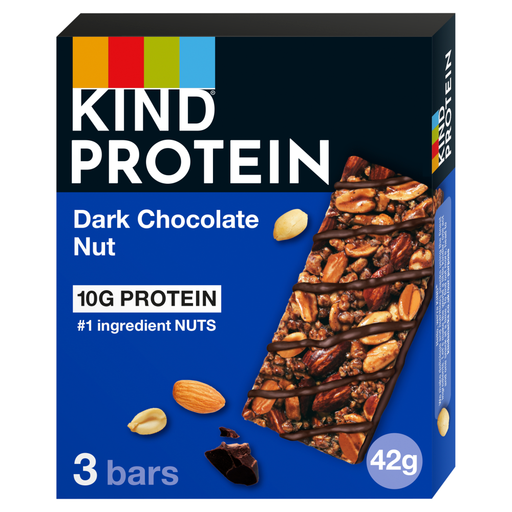 No image available
A nut-bar option to consider if its carbohydrate figure fits a less restrictive plan. The pack contains three 42g bars; check kcal, carbohydrate, ingredients and allergens for one bar.
No. Check carbohydrate for the whole bar against your own allowance, then assess kcal separately. The British Dietetic Association describes very-low-carbohydrate ketogenic diets as 20–50g carbohydrate per day; a calorie figure alone cannot show whether a bar fits that pattern.
It can fit only if its carbohydrate amount works within the plan you follow. Nature Valley UK declares 11g carbohydrate and 196 kcal per 40g Protein Peanut & Chocolate bar, so its protein content should not be used as a shortcut for judging keto suitability.
Treat it as the manufacturer’s claim for the named product, then read that flavour’s full nutrition panel and serving size. Compare figures on the same whole-bar basis rather than assuming “net carbohydrate” and an unqualified carbohydrate declaration mean the same thing.
Do not substitute one without your treating team’s advice. The British Dietetic Association says medical ketogenic diet therapy should be implemented and monitored by an experienced ketogenic diet team.
Read the ingredients and allergen information on the exact flavour and current pack, rather than relying on the range name. Nature Valley UK lists peanut, soy and milk ingredients for its Protein Peanut & Chocolate bar; another product’s information must be checked separately.