Who is choosing a single tin?

Carbohydrate-label checkers

If carbohydrate is your first screen for a keto-oriented meal, compare the declaration and ingredients on the exact unflavoured tin. A figure for one spring-water product does not establish the value for a flavoured or sauce-based variant.

One-meal tin buyers

If you expect to use one tin for one meal, compare its nominal size with its drained weight and stated number of servings. Princes lists 102g drained for its 145g spring-water tin, while Sainsbury's describes its 145g tin as two servings.

Low-fuss lunch buyers

Individually portioned, no-drain cans reduce the need to empty off packing liquid. The John West format described by Tesco Groceries contains three 100g cans, so it suits this preference only if buying a multipack is acceptable.

What matters when choosing?

Check the exact tin's nutrition label first, then decide whether its usable amount and purchase format match your meal.

Concern Buying checks Who this matters to
Carbohydrate declaration Read carbohydrate per 100g on the exact variant, noting whether the figure is for drained tuna; check for sauces or flavourings. If I am planning a keto-oriented meal, I want the tin's stated carbohydrate value before deciding what else to add. About 42% of consumers put that label check first.
Portion and leftovers Compare tin size, drained weight and stated servings; read the instructions for storing any unused tuna. When I need tuna for one meal, a single can is not automatically a single serving, and leftovers change the plan. Portion control comes first for about 33% of consumers.
Packing liquid and format Check the liquid, energy, fat and salt declarations, along with whether checkout is for one tin or a multipack. I may want a no-drain lunch or prefer to choose what I add to plain tuna, but I still need a purchase format that works for me. About 25% of consumers chiefly prioritise that practical choice.

Common buying mistakes

  • Assuming one tin always means one serving

    The number on the front of a can can include packing liquid. Tesco Groceries lists 102g drained for the Princes 145g spring-water tin, and Sainsbury's labels its 145g tin as two servings.

    Use the drained amount and serving declaration to decide whether the tin covers one meal or leaves some for later.

  • Choosing by packing liquid alone

    Spring water and oil do not, by themselves, establish a product's carbohydrate value. Princes reports less than 0.1g carbohydrate per 100g for its sunflower-oil variant as well as for its spring-water example, while the variants have different fat and energy declarations.

    Compare carbohydrate, energy, fat and salt on the exact tin, then choose the packing liquid to suit the meal you intend to make.

  • Using an online panel as the final label

    Tesco Groceries notes that ingredients and nutrition information can change when foods are reformulated.

    Read the physical tin before use, particularly if carbohydrate, salt or allergens affect your choice.

  • Confusing an individual can with a single-can purchase

    The John West No Drain listing described by Tesco Groceries contains three individually sized 100g cans, not one standalone can.

    If you want to buy only one tin, check the pack count at checkout as well as the size printed on each can.

Relevant tuna brands and formats

Princes

Its spring-water range includes a 145g tuna-chunks tin with a stated 102g drained weight; Princes also offers other packing liquids.

  • The spring-water listing at Tesco Groceries declares less than 0.1g carbohydrate per 100g drained.
  • If salt or the amount you will eat matters, compare the current label and the drained weight rather than using the nominal tin size alone.

Sainsbury's

Its own-label tuna chunks in spring water provide a 145g single-tin example.

  • Sainsbury's declares less than 0.5g carbohydrate and 0.12g salt per 100g drained.
  • The label states two servings per tin, which matters if you plan to eat the whole can as one portion.

M&S

Its tuna chunks in spring water offer a 160g single-tin format.

  • M&S lists skipjack tuna and spring water as ingredients and declares 0.0g carbohydrate per 100g.
  • The product information warns that bones may remain; consider whether the 160g tin suits your intended portion.

John West

Its No Drain tuna chunks provide an individually portioned format for shoppers who want less preparation.

  • The listing described by Tesco Groceries declares 0g carbohydrate per 100g and identifies 100g cans.
  • That listing is for a 3 × 100g pack, so it does not meet a strict requirement to buy one standalone tin.

Tesco

Its spring-water tuna range lists a 145g tin alongside other can sizes and multipacks.

  • The listed formats let shoppers distinguish a single 145g tin from multipack options before purchase.
  • Check the current physical label for the particular 145g tin's ingredients and nutrition values rather than applying figures from another product.

Joybuy tuna selections

These selections cover spring-water tuna in 145g and 160g formats, plus individually portioned no-drain cans sold as a multipack. Check the current label for carbohydrate and the checkout pack count if one standalone tin is essential.

Morrisons Fad Free Tuna Chunks in Spring Water 145g

Morrisons Fad Free Tuna Chunks in Spring Water 145g

Consider this named 145g spring-water tin if you want to plan a meal around one can. Check its current carbohydrate declaration, drained weight and serving information before deciding how much to use.

View on Joybuy
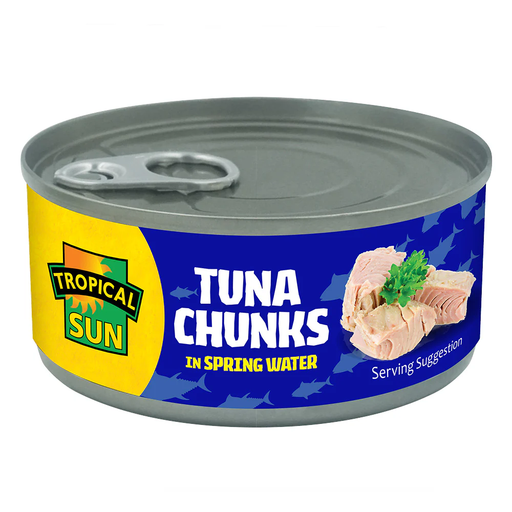
Topical Sun Tuna Chunks in Springwater 160g

Topical Sun Tuna Chunks in Springwater 160g

The named 160g spring-water format may suit a meal needing a larger nominal tin. Confirm the checkout pack count, drained amount and basis of the current nutrition declaration when comparing it with other cans.

View on Joybuy

John West No Drain Tuna Chunks in Springwater, three 100g cans

John West No Drain Tuna Chunks in Springwater 3 × 100g

The no-drain cans suit a preference for individually portioned tuna with less preparation. This is a three-can purchase, not a standalone single tin; check the current nutrition label for the basis of its carbohydrate declaration.

View on Joybuy

Questions about choosing tuna

Is tuna in spring water automatically suitable for a keto-oriented meal?

No product name establishes a fit with every meal plan. M&S declares 0.0g carbohydrate per 100g for its spring-water tuna, while the Princes and Sainsbury's examples declare less than 0.1g and less than 0.5g respectively per 100g drained. Check the exact tin's current label and ingredients against the meal you intend to make.

Should I choose tuna in spring water, oil or brine?

Choose by the exact product's carbohydrate, fat, energy and salt declarations, not by the liquid's name alone. Princes lists less than 0.1g carbohydrate per 100g for both its cited spring-water and sunflower-oil variants, but their other nutrition declarations differ. Compare labels on a like-for-like basis where possible.

Does a single tin count as one serving?

Not necessarily: Sainsbury's labels its 145g spring-water tin as two servings, and the Princes 145g tin has a stated drained weight of 102g. Check both the serving declaration and drained amount to plan how much tuna you will use.

What should I do with tuna left after opening?

Follow the storage instructions on the particular tin. If you will not use it all, move the remaining tuna to a suitable sealed container and refrigerate it as directed on the product label.

Is tinned tuna suitable if I have a fish allergy?

No. Tuna is fish, and the Food Standards Agency identifies fish as an allergen that poses a risk to people with a fish allergy. A low carbohydrate declaration does not change that; read the current allergen label before choosing a product.