
24/7 Customer Support

Free returns

Same-day & Next-day Delivery

Quality Guaranteed

Unlock Your Welcome Offers: FREE Delivery | Up to 80% OFF | Free 30-day JoyPlus trial
Download the APP
If you live in the UK, particularly in a hard water area, you're likely familiar with the chalky, white substance that builds up inside your kettle. This is limescale, and it’s more than just an unsightly nuisance. It can slow down boiling times, increase your electricity bills and leave unpleasant flakes floating in your morning cuppa.
Choosing an effective kettle descaler can feel overwhelming with so many options available. As the Joybuy Product Recommendation Officer, my role is to help you understand the key differences between products so you can find a practical solution that keeps your appliances running efficiently. This guide will walk you through what to look for and highlight some reliable options for 2026.
Before you buy, consider these three factors to ensure you select a product that fits your needs and your appliances.
Descalers primarily use acidic compounds to dissolve the mineral deposits of limescale. The main choice is between natural acids and more complex chemical formulas.
While your main concern might be your kettle, limescale affects other appliances too.
Descalers are commonly sold in two formats: pre-measured sachets or larger liquid bottles.
Here are a few recommended products, each suited to different household needs and priorities.
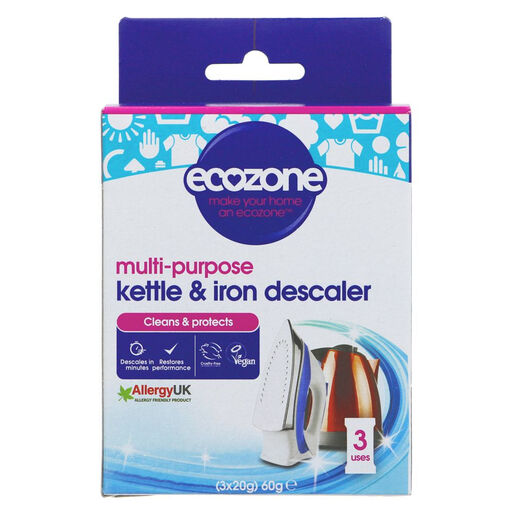
Why It Stands Out: This descaler from Ecozone is built on an eco-conscious philosophy. Its formula is based entirely on natural citric acid, effectively tackling limescale without introducing strong chemicals into your appliances. It comes in pre-measured sachets for ease of use.
Pros:
Who is it for? This is an excellent choice for the environmentally conscious household, families with allergy concerns or anyone who prefers using plant-based cleaning products.
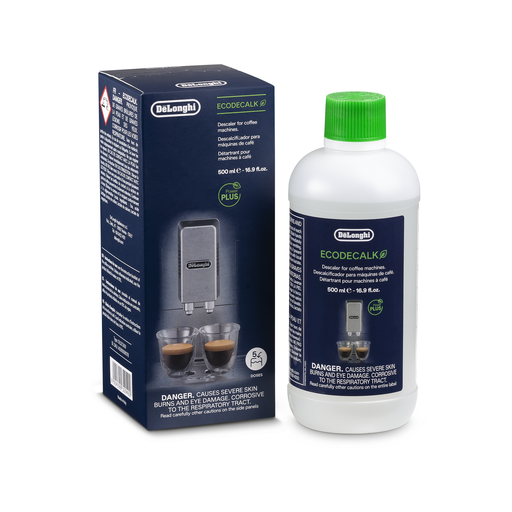
Why It Stands Out: While marketed as a coffee machine descaler, this solution is highly effective for all hot water appliances. According to the manufacturer, its lactic acid-based formula is powerful against limescale yet gentle on internal components. The large 500ml bottle offers great value, providing multiple descaling cycles.
Pros:
Who is it for? Ideal for owners of coffee machines, particularly De'Longhi models, but also a great value option for anyone who needs to descale their kettle frequently and prefers a liquid format.
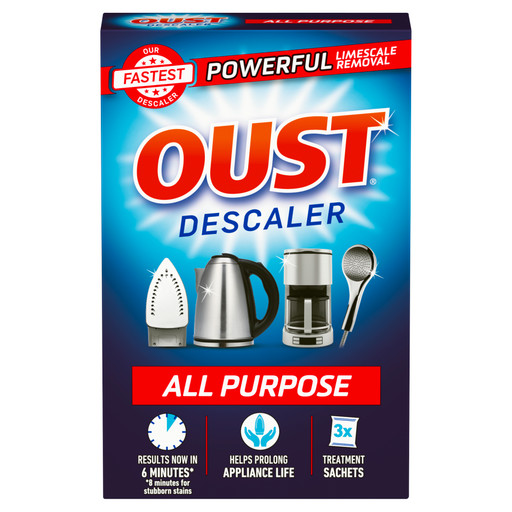
Why It Stands Out: Oust is a well-known name in descaling, and this product is designed for speed and convenience. Its all purpose descaler formula works on kettles, coffee machines and irons, with the brand stating it can produce results in as little as six minutes. The box contains three liquid sachets for easy application.
Pros:
Who is it for? Perfect for busy individuals who need a quick, powerful and straightforward solution to tackle limescale across multiple household appliances.
If these recommendations don't quite match what you're looking for, there are many other types of descalers available. From different formulations to larger pack sizes, you can find a solution tailored to your specific needs.
Explore our full range of limescale removers to find the perfect fit for your home.Shop All Descalers
This depends on the water hardness in your area. For those in hard water regions (like London and the South East), descaling every one to two months is advisable. In soft water areas, descaling every three to four months is usually sufficient to keep your kettle efficient.
White vinegar is a traditional home remedy for limescale. However, it can be less effective on heavy build-up, has a strong odour and may require multiple cycles. Furthermore, some appliance manufacturers advise against using vinegar as it can potentially damage certain seals or components over time. Commercial descalers are specifically formulated for fast, effective and safe use in appliances when instructions are followed.
Yes, when used correctly. Commercial descalers are designed for use in food and drink appliances. The key is to follow the product's instructions precisely, particularly regarding dilution and rinsing. Always rinse the appliance thoroughly with fresh water after descaling to remove any residual solution before using it again.