What matters when choosing?
Check the amount you need to boil and the space available, then examine how you will pour into the flask. Temperature settings and cleaning features matter more if they are part of your regular routine.
| Concern |
What to check |
Who this matters to |
| Controlled pouring |
Check for an explicitly specified narrow precision or non-drip spout and a handle you can use while the flask rests on a stable surface. |
I need a steady stream into a narrow flask without splashing nearby items; around 33% of consumers put controlled pouring first. |
| Worktop and cupboard space |
Compare the kettle and base’s height, width and depth with the space available; capacity alone does not establish its footprint. |
My storage space is limited, so the kettle has to fit without crowding the area where I use it. Roughly 27% of consumers prioritise space. |
| Capacity and minimum fill |
Compare the flask volume with the kettle’s capacity and minimum-fill instruction. Dualit specifies a two-cup minimum for its 1L Jug Kettle. |
I want enough water for my usual flask without making an unsuitable small top-up; around 20% of consumers make capacity and minimum fill their main concern. |
| Temperature and upkeep |
If you want below-boiling water, check the available settings. For regular cleaning, examine the filter and the manufacturer’s care instructions. |
I prepare drinks at a chosen temperature or expect to clean the kettle frequently; about 20% of consumers put temperature and upkeep first. |
Joybuy product choices
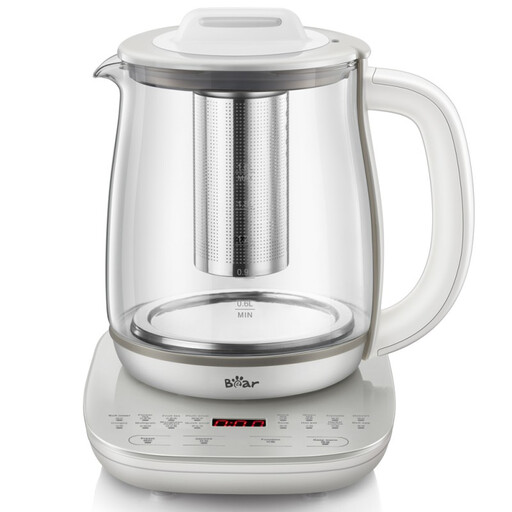
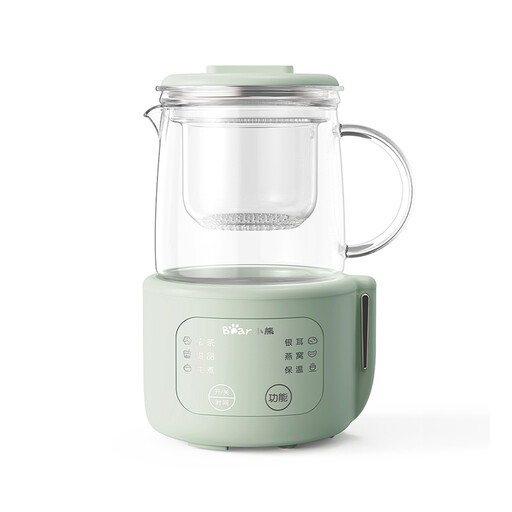
These Bear kettles serve different routines: one has a stated 1.8L capacity and adjustable temperature, while the Mini Office Cup is intended for personal-sized drinks. Compare either option with your flask volume, available space and pouring needs.
 No image available
Bear YSH-C18R6 1.8L Multifunction Glass Kettle
Consider this for a larger flask or repeated servings if its size fits your kitchen. Its stated features include 16 presets, adjustable temperature and a keep-warm function. Check the minimum fill and spout design if small top-ups or a narrow flask opening matter to you.
View on Joybuy
 No image available
Bear Mini Office Cup YSH-F04E1 Kettle
This personal-drink format may suit a smaller flask and limited space. Compare its capacity and minimum-fill instruction with your flask, and check the spout if you need a controlled pour into a narrow opening.
View on Joybuy
Common questions
What kettle capacity do I need to fill a flask?
Choose capacity by your flask’s volume and the number of servings you need from one boil. Check the model’s minimum fill too: Dualit specifies a two-cup minimum for its 1L Jug Kettle, while a larger-capacity kettle may be more practical when one boil must serve several drinks.
What helps when pouring into a narrow flask?
Look for a spout the manufacturer describes as narrow, precision-pour or non-drip, and keep the flask stable while filling it. Russell Hobbs, Dualit and Tefal specify different pour-related features on the models discussed above; check the exact kettle rather than judging by its shape alone.
Do I need temperature settings for a flask?
Not if you only need boiling water. If you deliberately prepare a drink with below-boiling water, temperature selection may be useful; Tefal specifies 70°C, 80°C, 90°C, 95°C and 100°C settings for its Selection KO760DG0. Check capacity, minimum fill and pouring separately.
How should I care for a kettle used regularly for flask filling?
Follow the model’s cleaning and descaling instructions, and make sure the lid closes securely. Limescale around a lid can affect closure; a removable filter can help with routine cleaning but does not replace descaling.


