Occasional cottage soup makers
If you usually prepare one or two soups, look for a readable water-level indicator and check the minimum-fill marking. Both help you judge whether the kettle suits the amount called for on the packet.


For several guests, a conventional 1.5–1.7L kettle gives you capacity for multiple portions; if you usually make only one or two and storage is tight, consider a compact travel kettle after checking its capacity and electrical suitability. Whichever size you choose, check the minimum-fill guidance and measure the water required by the soup packet. Bedfordshire Fire and Rescue Service advises plugging kettles directly into a wall socket.
If you usually prepare one or two soups, look for a readable water-level indicator and check the minimum-fill marking. Both help you judge whether the kettle suits the amount called for on the packet.
When several people want soup or hot drinks together, capacity matters more. Tefal UK and Morphy Richards UK list relevant conventional kettle examples with capacities of 1.5–1.7L; check portion sizes rather than treating a stated cup count as a count of soup servings.
Changing guests need clear filling guidance and straightforward operation. A removable filter may make routine cleaning easier, but the kettle will still need descaling according to its manual; Morphy Richards UK notes that limescale can affect automatic switch-off.
Choose capacity around the number of portions you usually make, then check filling, electrical use and cleaning. Temperature selection is an optional extra for other drinks, not a requirement for preparing instant soup according to its packet instructions.
Choose it when: Several guests may want soup or hot drinks in one round.
Trade-off: It needs more worktop and storage space than a compact travel kettle.
Choose it when: Storage is limited and you usually prepare only one or two portions.
Trade-off: A smaller capacity may mean repeated boils for a group; check the plug, voltage and minimum-fill guidance for the exact model.
| Concern | What to check | Who this matters to |
|---|---|---|
| Measured small portions | Check that the water-level indicator is readable and that the minimum-fill marking permits your usual quantity. | If I make one soup at a time, I want to measure the water without filling the kettle unnecessarily. Around 36% of consumers put small-portion filling first. |
| Several guests | Compare stated capacity with the water required for the whole round; check the handle and base arrangement for shared use. | When everyone wants soup or a hot drink together, I would rather prepare enough water without repeated refills. For around 29% of consumers, serving the group is the primary need. |
| Unfamiliar kitchen | Check the exact model for automatic shut-off and dry-boil protection, and use a suitable, undamaged wall socket. | In a cottage kitchen I do not know, I want straightforward operation and a safe place to plug in the kettle. That comes first for around 21% of consumers. |
| Limescale upkeep | Look for a removable filter and follow the model’s descaling instructions, particularly where the water is hard. | If I maintain a kettle between guest stays, I want cleaning to be manageable without overlooking scale inside it. Around 14% of consumers prioritise upkeep. |
A large kettle gives a group room for a shared round, but its maximum fill is not the amount needed for one soup. A compact kettle, meanwhile, may require repeated boils for several guests.
Use the packet’s water quantity and the largest realistic soup-and-drinks round to judge capacity. Check the kettle’s minimum-fill marking before relying on it for small portions.
A removable filter can help with routine cleaning, but it does not stop scale accumulating inside. Morphy Richards UK says limescale can affect how a kettle detects boiling and switches off.
Follow the model’s descaling instructions and take local water hardness into account.
Kettles are high-energy appliances. Bedfordshire Fire and Rescue Service advises plugging them directly into a wall socket.
Use a suitable socket near the worktop. If the plug, cable or socket looks damaged, do not use the kettle; tell the property owner or manager.
In August 2026, the Office for Product Safety and Standards reported a serious fire risk from inadequate earthing in the CZ-8520 electric kettle. That report concerns the identified model, not kettles generally.
Check the exact product’s UK-use details and instructions, inspect its condition before use and consult current product-safety notices where appropriate.
Tefal UK lists conventional kettles as well as models with temperature-control functions for uses beyond boiling water for soup.
Kenwood GB lists kettle ranges with features such as one-cup boiling and 360-degree bases.
Morphy Richards UK lists 1.5L kettles with features relevant to measuring water and routine cleaning.
These larger-capacity kettles are options to consider when a cottage needs hot water for more than one portion. Compare their controls and filling guidance with how you actually prepare soup; neither is presented as a compact travel kettle.
 No image available
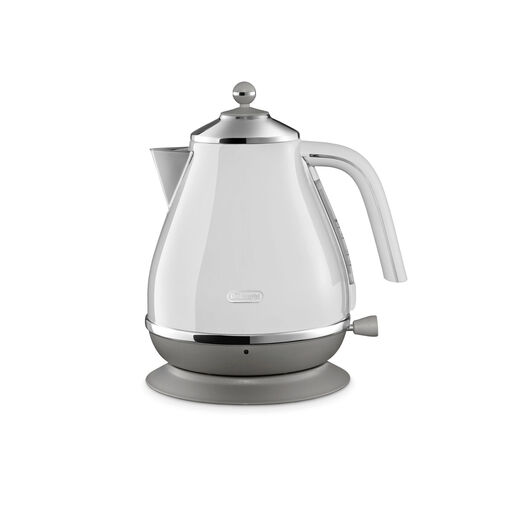
Consider this 1.7L kettle if several guests may need hot water in one round; use the soup packet to determine how much to fill. Check the minimum-fill guidance and supplied plug for the cottage before use.
 No image available
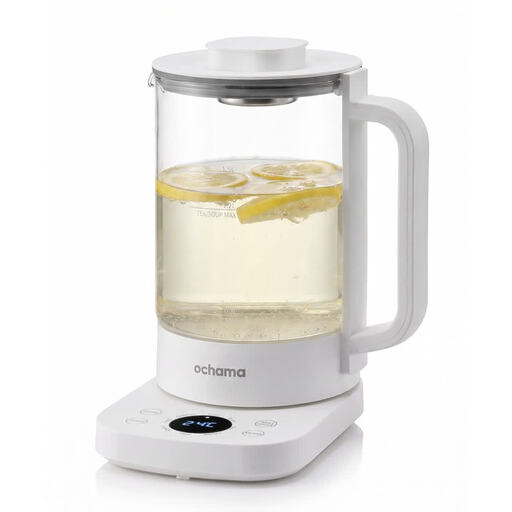
Consider the 1.5L capacity if you may prepare water for more than one person, but decide whether the additional controls suit your use. Check the voltage, supplied plug, water-level markings and minimum-fill guidance before choosing it for cottage soup preparation; take care around the hot body and steam outlet.
Plug the kettle directly into a suitable wall socket instead: that is the advice of Bedfordshire Fire and Rescue Service for high-energy appliances, including kettles. Do not use a visibly damaged plug, cable or socket.
A removable filter is useful if easier routine cleaning matters to you, but it does not replace descaling. Morphy Richards UK notes that scale inside a kettle can affect boiling detection and automatic switch-off.
Follow the exact model’s manual and adjust for use and local water hardness. Morphy Richards UK suggests monthly descaling depending on those conditions; that is manufacturer maintenance guidance, not a schedule for every kettle.
For a self-catering holiday home in England, GOV.UK says owners must follow HSE guidance on electrical safety. Check the condition and instructions of any kettle supplied; GOV.UK’s separate private-renting guidance should not be assumed to apply identically to every holiday-let arrangement or to properties outside England.