Choose a keyboard for API-documentation work by how long you type, how it fits your desk and whether you switch between separate computers—not by the number of screens. The Health and Safety Executive (HSE) advises keeping the screen and keyboard central and the keyboard just below elbow height. Consider a shaped layout for your preferred hand position, a full-size multi-device keyboard for switching between host devices, or a compact programmable layout if shortcuts and desk space matter more than a number pad.
Who these choices suit
Long-session documentation writers
If you spend extended periods writing and revising API references, keyboard placement and your typing position may matter more to you than custom switches. The HSE advises a central screen and keyboard, with the keyboard just below elbow height; it also recommends a separate keyboard and mouse for prolonged laptop use.
Multi-computer technical writers
If documentation work moves between separate computers or a tablet, device switching may be useful. Logitech says its MX Keys S can switch between up to three devices; that feature is not needed simply because one computer runs two monitors.
Shortcut-heavy compact-layout users
If you want more room beside the keyboard and are willing to learn layers or remap keys, a compact layout is worth considering. Keychron lists a 75% UK-ISO K3 Max configuration with QMK/VIA remapping; check the exact variant before buying.
What to check before buying
For a two-screen documentation desk, decide whether your primary concern is your typing position, switching between host devices or making room for a compact shortcut-focused layout.
| Concern | What to check | Who this matters to |
|---|
| Typing position and desk fit |
Check whether the keyboard can sit centrally just below elbow height and leaves a comfortable position for the mouse. Consider a separate keyboard and mouse for prolonged laptop use, as the HSE advises. |
If I write documentation for long stretches, I want a keyboard and desk arrangement that lets me work without twisting towards a screen. Roughly 42% of consumers would put typing position and workstation fit first. |
| Switching between devices |
Confirm the number of host devices, supported operating systems and whether your work setup permits the required connection or configuration software. |
When my references and test work sit on separate computers, I want to move between them without repeatedly changing keyboards; around 33% of consumers would make device switching their primary concern. |
| Compact layout and shortcuts |
Check the exact UK key layout, number-pad requirements and whether remapping works with your operating system and intended connection mode. |
If desk space is tight and I use repeated commands or symbols, I may accept a smaller layout and time spent learning its keys. For approximately 25% of consumers, compact programmability would come first. |
Buying pitfalls
-
Buying device-switching features just because you have two screens
Two monitors connected to one computer still use the same host device. Keyboard switching becomes relevant when you work across separate computers or tablets.
Establish how many host devices you use before choosing a connection setup. For desk positioning, the HSE advises keeping the screen and keyboard central.
-
Assuming every variant has the same symbol keys
A different physical layout can put punctuation and symbols in unfamiliar positions when you write API examples or code-like text.
Check the exact UK-ISO or British-English variant rather than relying on a keyboard family name or a general UK label.
-
Expecting keyboard shape to fix the whole workstation
The HSE treats screen and keyboard position, posture and work routine as parts of display-screen work. A shaped keyboard does not remove the need to arrange the rest of the desk.
Set up the keyboard, mouse, chair and displays together. If you use display-screen equipment for long periods as an employee, ask your employer about the applicable workstation assessment.
Brands to consider
Logitech
Relevant to conventional low-profile, multi-device and one-piece shaped keyboards.
- Logitech says MX Keys S can switch between up to three devices, while Wave Keys has a wave-shaped layout and cushioned palm rest.
- Choose between those approaches by your actual host-device workflow and preferred layout; a shaped keyboard still needs suitable desk positioning.
Keychron
Relevant if you want a compact UK-ISO mechanical layout and configurable keys.
- Keychron lists a 75% UK-ISO K3 Max configuration with wired, Bluetooth and 2.4 GHz connections and QMK/VIA remapping.
- A 75% layout omits a dedicated number pad. Confirm the exact layout and switch variant, and allow for learning any layers you plan to use.
Apple
Relevant to compatible Apple-silicon Mac users seeking a British-English extended keyboard.
- Apple lists a Magic Keyboard with Touch ID and Numeric Keypad for Mac models with Apple silicon, with Bluetooth and USB-C charging.
- Check the model's macOS requirement before purchase. This Touch ID configuration is a Mac-focused choice, and its numeric keypad takes desk space.
Keyboards on Joybuy
These choices span full-size, split-layout and compact keyboards for a documentation desk. Compare their physical layouts with your symbol-typing habits, and consider device switching only if you use separate host devices.
 No image available
Targus EcoSmart Full Size Wireless Keyboard (UK)
Consider this full-size wireless keyboard if you prefer a wider, conventional desk layout for writing. If the placement of UK punctuation keys is important, confirm the exact physical layout rather than relying on the UK label alone.
View on Joybuy
 No image available
HP 960 Split-Layout Wireless Keyboard with Padded Wrist Rest
Consider the split layout and padded wrist rest if you prefer that arrangement for extended writing; neither establishes how comfortable it will feel for you. Check the physical key layout for UK symbol typing and whether any key-customisation software works on your work device.
View on Joybuy
 No image available
HyperX Alloy Rise 75 Wireless Keyboard (UK)
A compact wireless option to consider when you want room beside the keyboard but still need to navigate documentation. Confirm the exact physical layout if UK-ISO symbol positions matter, and check shortcut customisation separately before relying on it.
View on Joybuy
 No image available
ASUS ROG Falchion Ace HFX 65 Analog Gaming Keyboard (UK Layout)
This compact UK-layout option may suit a desk where keyboard width matters. Its gaming focus does not establish a benefit for long documentation sessions; check operating-system compatibility and the exact key arrangement for your work.
View on Joybuy
 No image available
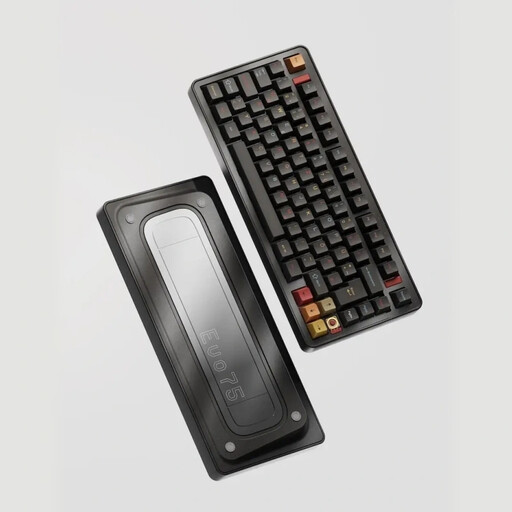
Ticktype EVO75 Wireless Mechanical Keyboard, US Layout, Creamy Rye Switches, Spray-coated Nebula
Consider this compact, VIA-compatible keyboard if configurable shortcuts matter more to you than a familiar UK key layout. The stated US layout may change where you find punctuation and symbols; check that it suits your documentation work and that the mapping software works with your device. The named variant has hot-swappable switches and an 8000mAh battery.
View on Joybuy
Common questions
Do two monitors mean I need a multi-device keyboard?
No. Two monitors connected to one computer do not require keyboard switching; that feature matters when you move between separate host devices. For workstation position, the HSE advises keeping the screen and keyboard central.
How should I position a keyboard when I use a laptop and external displays?
For prolonged laptop work, use a separate keyboard and mouse so you can position the display independently. The HSE advises keeping the screen and keyboard central and placing the keyboard just below elbow height.
Should I look for a UK-ISO layout when writing API documentation?
If you normally type on a UK keyboard, check the exact UK-ISO configuration before buying. The position of punctuation and symbol keys matters when you regularly write API examples; a general model name or UK label may not identify the physical layout precisely.
When do display-screen equipment rules matter for this work?
The HSE says the UK Display Screen Equipment Regulations apply to workers who use display-screen equipment daily for continuous periods of an hour or more. Whether they apply to your work depends on your working pattern and circumstances; ask your employer about the relevant workstation assessment.
How should I dispose of an old wireless keyboard or its batteries?
Keep electrical products and batteries out of household rubbish. UK government recycling guidance advises taking them to appropriate electrical-waste and battery collection points.


