What matters when choosing
Check standing-desk fit first, then match key access, shortcuts and layout to the actions you repeat while testing.
| Concern |
What to check |
Who this matters to |
| Standing-desk fit |
Check whether the desk or tray can place the keys just below elbow height, with room to position the keyboard and pointing device. |
If I cannot get the keys to a workable standing height, a different keyboard shape will not fix my desk setup. Roughly 46% of consumers would put workstation fit first. |
| Testing workflow |
Check access to required navigation and function keys, shortcut configuration and switching between the devices you use. |
When I repeat app actions or move between test machines, I need the same essential commands within easy reach. Around 36% of consumers would make that workflow their primary concern. |
| Layout and customisation |
Confirm the exact key layout and symbols; for split or compact boards, inspect the default keymap and layer access. |
If my tests rely on familiar UK symbols, I need to find them reliably; if I change to a split layout, I need time to adapt. Approximately 18% of consumers would prioritise layout and customisation. |
Joybuy keyboard choices
These choices span compact and full-size keyboards for desktop-app input. Compare their stated layouts and connections with your test routine, then check whether each board fits your standing workstation.
 No image available
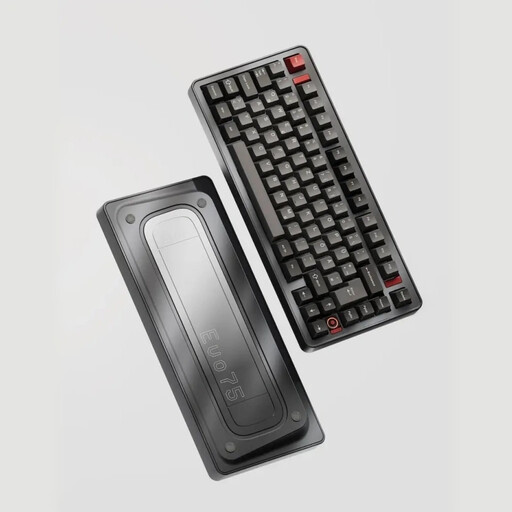
Ticktype EVO75, US layout, Creamy Rye switches, Anodized Basalt Grey
Consider this compact board if you want to configure repeated test actions, but check that its US key positions suit your scripts.
The title specifies a 75% layout, VIA compatibility, hot-swappable switches and tri-mode connectivity. Confirm that the configuration method works with your operating system and that the keyboard fits your standing setup.
View on Joybuy
 No image available
HyperX Alloy Rise 75 Wireless Keyboard UK
Consider it if you want a wireless keyboard for testing and need to check how its keys and switching method fit your routine.
Confirm the physical key layout on the exact variant, the operating-system support for any key customisation you need, and its height at your standing desk.
View on Joybuy
 No image available
AULA F75, 75% US layout
This compact layout is worth considering when desk space and connection options matter, provided its US key positions work for your tests.
The title specifies wired, Bluetooth and 2.4G modes and PBT keycaps. Check access to your essential keys, any required shortcut configuration and the keyboard’s standing-desk fit.
View on Joybuy
 No image available
Ticktype DP104, 108-key US layout, Silent Tactile switches, Gecha Gray
Consider this full-size option if your testing uses a conventional spread of keys and you have room for it alongside your pointing device.
The title specifies tri-mode connectivity and hot-swappable switches. Its stated layout is US; confirm the symbols, shortcut functions and physical fit you need.
View on Joybuy
 No image available
ASUS ROG Falchion Ace HFX 65, UK layout
Consider it if a compact UK-layout keyboard matches your test scripts and a wired connection suits your devices.
Check the exact access to navigation and function keys, the stated Windows 10/11 compatibility against your setup, and the keyboard’s height when standing.
View on Joybuy
Frequently asked questions
How high should my keyboard be when I test an app standing up?
Position the keyboard just below elbow height and keep it central with the screen, following Health and Safety Executive posture guidance. If the desk cannot reach a workable position with the keyboard in place, consider whether a keyboard tray or arm would help before changing boards.
Should I choose UK-ISO for desktop-app testing?
Choose UK-ISO if familiar UK key positions and symbols matter to your test scripts or data entry. Check the exact variant rather than relying on the retailer’s location; Keychron UK, for example, identifies UK-ISO options in its collection.
Is a split keyboard automatically more suitable for standing work?
No: split spacing and tenting offer adjustment, but suitability still depends on workstation placement and your willingness to learn the layout. The Health and Safety Executive’s keyboard-height guidance remains relevant whichever shape you choose.
Will programmable keys make app testing quicker?
Programmable keys may reduce repeated input when the required actions can be configured and used on your test devices; a speed improvement is not guaranteed. Check the exact shortcuts, operating-system compatibility and access to function keys before depending on them.
Does an employee’s standing-desk testing setup need a display-screen-equipment assessment?
In the UK, the Health and Safety Executive says an employer must assess the workstation when a worker uses display screen equipment daily as part of normal work, continuously for an hour or more. The assessment concerns the workstation as a whole, not just the keyboard selected for it.


