Shared-room coding students
A small desk and nearby flatmates make keyboard size and typing noise immediate considerations. If coursework also moves between a laptop, tablet and phone, check whether one keyboard can switch among those devices.


Choose a compact keyboard with quiet keys if desk space and typing noise are your main constraints. If your browser-extension work depends on custom shortcuts or layers, a compact mechanical model with confirmed remapping and a wired option may suit you better. Check the exact key layout and device compatibility before buying, and treat the keyboard as one part of your laptop workstation rather than an ergonomic fix on its own.
A small desk and nearby flatmates make keyboard size and typing noise immediate considerations. If coursework also moves between a laptop, tablet and phone, check whether one keyboard can switch among those devices.
If you regularly move between browser tools, an editor and a terminal, check the exact navigation keys and whether your chosen model supports the remapping or layers you intend to use. A wired connection may also matter to your setup.
Consider where the keyboard, mouse and laptop screen will sit together. The Health and Safety Executive advises using a separate keyboard and mouse when raising a laptop screen for prolonged use; no keyboard model determines the suitability of the whole desk setup.
Start with the constraint most likely to decide your purchase: room impact, device compatibility, shortcut control or the layout of a longer-use workstation. Then inspect the exact variant rather than relying on a keyboard's size label alone.
| Concern | What to check | Who this matters to |
|---|---|---|
| Noise and desk space | Compare the keyboard's dimensions with your available desk area, and check the maker's description of its keys and the keys retained in its compact layout. | If I type while someone else is studying nearby, I need a board that fits beside my laptop without making typing noise my flatmate's problem. Around 36% of consumers put room impact first. |
| Device compatibility | Check the listed operating systems, connection methods and number of devices the exact model can pair with or switch between. | Moving between a laptop and other study devices is frustrating if the keyboard cannot follow my workflow. For around 29% of consumers, compatibility is the primary concern. |
| Shortcuts and customisation | Inspect the physical navigation keys and confirm whether remapping works with your operating system and requires a cable for setup. | Frequent editor and browser-tool commands make key placement and configurable shortcuts more important to me than switch style alone. Around 21% of consumers prioritise coding controls. |
| Long-session setup | Allow space for a separate mouse and a raised laptop display; the Health and Safety Executive advises positioning the keyboard just below elbow height. | When I spend extended sessions at a laptop, I need the screen and typing positions to work together rather than relying on a different keyboard to resolve the setup. Workstation arrangement comes first for around 14% of consumers. |
A 75% or 80% label describes a format, not the exact placement of the navigation, function or shortcut keys you use in your editor.
Inspect a photograph or diagram of the specific keyboard variant and check your frequently used key combinations before ordering.
Device support and key behaviour differ by model. HP lists several operating systems for its 350 Compact, while Apple's stated requirements for its Magic Keyboard focus on Apple devices.
Match the exact model's compatibility information and switching features to the laptop, tablet or phone you plan to use.
The Health and Safety Executive's display-screen guidance considers screen placement, keyboard position and the wider working environment, not the keyboard in isolation.
Plan where a separate mouse and keyboard will sit, and raise the laptop display where practical.
A laptop riser or changes to the desk arrangement may still be needed for prolonged laptop work.
UK government guidance directs consumers to keep electrical waste and batteries out of household rubbish when they reach the end of their useful life.
Use an appropriate electrical-waste or battery collection point, and check the available take-back arrangements when replacing a keyboard.
These brands illustrate different keyboard approaches; assess the particular model and variant against your desk, devices and coding habits.
Logitech's Pebble Keys 2 K380s and MX Keys Mini illustrate compact, multi-device keyboards for a smaller desk.
The K3 Max UK-ISO line is a compact mechanical option for consumers who intend to configure their coding keys.
HP's 350 Compact illustrates a compact Bluetooth keyboard with standard-size keycaps for straightforward multi-device use.
Apple's British-English Magic Keyboard is relevant to a desk centred on compatible Apple devices.
These keyboards cover compact wireless layouts, configurable mechanical designs and a split-layout option. Their printed layouts and controls differ, so choose by the keys and connections your student-room workflow actually needs.
 No image available
Consider this compact option if a separate keyboard must share a small desk with your laptop. Its listed specifications include 78 keys, a US QWERTY layout, 2.4 GHz wireless and Bluetooth 5.0/4.0, with support for four devices. Check the printed keys for your UK-based coding workflow, and confirm wired data use or remapping if either matters to you.
 No image available
Consider the split layout if you are willing to check how its key positions fit your coding habits and desk. The product name specifies wireless use and a padded wrist rest. Check its full footprint and the operating-system requirements for any key-customisation software you intend to use; the keyboard alone cannot establish a comfortable workstation.
 No image available
This is a compact mechanical option to examine if custom key assignments matter to your coding workflow. Its named variant has a US layout, hot-swappable Creamy Rye switches and VIA compatibility. Check that your operating system supports the configuration you plan to use, and assess its typing sound if you share a room.
 No image available
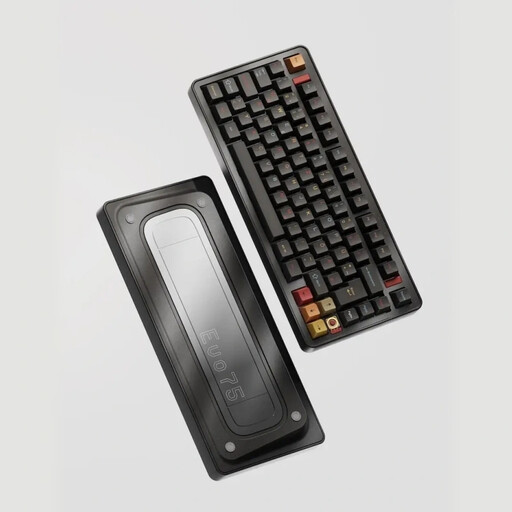
Look at this 80% mechanical layout if you want to compare a compact arrangement with the keys you use in an editor or terminal. The named variant has a US QWERTY layout, a gasket mount and Latte switches. Check whether its sound suits your room, and confirm device switching or remapping before relying on either feature.
 No image available
Consider this 75% wireless model if you want a compact keyboard and can check its exact key arrangement before ordering. Confirm the printed layout despite the UK-labelled name, along with the operating-system requirements for any key-assignment software. If you type near a flatmate, assess whether its sound will suit the room.
No: choose a mechanical model if you intend to use its particular layout or configuration options, not simply because you code. Keychron lists QMK/VIA customisation for its K3 Max; if your main constraint is typing near a flatmate, compare quiet-key options and the space each keyboard takes on your desk.
Choose the printed layout that matches the keys and shortcuts you expect to use, and verify the exact variant before ordering. Keychron distinguishes a UK-ISO K3 Max configuration, while Apple sells a British-English Magic Keyboard; an English-language listing alone does not identify the physical layout.
An external keyboard can let you place the laptop screen and typing area separately, but it does not determine the whole workstation setup. For prolonged laptop use, the Health and Safety Executive advises a separate keyboard and mouse so the display can be raised, with the keyboard positioned just below elbow height.
Take unwanted electrical equipment and batteries to appropriate collection points rather than putting them in household rubbish. UK government guidance also describes retailer take-back arrangements for equivalent electrical items when you buy a replacement; check how the arrangement applies to your purchase.