Choose a UK-layout keyboard whose legends you can read from your actual window-side seat; adjustable backlighting alone does not establish readability in direct glare. A full-size layout is worth considering if checkout scripts involve frequent number entry, while a direct USB connection may suit a fixed desk. Whatever keyboard you choose, test the checkout itself without a pointer: the W3C Web Accessibility Initiative explains that keyboard operation is required for content functionality, apart from limited movement-path exceptions.
Who this is for
Window-side checkout tester
If you repeatedly enter test details beside a bright window, start with legends you can distinguish from your usual seat. Adjustable lighting may be useful when ambient light changes, but inspect the physical keys in daylight too.
Keyboard-only accessibility tester
If you check checkout fields, buttons, errors and dialogs without a pointer, choose a layout that makes your repeated navigation practical. The W3C Web Accessibility Initiative’s keyboard guidance concerns the checkout’s operation, not a feature a keyboard can add to the site.
Fixed-desk regression tester
If you run the same checkout cases at one workstation, a UK layout, direct access to frequently used keys and a suitable connection may matter more than portability. The Health and Safety Executive advises placing the keyboard just below elbow height and keeping it central with the screen.
What matters when choosing
Start with the keys you need to see and use repeatedly, then check the connection and desk position. Treat lighting features as something to assess at the workstation, not a substitute for legible legends.
| Concern |
What to check |
Who this matters to |
| Key legibility |
Inspect UK-layout legends from your usual seat in daylight; assess any backlighting separately. |
If I have to identify symbols quickly beside the window, I need lettering I can distinguish without relying on a lighting setting. Around 42% of consumers put physical-key readability first. |
| Keyboard-only checkout testing |
Try a pointer-free checkout path, including focus, form entry, errors and dialog exits. |
When I test whether someone can complete checkout without a mouse, I need convenient access to the navigation keys I use throughout the journey; around 33% of consumers prioritise keyboard-only testing. |
| Repeated desk work |
Check the connection, frequently used keys and whether the keyboard fits centrally below elbow height. |
For long runs of test cases at one desk, I want a layout and setup I can use consistently rather than features aimed at moving between workstations. Around 25% of consumers place fixed-desk use first. |
Buying pitfalls
-
Assuming backlighting solves window glare
Logitech describes automatic lighting on the MX Keys S, and Keychron distinguishes shine-through from non-shine-through K10 Pro keycaps. Neither feature establishes that you will be able to read the legends in direct window glare.
Check the keys in the daylight position where you will test, and treat lighting controls as a separate consideration.
-
Choosing a layout without checking the test scripts
Repeated symbols, navigation and number entry may be less convenient if expected keys are elsewhere or require a function layer. A compact keyboard saves desk space, but that trade-off depends on the checkout tasks you repeat.
Confirm the UK layout and decide whether you need direct access to a numpad before choosing a size.
-
Expecting a keyboard to fix checkout accessibility
A physical keyboard cannot make controls on a checkout page operable. The W3C Web Accessibility Initiative’s keyboard guidance addresses the functionality of the content being tested.
Complete a checkout pass without a pointer and record problems with focus, controls, errors and dialogs.
-
Overlooking the workstation
A different keyboard will not, by itself, correct an awkward desk position. The Health and Safety Executive advises keeping the keyboard just below elbow height, with it and the screen central.
Check the keyboard’s position at the desk as well as its keys and connection.
Brands to consider
These brands offer examples of different keyboard features relevant to checkout testing; assess the particular model and layout rather than treating a brand name as a visibility guarantee.
Accuratus (Ceratech)
Wired UK-layout models provide two distinct reference points: a full-size keyboard with protected legends and a high-visibility keyboard with enlarged lettering.
- RS describes the 276 V3 as a USB, 105-key UK keyboard with UV-protected legends and spill holes.
- RS describes enlarged yellow lettering on a black background for the 260 Hi Vis, but its listing was marked unavailable; check availability before relying on that model as a purchase option.
Logitech
The MX Keys S is relevant when changing ambient light and switching among supported devices are part of the workflow.
- Logitech specifies lighting that brightens or fades with the environment and switching across up to three supported devices.
- Those features do not establish direct-glare legibility and may be unnecessary at a single fixed test machine.
Keychron
The K10 Pro UK-ISO range is relevant if configurable keys or macros would help with repeated test actions.
- Keychron offers shine-through ABS and non-shine-through PBT keycap versions, so the variant matters if you want illuminated legends.
- Neither keycap option establishes readability beside the window; check the exact configuration and its availability.
CHERRY
The wired STREAM keyboard is an office-workstation option when a cable connection and quieter keystrokes matter.
- CHERRY describes the STREAM with quiet keystrokes, durable lettering, a flat profile and slip resistance.
- Those manufacturer descriptions do not establish illuminated or high-visibility legends for window-side use.
Joybuy keyboards for checkout testing
These UK-layout options cover a full-size wireless keyboard, a USB keyboard-and-mouse set and another wireless keyboard. Compare their formats against your checkout scripts, then inspect key legibility at your window-side desk.
 No image available
Targus EcoSmart Full Size Wireless Keyboard (UK)
Consider this full-size UK keyboard if you want a wireless option for repeated checkout entry. Check that its key placement, wireless connection and legends work for your test machine and daylight position.
View on Joybuy
 No image available
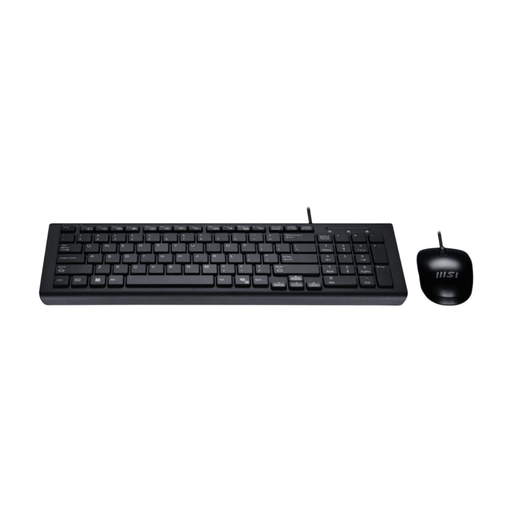
MSI GK-701 Office Keyboard and Mouse Set, USB, UK Layout
This UK-layout keyboard-and-mouse set is an option for a fixed checkout-testing desk. Its name specifies USB and a CoPilot key; check how the set connects, which ports it needs and whether the keyboard legends are clear at your seat.
View on Joybuy
 No image available
ASUS ROG Strix Scope II 96 Wireless Keyboard, UK Layout
If you prefer a wireless UK-layout keyboard for checkout testing, assess this model against the keys your scripts use most often. Confirm their placement and inspect the legends in the light at your desk.
View on Joybuy
Common questions
Will a backlit keyboard solve the problem of a bright window?
Not necessarily: backlighting does not by itself establish that physical key legends will be readable in direct glare. Logitech specifies lighting that adjusts with the environment on the MX Keys S, but check the legend contrast from your intended seat before choosing a keyboard for this reason.
Should I test the checkout using only a keyboard?
Yes: a pointer-free pass helps you check whether the checkout can be operated through a keyboard interface. The W3C Web Accessibility Initiative explains that content functionality should be keyboard-operable apart from limited movement-path exceptions; work through fields, buttons, errors and dialogs while checking focus and operation.
Do checkout test scripts require a numpad?
A numpad is useful to consider when your scripts involve frequent numeric entry and you want those keys directly available, but it is not a universal requirement. Check the scripts and available desk space before choosing between a full-size and a more compact layout.
Where should the keyboard sit during a long testing session?
Position it just below elbow height and centrally with the screen, in line with Health and Safety Executive workstation guidance. Check that the keyboard you choose fits that position on your desk rather than judging comfort from its features alone.


