Choose a keyboard whose layout and connection suit the checkout tasks you repeat, rather than choosing on gaming-speed claims alone. A full-size layout is worth considering for frequent numeric entry; a compact layout saves desk space but may give up the number pad; and comfort features may matter during long testing and documentation sessions. Whatever you choose, test the checkout itself for keyboard operation, meaningful focus order and visible focus, as described by the W3C Web Accessibility Initiative.
Who is this for?
Keyboard-only checkout testers
You work through a checkout without a mouse, checking whether controls operate from the keyboard and whether focus moves visibly in a meaningful order. These are distinct checks in guidance from the W3C Web Accessibility Initiative; the keyboard you buy cannot establish that a website passes them.
High-volume form-data testers
You repeatedly enter addresses, postcodes, quantities and order data. A familiar layout, arrow keys and, if you use one often, a number pad may be more useful to you than a narrower keyboard. HP lists a three-zone layout with arrow keys and a number pad for its 320K.
Long-session home-office testers
Checkout checks sit alongside defect reports, ticket writing and documentation, so key feel, typing angle and noise may influence your choice. HP lists low-profile quiet keys and adjustable slope for the 320K, and a shaped layout and selectable typing positions for the 485 Comfort; neither specification establishes how comfortable a keyboard will feel to you.
What matters when choosing?
Start with the keys, layout and connection needed at your test workstation. Then weigh desk space, numeric entry and typing comfort against one another: a conventional full-size keyboard, a compact programmable model and a shaped wired model solve different parts of the workload.
| Concern |
What to check |
Who this matters to |
| Keyboard-only checkout checks |
Check the placement of Tab, Shift, Enter, Space, Escape and arrow keys. Run the actual checkout without a mouse to assess control operation, focus order and visible focus. |
When I test a complete checkout by keyboard, I need to follow and operate its controls without losing my place. Around 36% of consumers put keyboard-only checking first. |
| Comfort and noise over long sessions |
Consider key profile, typing angle and whether a shaped layout or wrist rest suits your desk and preferences; listed comfort features do not guarantee an individual benefit. |
If testing also means hours of writing defect reports, I want a keyboard I can use comfortably without making the workspace more distracting. Roughly 29% of consumers make long-session comfort their primary concern. |
| Layout and workstation compatibility |
Confirm the exact UK or US key layout, USB connector and operating-system requirements. For remapping, check the configurator’s browser and connection requirements too. |
Moving between test machines makes an unexpected connector or unfamiliar punctuation layout an immediate obstacle to my work. About 21% of consumers prioritise layout and device compatibility. |
| Numeric and form-data entry |
Decide whether a dedicated number pad earns its desk space; also inspect the arrow and editing-key arrangement on compact layouts. |
Repeated quantities and other numerical order data make a familiar number pad valuable to me, even if the keyboard takes more room. Around 14% of consumers put numeric-entry convenience first. |
Buying pitfalls
-
Choosing gaming-speed claims over the testing workflow
A keyboard’s polling-rate claim cannot show whether a checkout has operable controls, meaningful focus order or visible focus. Those are properties to check on the page, as the W3C Web Accessibility Initiative’s keyboard and focus guidance makes clear.
Choose a layout and connection you can use consistently, then test the checkout with Tab, Shift+Tab, Enter, Space, Escape and arrow keys. Treat gaming features as relevant only if they meet another need you have identified.
-
Assuming every variant has the same layout and connector
A model family may include different regional layouts or connections. Logitech lists a UK QWERTY USB-C variant of its K620, while HP describes a USB-A connection for its 485 Comfort.
Check the exact variant’s key layout, connector, cable reach and workstation port before ordering.
If the connector does not fit the workstation, using the keyboard may require a suitable adapter.
-
Treating comfort features as a promised outcome
A shaped keyboard or wrist rest is a feature to assess, not proof that it will prevent discomfort. HP describes the 485 Comfort’s wave-like form and three typing positions, but individual preferences can differ.
Check the keyboard’s dimensions and the seller’s return conditions, and assess whether the layout suits your usual testing and documentation work.
-
Assuming remapping works on every test machine
Programmable keys can come with separate configuration requirements. Keychron says its C3 Pro web configurator needs a current Chrome, Opera or Edge browser and a wired connection.
If remapping matters to your workflow, confirm that the configuration route works with the browser and operating system you intend to use.
Relevant brands to consider
Logitech
A reference point for conventional wired office keyboards, particularly where a shared workstation needs a familiar layout.
- Logitech lists the Signature Slim Wired K620 in an English UK QWERTY variant with a wired USB-C connection and basic compatibility with Windows, macOS, ChromeOS and Linux.
- Logitech says shortcut customisation through Logi Tune or Logi Options+ is supported on Windows and macOS; do not assume those configuration features work on ChromeOS or Linux.
Keychron
A reference point for a wired UK-ISO mechanical layout when desk width and key remapping are part of the decision.
- Keychron describes the C3 Pro UK-ISO as a tenkeyless keyboard with per-key programmability, Windows and macOS keycaps, and stated compatibility with Mac, Windows and Linux.
- The tenkeyless layout omits a number pad. Keychron’s web configurator also requires a supported browser and a wired connection.
HP
A reference point for wired office layouts, from a conventional three-zone keyboard to a shaped model for people considering a different typing position.
- HP lists a number pad, arrow keys, low-profile quiet keys and adjustable slope for the 320K. Its 485 Comfort has a wave-like form, cushioned wrist rest and three typing positions.
- The 485 Comfort’s shape and wrist rest are manufacturer-described features, not evidence that it will deliver an ergonomic benefit for every tester.
Joybuy keyboards for this setup
These keyboard choices cover a UK-layout keyboard-and-mouse set, compact UK-layout models and wired compact alternatives. Compare their stated layouts with the keys and numeric-entry tasks you use most; check connection and workstation requirements for the exact model before ordering.
 No image available
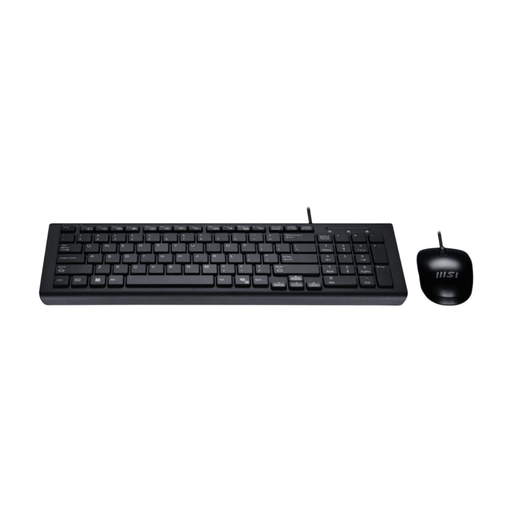
MSI GK-701 UK Keyboard and Mouse Set, Black
Consider this set if you want a UK-layout keyboard and mouse for a fixed home-office desk, particularly when you enter numeric checkout data regularly.
The product name specifies a UK layout, USB connection and CoPilot key. Check that its connector fits your workstation and that the arrangement of checkout-test keys suits your workflow.
View on Joybuy
 No image available
ASUS ROG Strix Scope II 96 Wireless, UK Layout
The 96% UK layout is worth considering if you want a number pad while comparing keyboards for a desk with limited width.
This model offers wired USB operation as well as wireless options. Check how to use its wired mode on your test machine and whether its key arrangement works for your checkout checks.
View on Joybuy
 No image available
ASUS ROG Falchion Ace HFX 65, UK Layout
Consider its compact 65% UK layout if desk space matters more than having a dedicated number pad; check that its arrow and navigation-key arrangement suits your tests.
Check its wired USB-C connection and listed Windows 10/11 compatibility against the workstation you use. Inspect the placement of the other keys needed for checkout testing before ordering.
View on Joybuy
 No image available
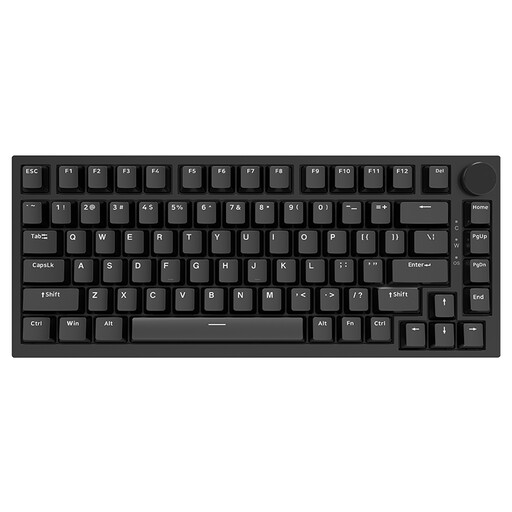
AJAZZ AK820 75% Wired Keyboard, US QWERTY, Red Switch, Black
This compact wired option is most relevant if you are comfortable using its stated US QWERTY layout for checkout data entry rather than requiring a UK key arrangement.
The product name specifies a 75% layout, 83 keys, hot-swappable linear switches and a volume knob. Check its USB-C connection and the placement of navigation keys before choosing it for your test workstation.
View on Joybuy
 No image available
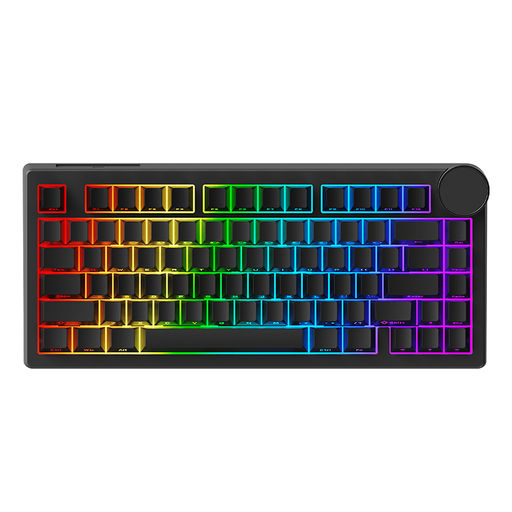
AJAZZ AK820 V2 75% Wired HE Keyboard, Starry Sparkle, Black Keycaps
Consider this compact wired model if repeatable key configuration matters to your testing routine, provided its layout suits your usual form-entry work.
The product name specifies a 75% layout and HE magnetic switches. If you intend to remap keys, check that its Windows web-driver route works on your workstation; confirm the regional layout and number-pad requirements before ordering.
View on Joybuy
Frequently asked questions
What should I check during a keyboard-only checkout test?
Complete the flow in a safe test environment without using the mouse. Following W3C Web Accessibility Initiative guidance, check that controls can be operated from the keyboard, focus moves in a meaningful order and the focused element remains visible; also inspect form labels, errors, correction instructions and confirmation feedback.
Do I need a number pad to test checkout pages?
No: a number pad can make repeated numeric entry more convenient, but it is not a requirement for keyboard accessibility testing. A full-size layout may suit frequent order-data entry, while a tenkeyless layout trades the number pad for desk space. HP lists a number pad on its 320K; Keychron’s C3 Pro is tenkeyless.
Can I return an online keyboard purchase if the layout does not suit me?
For a UK distance sale, GOV.UK guidance says customers generally have 14 days from receiving an item to tell the seller they want to cancel. Check the applicable cancellation and handling conditions before trying the keyboard; remedies for goods that are faulty or misdescribed are separate from a change-of-mind cancellation.
How should I get rid of an old keyboard?
Check your local council’s small-electricals collection options or a retailer’s take-back arrangements before disposing of it. UK government guidance identifies the Waste Electrical and Electronic Equipment Regulations as the framework for handling electrical equipment at the end of its use.


