Choose the keyboard around your standing position and route-planning tasks, rather than switch type alone. The Health and Safety Executive advises keeping the keyboard central and just below elbow height; from there, consider a shaped wireless layout for palm support, a compact programmable layout for shortcuts and mouse space, or a keyboard with a numpad for frequent numerical entry. Each choice still has to fit your desk, pointing device and computer setup.
Who each layout suits
Comfort-first standing route planners
If you spend extended sessions entering place names and route notes, start with where the keyboard and mouse sit. The Health and Safety Executive advises keeping the keyboard central and just below elbow height. A shaped board with a palm rest, such as the Logitech Wave Keys described by Logitech, is one layout to consider once that position works.
Shortcut-heavy map editors
If you frequently move between mapping commands, tabs and notes, a compact board may leave more room beside the mouse. Keychron describes its UK-ISO K3 Max as a 75% keyboard with QMK/VIA remapping and wired, Bluetooth and 2.4 GHz connection options; check that its available keys suit your commands.
Numpad and wired-connection users
If numerical entry is a regular part of your route work, direct access to a numpad may matter more than a smaller keyboard. HP describes its 400 Backlit Wired Keyboard as a compact design with a full numpad, wired connection and programmable keys. A wired choice also needs a cable path that works as the desk moves.
What matters when choosing
For route planning at a standing desk, settle the keyboard and mouse position before choosing which layout compromise you can live with. The Health and Safety Executive treats keyboard placement, mouse reach and screen position as parts of the same workstation setup.
Shaped wireless keyboard
Consider it when: A shaped layout and palm rest appeal to you for longer typing sessions; Logitech describes both features on Wave Keys.
Trade-off: Allow time to adapt to the shape, and check whether its key layout covers your numerical work.
Compact programmable keyboard
Consider it when: Mouse space and custom shortcuts matter more than a dedicated numpad; Keychron offers those layout and remapping features on the K3 Max.
Trade-off: A 75% layout leaves out the dedicated numpad, so frequent numerical entry may feel less direct.
Wired keyboard with numpad
Consider it when: You want direct number-key access and a wired connection; HP provides both on its 400 Backlit Wired Keyboard.
Trade-off: The cable needs a clear path through the desk’s height range, while the numpad takes space beside the mouse.
| Concern |
What to check |
Who this matters to |
| Standing position and comfort |
Can the keyboard sit centrally, just below elbow height, with the mouse close by? Check the space needed for any palm rest. |
I need to type route notes without placing the keyboard so high that my shoulders rise or reaching across the desk for the mouse. Roughly 42% of consumers put this workstation fit first. |
| Shortcuts and mouse space |
Check which navigation and function keys your mapping software uses, and whether remapping works with your computer. |
When I switch repeatedly between map tools and notes, I want commands within easy reach while leaving room to move the mouse. Around 33% of consumers make that shortcut workflow their primary concern. |
| Numpad and connection |
Decide whether you need a dedicated numpad. For a wired board, check cable routing at both desk heights. |
Frequent numerical entry makes direct number keys important to me, and I may prefer a cable to a wireless connection. For approximately 25% of consumers, those needs take priority. |
Buying pitfalls
-
Expecting a shaped keyboard to fix the whole workstation
A palm rest cannot correct a position that makes you raise your shoulders, twist towards the screen or reach too far for the mouse. The Health and Safety Executive considers these parts of the workstation together.
Set the standing desk and screen first, then choose a keyboard you can keep central with the mouse nearby.
-
Choosing a small layout before checking the keys you use
A 75% layout leaves out the dedicated numpad. If you enter numerical route data frequently, compactness may come at the expense of direct key access.
Note the commands and number keys you use during several planning sessions before deciding which dedicated keys you can give up.
-
Forgetting that a wired keyboard moves with the desk
A cable that reaches comfortably at one height may pull or obstruct placement at another.
Check the cable path at the desk’s lowest and highest positions, and route it so it does not pull on the keyboard connection.
-
Assuming ergonomic wording guarantees personal comfort
Logitech describes the design of Wave Keys as supporting a different hand and wrist position, but a keyboard’s shape does not determine how it will suit every person or workstation.
Use its layout and palm rest as features to assess alongside desk position, key access and your preferred typing posture.
Brands to consider
These brand examples refer to particular keyboard lines, not every model each brand makes.
Logitech
Logitech’s Wave Keys is a compact, wave-shaped wireless keyboard with a cushioned palm rest, Bluetooth and Logi Bolt receiver support.
- Logitech lists device switching and multi-platform compatibility for Wave Keys.
- Check its key layout if you need a dedicated numpad; its shaped design is not a guarantee of individual comfort.
Keychron
Keychron offers the K3 Max in UK-ISO variants for people considering a compact 75% mechanical layout.
- Keychron specifies wired, Bluetooth and 2.4 GHz connections and QMK/VIA remapping for the K3 Max.
- The 75% layout omits a dedicated numpad; check the particular switch and layout variant you want.
HP
HP’s 400 Backlit Wired Keyboard combines a compact conventional layout with a full numpad.
- HP specifies wired USB connectivity, three backlight levels and up to 12 programmable keys for this model.
- Its cable needs a workable path when the desk changes height; its conventional layout does not have the shaped palm support described for Logitech Wave Keys.
Joybuy keyboard choices
These keyboards offer different approaches to route-planning desk space and key access, including shaped wireless, full-size wireless and compact layouts. Check the exact layout and how each keyboard will sit beside your mouse before choosing.
 No image available
HP 960 Ergonomic Split Layout Wireless Keyboard with Padded Wrist Rest
Consider this shaped wireless layout if a padded wrist rest is part of what you want for longer route-planning sessions.
Check that the key layout suits you and that the keyboard and mouse can remain comfortably positioned on your desk.
View on Joybuy
 No image available
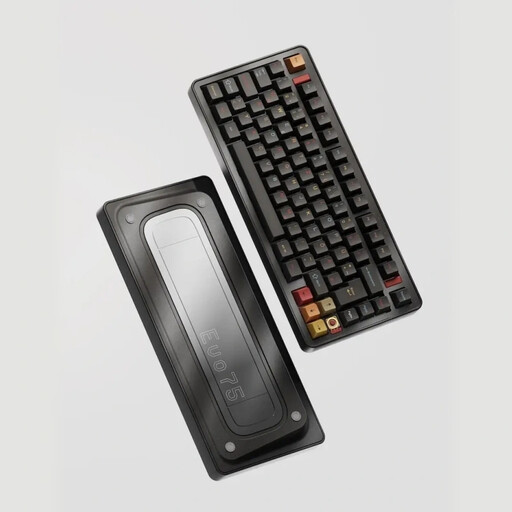
Ticktype EVO75 Custom Tri-Mode Wireless Mechanical Keyboard, US Layout, Creamy Rye Switches, Spray-coated Nebula
Consider this compact mechanical keyboard if desk space and configurable keys matter to your mapping workflow, provided its US Layout suits your typing preferences.
This Full Aluminum, Hot-Swappable variant is listed as VIA Compatible, with 8000mAh and RGB in its product name. Confirm that the configuration software works with your computer before relying on remapped commands.
View on Joybuy
No image available
Targus EcoSmart™ Full Size Wireless Keyboard (UK)
Consider this UK-layout wireless keyboard if you prefer a full-size arrangement for route notes and numerical work.
Check that a full-size board leaves enough desk space to position your mouse close by.
View on Joybuy
 No image available
ASUS ROG Falchion Ace HFX 65 Analog Gaming Keyboard, UK Layout
Consider this UK-layout keyboard if a compact board appeals to you, but check that its keys cover the navigation commands you use while mapping.
Confirm compatibility with your computer and, if you plan to use a cable, that its routing works throughout the desk’s height range.
View on Joybuy
 No image available
Razer Huntsman V3 Pro Mini 60% Analog Optical Esports Keyboard
Consider this 60% keyboard if minimising the space taken by the board matters more than having a dedicated numpad.
Check how you would access the navigation keys needed for your maps, as well as compatibility with your computer and cable placement at both desk heights.
View on Joybuy
Common questions
Where should my keyboard go when I plan routes standing up?
Place it centrally and just below elbow height, with the mouse close enough to use without reaching where possible. The Health and Safety Executive advises considering the keyboard, mouse and screen as part of the same workstation, so adjust the desk and screen rather than accepting an awkward keyboard position.
Is a shaped ergonomic keyboard necessary at a standing desk?
No particular shape follows from standing alone: choose a shaped keyboard if its layout and palm rest suit your typing needs and desk position. Logitech’s Wave Keys offers those design features, but keyboard shape does not replace the workstation positioning advised by the Health and Safety Executive.
Will a 75% keyboard work for mapping cycle routes?
A 75% keyboard can suit route planning if compactness and accessible shortcuts matter more to you than a dedicated numpad. Keychron specifies a 75% UK-ISO layout and QMK/VIA remapping for its K3 Max; check your own mapping commands and numerical-entry needs before choosing that format.
Does UK workplace guidance call for a specific ergonomic keyboard?
The Health and Safety Executive’s guidance focuses on assessing the workstation and reducing identified risks, rather than selecting one keyboard model. In UK workplaces, employers must assess the workstation when staff use display screen equipment daily as part of their normal work for continuous periods of an hour or more; that assessment covers the wider setup and task.


