What to prioritise
Start with the issue that most interrupts your edits, then check the exact layout and configuration: lighting, typing sound and shortcut access can overlap in one keyboard, but none guarantees the others.
| Concern |
What to check |
Who this matters to |
| Keys in changing light |
Check illumination controls and legend visibility in your usual desk position; assess screen reflections separately. |
If daylight shifts while I edit, I want to find the right keys without losing my place. Around 42% of consumers put changing-light key visibility first. |
| Typing noise |
Check the supplied switch variant and, where possible, sound information for that configuration rather than the mechanism label alone. |
When I am listening for subtle details or working near someone else, keystrokes can get in the way; roughly 33% of consumers prioritise quieter typing. |
| Shortcuts and portability |
Compare your regular commands with the actual layout, then check remapping-software and connection compatibility. |
Taking a keyboard between editing setups makes space and quick command access important to me. About 25% of consumers put a portable shortcut workflow first. |
Joybuy keyboards for these needs
These keyboards offer different starting points for a changing-light desk, a compact shortcut setup or quiet-focused editing. Compare each listed variant with your layout and monitoring needs rather than treating any one feature as an answer to all three.
 No image available
HyperX Alloy Rise 75 Wireless Keyboard UK
Consider this wireless model if you want to keep a field-editing setup compact while assessing key visibility at a changing-light desk. Check its lighting controls, exact UK layout and compatibility with your shortcut software; confirm typing sound separately if you monitor while typing.
Joybuy
 No image available
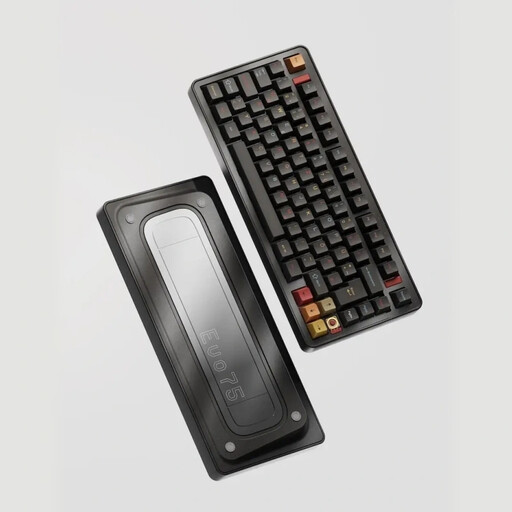
Ticktype EVO75, US layout, Creamy Rye switches, Spray-coated Nebula
This configuration is worth considering if a compact keyboard and configurable shortcuts are priorities. Its name specifies a US layout, VIA compatibility, RGB lighting, tri-mode connectivity and an 8000mAh battery. Check whether its key positions suit your UK typing habits and how the Creamy Rye switches sound during monitoring.
Joybuy
 No image available
Ticktype DP104, Gecha Gray, US layout, Silent Tactile Switches
Consider this full-size configuration if you prefer dedicated keys and want to assess a switch option labelled Silent Tactile for monitoring work. The name specifies 108 keys, a US layout, tri-mode connectivity, RGB lighting and an 8000mAh battery. The switch name is not a noise measurement: confirm the supplied switches, their sound and the layout before choosing.
Joybuy
Common questions
Will an illuminated keyboard solve the problem of a bright window?
No: key lighting may help you find controls as ambient light changes, but it will not remove reflections from the display. Assess the window, screen position and keyboard lighting as separate parts of your editing setup.
Which keyboard should I check if typing noise affects monitoring?
Start with the exact switch and keyboard configuration, not the word mechanical on its own. RTINGS notes that scissor and rubber-dome mechanisms are generally among the quieter options, while switch and case construction also affect noise; look for sound information that applies to the variant you will receive.
Can I set up shortcuts for field-recording edits?
Yes, if your editing software supports the commands you want to assign: the Audacity Manual describes shortcut preferences for numerous commands. For keyboard-side remapping, also check the board's configuration software, operating-system compatibility and access to keys on its particular layout.
What if I need to return a keyboard bought online in the UK?
A change-of-mind cancellation and a remedy for a faulty or misdescribed keyboard are different matters. Coventry City Council Trading Standards says consumers generally have up to 14 days after receiving goods bought at a distance to change their mind, with exceptions; check the seller's return instructions without treating its voluntary policy as a replacement for statutory remedies.
How should I dispose of an old keyboard?
Use an appropriate electrical-waste collection route rather than putting an old keyboard in ordinary rubbish. GOV.UK describes the UK waste electrical and electronic equipment regime; check your local authority's collection arrangements or an available retailer take-back option, particularly if the keyboard contains a battery.


