Shared-office map designers
If you write labels, notes and commands beside colleagues, typing sound may matter more than a pronounced mechanical feel. RTINGS identifies noise as a consideration for shared-office keyboards.


For quest-map work near colleagues, start with a keyboard designed for quieter typing, or a mechanical model with a specifically quieter switch, rather than choosing by feel alone. Then weigh shortcut needs against desk space and sustained comfort: check the exact switch and layout, the connections your workplace permits, and whether you need a number pad.
If you write labels, notes and commands beside colleagues, typing sound may matter more than a pronounced mechanical feel. RTINGS identifies noise as a consideration for shared-office keyboards.
If map revisions involve repeated commands or more than one work device, programmable keys, remapping and device switching are features worth checking. Logitech and Keychron describe these options on specific keyboard models.
If you work for extended periods at one desk, consider keyboard height and angle alongside the workstation layout. The Health and Safety Executive advises positioning the keyboard centrally, just below elbow height.
Decide how much typing sound you can accept before choosing a key feel. For repeated quest-map commands, a quieter low-profile board, a mechanical keyboard with the right switch, and a fixed-desk wired keyboard offer different trade-offs.
Consider it when: You type near colleagues and prefer laptop-style keys; Logitech describes reduced noise from the key stability of its MX Keys S.
Trade-off: Its key feel differs from a mechanical switch, so check whether the available size leaves you the dedicated keys you use.
Consider it when: Mechanical feel matters for repeated commands and you can select the actual switch variant. Logitech lists Tactile Quiet, Clicky and Linear MX Mechanical options.
Trade-off: A quieter-labelled variant does not establish how loud it will be at your desk; remapping also depends on the particular model and setup.
Consider it when: You work mainly at one desk and value an adjustable position and a fixed connection. HP describes three keyboard positions on its 485 Comfort model.
Trade-off: Allow room for the keyboard and cable; an adjustable board cannot compensate for a poorly positioned workstation.
| Concern | What to check | Who this matters to |
|---|---|---|
| Typing noise | Check the exact switch variant or quiet-key description; do not assume every mechanical version sounds alike. | If I type labels beside colleagues, I want to keep keystrokes considerate even if that means less pronounced feedback. Around 36% of consumers put typing noise first. |
| Shortcuts and devices | Check remapping, programmable keys and device switching against your operating system and workplace software rules. | Repeated map-editing commands make a workable shortcut setup more important to me than changing the keyboard feel. For around 29% of consumers, workflow flexibility is the primary need. |
| Long-session comfort | Check height and angle options alongside desk positioning; the Health and Safety Executive advises a central keyboard just below elbow height. | When I spend long stretches revising a map, I need a keyboard I can position comfortably at my desk. Around 21% of consumers place that need first. |
| Layout and connection | Confirm the regional key layout, space for the keyboard and mouse, and permitted USB or wireless connections. | A cramped desk or restricted work computer makes the layout and connection decisive before I consider extras. Those are the leading concerns for around 14% of consumers. |
Switch versions can differ in sound and feel. Logitech, for example, lists Tactile Quiet and Clicky versions within its MX Mechanical range.
Read the selected variant name and switch specification, not just the keyboard-family name, when colleagues work nearby.
An angled or low-profile design cannot correct a keyboard placed too high or off-centre. The Health and Safety Executive advises keeping the screen and keyboard central to avoid twisting.
Set up the desk first, then assess which keyboard height or angle suits that position.
A different regional layout changes familiar key positions, while a managed computer may restrict wireless connections or configuration software.
Check the exact layout and ask your workplace which USB ports, Bluetooth devices, receivers and software it permits.
Keychron describes acoustic foams on its K2 QMK UK-ISO model, but that feature alone does not establish the sound of a particular switch configuration.
Check the switch option as well as the damping features, and listen to the specific configuration where that is possible.
Its MX Keys S and MX Mechanical lines offer different approaches to low-profile typing and device switching.
Its K2 QMK UK-ISO model is relevant if remapping and a labelled UK-ISO mechanical layout matter to your workflow.
Its 485 Comfort is a wired, comfort-focused option for a fixed desk.
These options cover compact and full-size keyboards for shared-office map work, including quieter-described keys and mechanical variants. Check each listing’s layout, connection and exact switch against your desk and work computer before choosing.
 No image available
Consider this compact board if mouse space and switching between devices matter for your map-design desk.
The listed variant has 78 keys, a US QWERTY layout and 2.4 GHz and Bluetooth wireless modes. Check whether that layout and those connections suit your workplace; the quiet-key description is not a cross-model sound comparison.
 No image available
Consider the full-size keyboard if you want room for numeric entry and also need a mouse.
The set is listed with a 2.4 GHz wireless connection and US layout. Confirm that its receiver connection is permitted on your computer; the quietness wording does not establish a comparable sound level.
 No image available
Consider this variant if you want mechanical switches and a full-size board for map commands and numeric entry.
Its title specifies 108 keys, hot-swappable Silent Tactile switches and a US layout. Check the connection mode your office allows; the switch name alone does not establish its sound level beside colleagues.
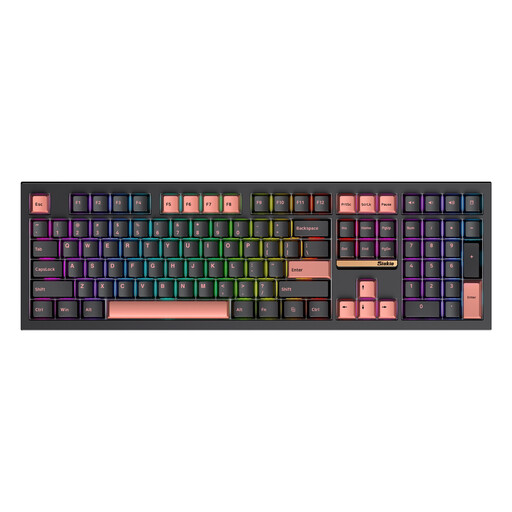 No image available
Consider its full-size format if numeric entry matters more to you than keeping the keyboard compact.
The title identifies detachable switches and three connection modes. Confirm the actual key layout, permitted connection and switch sound for your office before choosing it.
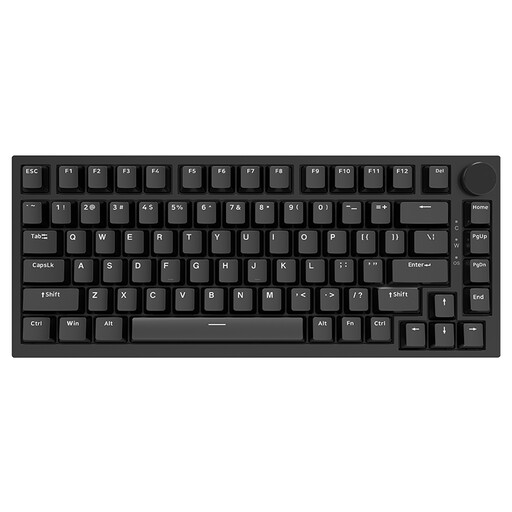 No image available
Consider this compact wired board if mouse space matters and a mechanical key feel suits your work.
The title specifies 83 keys, a US QWERTY layout, hot-swappable linear switches and Poron foam. Check the required connection and layout; damping material alone does not establish how quiet the keyboard will be.
Choose a full-size keyboard if you regularly enter coordinates, quantities or spreadsheet data and want an integrated number pad. A 75% or mini layout may leave more mouse space, but check which dedicated keys you would give up; RTINGS notes this desk-space difference between layouts.
Keep the keyboard central and just below elbow height, with the screen in front of you rather than twisting to reach either one, as the Health and Safety Executive advises. For prolonged laptop use, its guidance also recommends a separate keyboard and mouse so you can elevate the screen.
It may be, but check the exact switches rather than relying on the keyboard-family name. Logitech lists Tactile Quiet, Clicky and Linear MX Mechanical variants, so consider the selected version’s sound where you will use it.