For writing museum labels near colleagues, start by considering a scissor or membrane keyboard: RTINGS.com identifies these switch types as generally among the quieter options, while clicky mechanical switches can be among the loudest. If sustained comfort or moving between desks matters more, assess the keyboard’s shape, layout and connections against your own work; as the Health and Safety Executive advises, keyboard position is part of the wider workstation setup.
Who is this for?
Shared-office label writers
If colleagues sit nearby while you draft and revise text, typing noise may shape your choice. RTINGS.com identifies scissor and membrane switches as generally among the quieter types, while clicky mechanical switches can be among the loudest.
Writers at one desk for long periods
If you spend extended sessions editing labels, consider keyboard position alongside the chair, desk and screen. The Health and Safety Executive advises placing the keyboard just below elbow height as part of a suitable display screen equipment workstation.
Hot-desk and multi-device staff
If you move between work areas or use more than one device, check the keyboard’s size and permitted connection methods. Manufacturer options include Logitech’s multi-device MX Keys S and a UK-ISO version of the Keychron B1 Pro; the exact model and layout still matter.
What matters when choosing?
For museum-label writing in a shared office, establish how much noise colleagues will hear, then assess your typing position and the keys and connections your desk requires.
| Concern |
What to check |
Who this matters to |
| Typing noise |
Look at the switch type and, if sound is critical, try the exact model or compare noise tests made using the same method. |
When I revise text beside colleagues, I want keystrokes that do not distract them. Around 40% of consumers put noise control first. |
| Comfort and accuracy |
Check that the layout feels familiar and that keyboard height and angle work at your desk; assess any ergonomic shape as part of the whole workstation. |
For long editing sessions, I need to reach the keys comfortably and enter punctuation without slowing down. Sustained comfort and accurate typing come first for around 40% of consumers. |
| Desk and device fit |
Confirm the UK layout and keys you need, available desk space, device ports and workplace rules for Bluetooth or receivers. |
If I change desks or devices, I need a keyboard that fits the space and connects in a permitted way. Around 20% of consumers prioritise that fit. |
Buying pitfalls
-
Taking “quiet” as a sound test
Switch type is not the only influence on typing noise; case resonance and larger keys can also affect what colleagues hear. A quietness claim alone cannot tell you how the exact keyboard will sound at your desk.
If low noise is essential, try the model where possible or compare measurements taken using the same test method. RTINGS.com identifies scissor and membrane switches as generally quiet choices, but construction still matters.
-
Expecting a keyboard to fix the whole workstation
A different keyboard shape will not by itself correct an unsuitable desk, chair or screen position. The Health and Safety Executive advises assessing the workstation and individual working needs together.
Check keyboard placement, desk and chair height, screen position and breaks. Raise persistent discomfort through your workplace display screen equipment process rather than relying on a product change alone.
-
Assuming an English-language listing has a UK layout
Layout variants can place punctuation and symbols differently, which matters when you are making precise edits.
Check the exact variant for UK QWERTY or UK-ISO and inspect its key arrangement before ordering. Keychron, for example, lists a UK-ISO version of its B1 Pro alongside other regional versions.
-
Choosing a mechanical keyboard by its profile alone
RTINGS.com notes that clicky mechanical switches can be among the loudest options. Other mechanical keyboards vary by switch and construction, so a slim case does not establish shared-office quietness.
If you prefer mechanical keys, check the exact switch configuration and seek model-specific sound evidence before using it close to colleagues.
Brands to consider
Logitech
Relevant to writers considering a low-profile multi-device keyboard or a comfort-focused wireless design.
- Logitech specifies multi-device switching for MX Keys S and a wave-shaped frame with a cushioned palm rest for Wave Keys.
- Comfort and perceived noise depend on the user and the exact model; check layout and workplace connection rules before choosing.
CHERRY
Relevant to writers considering the STREAM scissor-key line for a fixed office desk.
- CHERRY describes the wired STREAM’s SX scissor keystrokes as extremely quiet and offers a wireless STREAM variant.
- Those descriptions are the manufacturer’s claims, not a comparable sound measurement. Confirm the regional layout and connection type of the specific version.
Keychron
Relevant when a slim keyboard with a UK-ISO option and flexible connections suits a changing desk setup.
- Keychron lists a UK-ISO B1 Pro and specifies 2.4 GHz, Bluetooth and wired connection options for that model.
- Do not extend its layout or portability features into a quietness claim. Check sound evidence for the exact model, particularly when considering a mechanical configuration.
Joybuy keyboard choices
These keyboards offer different ways to fit a shared-office writing desk, from a full-size wireless layout to split or compact designs. Check the exact layout and typing sound against your workplace needs rather than treating a quietness claim as a measurement.
 No image available
Targus EcoSmart full-size wireless keyboard (UK)
Consider this if you want a full-size wireless keyboard identified as a UK variant. Check that its footprint fits your desk and assess the exact model’s typing sound if colleagues sit close by.
View on Joybuy
 No image available
Ticktype DP104 tri-mode mechanical keyboard, Gecha Gray, silent tactile switches, US layout
Consider its tactile-switch configuration if that key feel matters to you, but check the exact keyboard’s sound before using it near colleagues. The title specifies a full-size 108-key US layout, so confirm that its punctuation positions suit your editing work.
View on Joybuy
 No image available
HP 960 ergonomic split-layout wireless keyboard with padded wrist rest
Consider the split layout if wrist and forearm positioning is your main concern, and assess how it fits your desk and typing habits. Confirm the regional key layout and the exact model’s typing sound before choosing it for a shared office.
View on Joybuy
 No image available
ET Silent full-size 2.4 GHz wireless keyboard and mouse set, US layout
This set may suit a desk that needs both a keyboard and mouse. The keyboard is identified as US layout; check its key positions, whether the bundled mouse fits your setup and how the exact keyboard sounds near colleagues.
View on Joybuy
 No image available
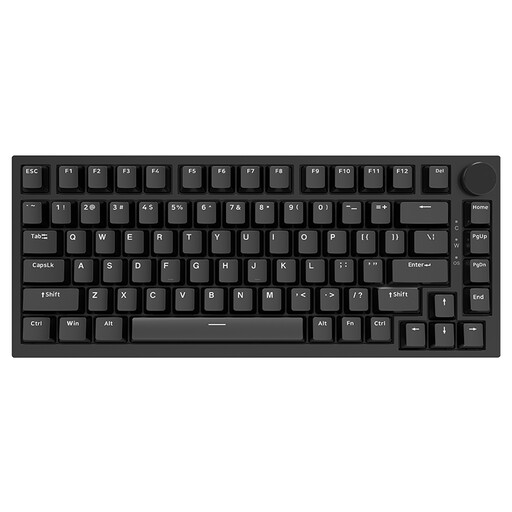
AJAZZ AK820 75% wired mechanical keyboard, black, red switches, US layout
Consider the 83-key compact layout if desk space matters more than having a full-size key arrangement. This wired model has a US layout and linear switches; check the keys you need, the device connection and model-specific typing sound before using it in a shared office.
View on Joybuy
Common questions
Can I use a mechanical keyboard in a shared office?
Yes, if the exact keyboard’s typing sound is acceptable in that space; “mechanical” alone does not tell you how loud it will be. RTINGS.com identifies clicky switches as potentially among the loudest options and scissor and membrane designs as generally quieter, so check the specific switch and keyboard construction.
Do museum labels require a full-size keyboard?
No; choose a full-size layout if you regularly need its number pad, or a compact layout if desk space matters more. Before changing size, check that the punctuation and editing keys you use remain convenient to reach.
Where should I position the keyboard?
Place it just below elbow height and centrally with the screen, in line with Health and Safety Executive posture guidance. For prolonged laptop work, a separate keyboard and mouse can also let you position the screen independently.
Does an ergonomic keyboard replace a workplace DSE assessment?
No. In the UK, the Health and Safety Executive says display screen equipment rules apply to workers who use it daily for continuous periods of an hour or more; the workstation assessment considers the equipment, work and individual requirements together. A keyboard is only one part of that setup.


