Pen-tablet painters who rely on shortcuts
If brush, layer, transform and view commands need to stay close to your pen tablet, a compact remappable keyboard is worth considering. Check that the controls you actually use remain accessible.


Choose a keyboard that leaves room for your pen tablet while keeping your most-used painting shortcuts within reach: a compact programmable layout suits that priority, while a full-size layout makes more sense if you regularly need dedicated number and navigation keys. Two monitors connected to one computer do not call for multi-device switching; consider that feature when you move between separate devices. Whatever shape you choose, check how the keyboard fits with the tablet, mouse and screens.
If brush, layer, transform and view commands need to stay close to your pen tablet, a compact remappable keyboard is worth considering. Check that the controls you actually use remain accessible.
If each screen belongs to a different computer, keyboard device switching may be useful. Two displays connected to one computer do not create the same need.
Assess keyboard shape alongside the positions of your screens, chair, tablet and mouse. The Health and Safety Executive advises keeping the keyboard just below elbow height and the screen and keyboard central to avoid twisting.
Start with the space your pen tablet needs and the commands you use most. Then establish whether your two screens share a computer before weighing device switching against layout and workstation fit.
| Concern | What to check | Who this matters to |
|---|---|---|
| Shortcuts and tablet space | Compare keyboard width with the room available for your tablet, then check key remapping and your art application’s shortcut support. | I want the tablet close to my working position without stretching for brush and layer commands. Around 43% of consumers would put shortcut access and tablet space first. |
| Dedicated keys and device switching | Check whether you need a numpad or dedicated navigation keys, and whether the two screens use one computer or separate devices. | If I enter values often or work across separate computers, I want the relevant keys or switching controls ready to use. Around 29% of consumers would prioritise those layout and device needs. |
| Workstation fit | Check whether the keyboard can sit just below elbow height and centrally without pushing the tablet or mouse out of comfortable reach. | During longer painting sessions, I need a layout that fits the positions of my screens, tablet and mouse. Roughly 28% of consumers would make workstation fit their primary concern. |
A keyboard does not need to change devices to work with two monitors attached to one computer.
Check how many computers or other devices you actually use. Look for keyboard switching only if you need to move between separate devices.
A smaller board can leave room for a pen tablet but may replace dedicated controls with key combinations or remaps.
List the painting and typing commands you use, then compare them with the exact model’s key layout and remapping options.
A split or low-profile design does not remove the need to position the screens, keyboard, chair and mouse appropriately.
Follow the Health and Safety Executive’s advice to keep the keyboard just below elbow height and the screen and keyboard central, then assess which shape fits that arrangement.
A programmable keypad can place art commands nearby without providing the keys needed for ordinary text entry.
Use one alongside a keyboard unless you have checked that its available controls cover everything you need to do.
Its MX Keys S is a full-size productivity keyboard to consider when conventional keys and switching between separate devices matter.
Its K3 Max is a 75% keyboard for painters considering remapped shortcuts and a smaller layout.
Its range includes a split keyboard and a separate programmable keypad, which serve different roles in a painting setup.
These keyboards offer compact, split and other layout options for a desk shared with a pen tablet and two screens. Check the exact key arrangement and shortcut options against the way you paint; connection modes alone do not establish device-switching or remapping capability.
 No image available
Consider this 75% keyboard if you want to leave more desk room for a pen tablet while keeping a complete typing keyboard.
The product name specifies a wireless model. Check the exact key arrangement, including whether it meets your UK layout preference, and confirm the shortcut controls you need.
 No image available
Consider its split layout if you are willing to adapt to a different key arrangement and can position it comfortably alongside your tablet and mouse.
The product name specifies wireless operation and a padded wrist rest. Check the exact typing layout and HP Accessory Center compatibility with your device and operating system if you plan to customise keys.
 No image available
The 75% layout is an option when desk space beside the pen tablet is a priority.
The product name specifies tri-mode connectivity, a TFT display and a knob. Confirm that the key layout suits you and that any painting shortcuts you intend to assign can be remapped for your application.
 No image available
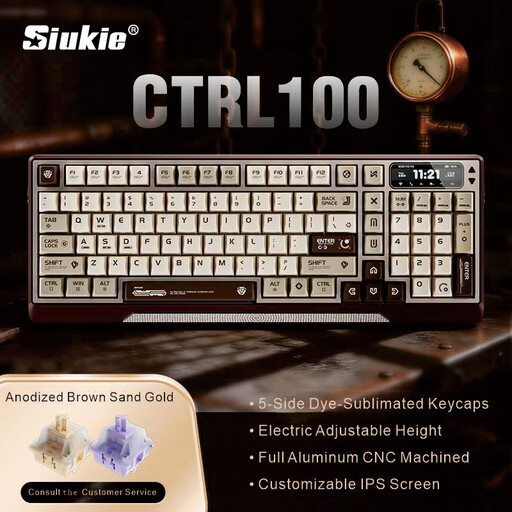
Consider the 96% layout if you want to assess an arrangement between smaller and conventional full-size options without assuming it will fit every desk.
The product name specifies tri-mode wireless connectivity and a motorised lift. Confirm that US QWERTY suits your typing and check shortcut-remapping support. Keep fingers and small objects clear of the lift while adjusting it; the product information warns of a pinch or crush risk.
 No image available
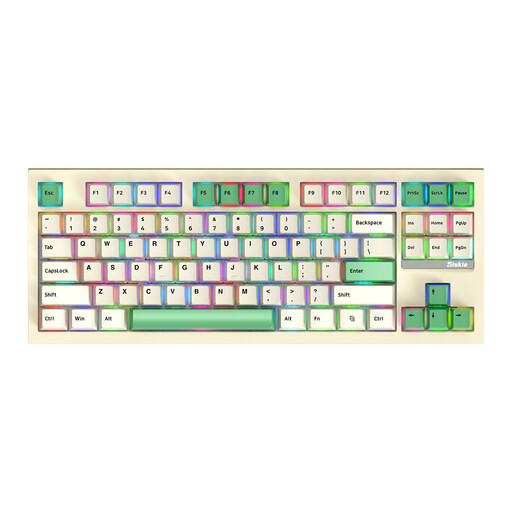
Its 87-key format is worth checking if you want a keyboard without a dedicated numpad beside your pen tablet.
The product name specifies three connection modes. Check the exact key layout and whether the shortcuts you use can be remapped for your art application.
No, not if both monitors connect to the same computer. Device switching matters when you move the keyboard between separate computers or other paired devices; Logitech says its MX Keys S can switch across up to three devices.
A compact keyboard makes sense when leaving room for the pen tablet matters more than retaining a dedicated numpad; a full-size layout suits frequent number entry and conventional navigation. Check the exact key arrangement and whether any missing controls can be remapped without interrupting your work.
Yes, as a companion device if you can assign the intended commands in its software and your art application. Razer describes 32 programmable keys on the Tartarus Pro, but you would still need a keyboard for ordinary text entry.
Keep it just below elbow height and central to your working position, in line with Health and Safety Executive posture guidance. Arrange the screens, tablet and mouse so that using the keyboard does not require you to twist or reach awkwardly.